Advance Your Career: 7 Finance Certifications Worth Pursuing
In today’s competitive financial landscape, a solid credential can be the difference between a stagnant salary and a rapid climb up the corporate ladder. Whether you’re a recent graduate eyeing your first analyst role or a seasoned professional looking to pivot into risk management, the right finance certification not only validates your expertise but also signals ambition to employers.
Why Finance Certifications Matter
Beyond the résumé boost, certifications provide structured learning that bridges theory and real‑world application. They often come with rigorous exams, ensuring that holders have mastered current regulations, analytical tools, and industry best practices. Moreover, many firms tie certification achievements to salary bands, bonuses, or promotion eligibility, making the investment tangible.
7 Certifications That Can Transform Your Path
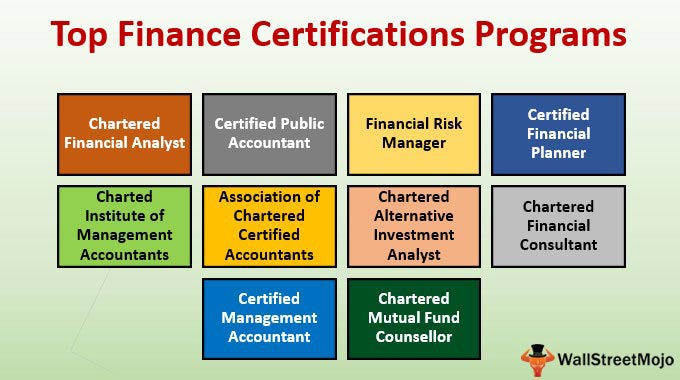
Below is a curated list of the most respected credentials across different finance sub‑fields. Each entry includes the typical audience, core focus, and what you can expect after earning it.
- CFA (Chartered Financial Analyst) – Ideal for investment analysts, portfolio managers, and equity researchers. The three‑level program covers ethics, quantitative methods, economics, and asset valuation. Passing all levels is widely regarded as a benchmark of analytical rigor.
- CPA (Certified Public Accountant) – The go‑to for auditors, tax specialists, and corporate accountants. In addition to financial reporting standards, the exam tests regulatory knowledge and business law, positioning holders for senior accounting leadership.
- FRM (Financial Risk Manager) – Tailored for risk analysts, credit officers, and treasury professionals. It dives deep into market, credit, and operational risk measurement, as well as risk modeling techniques used by banks and investment firms.
- CFA Institute Investment Foundations® – A beginner‑friendly entry point for non‑finance professionals entering financial services. It demystifies basic concepts like the time value of money, financial statements, and market structures.
- CFP (Certified Financial Planner) – Best suited for wealth managers, financial advisors, and retirement planners. The curriculum emphasizes client‑centered planning, tax strategies, estate considerations, and ethical practice.
- CAIA (Chartered Alternative Investment Analyst) – Focuses on hedge funds, private equity, real assets, and structured products. Professionals aiming to specialize in alternative investments find this credential particularly relevant.
- CIMA (Chartered Institute of Management Accountants) Certification – Bridges accounting with strategic management. It prepares candidates for roles that require budgeting, performance measurement, and decision‑support analytics.
Choosing the Right Credential for Your Goals
Not every certification aligns with every career stage. Start by mapping your desired trajectory: are you aiming for a front‑office role, a compliance function, or a client‑facing advisory position? Then consider the following factors:
- Industry relevance – Some sectors prioritize specific designations; for instance, investment banks often favor the CFA, while public accounting firms look for the CPA.
- Time and cost commitment – The CFA and CPA demand extensive study hours and multiple exam attempts, whereas the Investment Foundations program can be completed in a few weeks.
- Geographic recognition – Certain credentials, like the CPA, have state‑specific licensing requirements that may limit mobility.
Talking to mentors, recruiters, or alumni can also surface hidden insights about which certification actually moves the needle within a particular firm.
Preparing Effectively: Tips for Success
Once you’ve settled on a target, a disciplined prep plan makes a huge difference. Here are practical steps that seasoned candidates swear by:
- Set a realistic timeline. Break the syllabus into weekly goals and reserve consistent study blocks.
- Use official resources. Most bodies provide sample questions, practice exams, and study guides that mirror the real test format.
- Join a study group. Explaining concepts to peers reinforces your own understanding and fills knowledge gaps.
- Apply concepts on the job. Try to integrate new techniques—like Monte Carlo simulations for FRM or cash‑flow analysis for CPA—into current projects.
- Schedule the exam early. A firm deadline creates accountability and reduces procrastination.
Beyond the Certificate: Leveraging Your New Credential
Earning a certification is only half the battle. To maximize its impact, showcase your achievement strategically. Update your LinkedIn headline, add the credential to your email signature, and highlight relevant coursework during interviews. If possible, volunteer for projects that let you apply the newly acquired skills; the practical demonstration often impresses hiring managers more than the credential alone.
Frequently Asked Questions
Which finance certification is best for someone without prior experience?
For beginners, the CFA Institute Investment Foundations® or the CIMA Certificate in Business Accounting provide solid groundwork without the extensive time commitment of the full CFA or CPA tracks.
Do employers really pay more for certified professionals?
While exact figures vary, surveys consistently show that certified individuals tend to earn higher median salaries than their non‑certified peers, especially in roles where the credential is considered a baseline requirement.
Can I pursue multiple certifications simultaneously?
It’s possible, but most candidates find that focusing on one at a time yields better retention and reduces burnout. Overlap in content—such as ethics modules—can be advantageous if you plan sequentially.