Beyond NiFi: The Top Alternatives for Enterprise Data Flow
Data pipelines have become the lifeblood of modern enterprises, turning raw logs and sensor streams into actionable insights. While Apache NiFi has long been celebrated for its drag‑and‑drop flow design and robust security, many teams find themselves looking for alternatives that better fit their scale, programming language, or cloud strategy. In this inside look, we’ll explore the most compelling Apache NiFi alternatives, highlighting how each stacks up on ease of use, extensibility, and operational maturity.
Why Apache NiFi Alternatives Matter
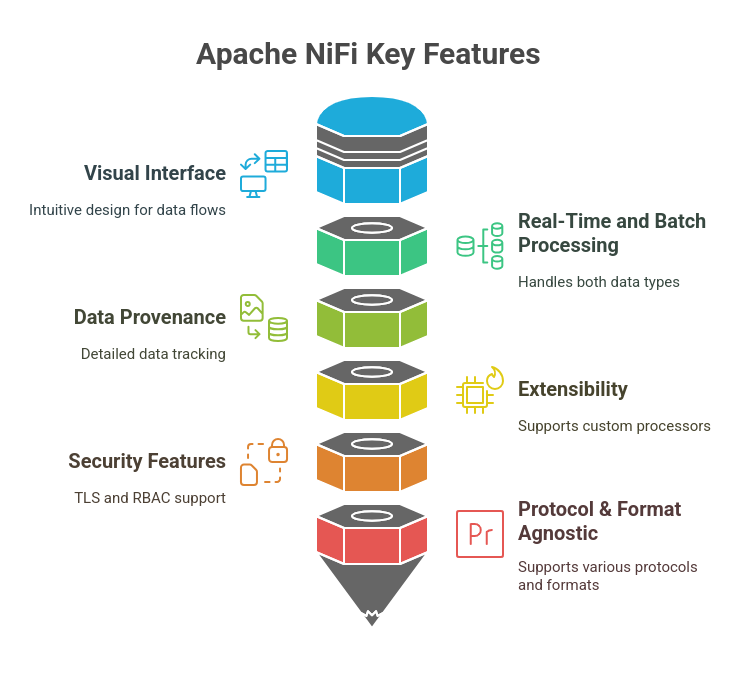
NiFi’s strengths—real‑time flow management, provenance tracking, and granular access controls—are hard to ignore. Yet, the same features can become bottlenecks when teams need high-throughput batch ingestion, tighter integration with message brokers, or a more lightweight footprint for edge deployments. That’s where alternatives enter the scene, offering trade‑offs that match diverse use cases: from low‑code visual editors to fully programmable stream processors.
1. StreamSets Data Collector
StreamSets is built for “data pipelines as code.” Its UI resembles NiFi’s flow graph, but it adds powerful schema management and auto‑recovery features. The open‑source version supports a wide range of sources—Kafka, S3, relational databases—and the enterprise edition offers governance and a data catalog. Pros: schema evolution handled automatically; rich lineage; tight Kafka integration. Cons: licensing cost for advanced features; slightly steeper learning curve for non‑Java developers.
2. Apache Camel
For teams that prefer a code‑first approach, Camel’s Enterprise Integration Patterns (EIP) library is a natural fit. Its routing engine is highly extensible, with a vast catalog of components for HTTP, JMS, FTP, and more. While Camel doesn’t provide a visual editor by default, the community has built tools like camel-k for Kubernetes and camel-quarkus for lightweight deployments. Pros: strong Java ecosystem; easy to embed in microservices; excellent testing support. Cons: lacks built‑in UI; monitoring requires separate tooling.
3. Talend Data Fabric
Talend offers a commercial platform that blends visual design, data quality, and orchestration. Its drag‑and‑drop interface feels familiar to NiFi users, but the underlying engine is built on Apache Spark, allowing for large‑scale transformations. The platform also supports real‑time streaming with Kafka connectors. Pros: end‑to‑end data management; robust governance; cloud‑native deployment. Cons: higher cost; learning curve for Spark‑centric transformations.
4. WSO2 Enterprise Integrator
WSO2 provides a full integration stack: API mediation, ESB, and data services. Its integration runtime can process streams, transform data, and route messages in real time. The platform’s emphasis on API management makes it suitable for micro‑service‑heavy architectures. Pros: strong API gateway; open‑source core; active community. Cons: less visual workflow than NiFi; steeper setup for new users.
5. ksqlDB and Kafka Streams
If your data pipeline is centered on Kafka, ksqlDB offers a declarative SQL layer for stream processing, while Kafka Streams provides a Java library for stateful transformations. Both run natively on top of Kafka brokers, eliminating the need for a separate orchestration layer. Pros: minimal latency; built‑in fault tolerance; native integration with Kafka. Cons: limited to Kafka ecosystem; not ideal for non‑streaming batch jobs.
6. Apache Flink
Flink is a distributed stream and batch processing engine that excels at event‑time semantics and windowing. It’s more complex than NiFi but offers unparalleled scalability for time‑sensitive analytics. Flink’s Table API and SQL support makes it approachable for developers familiar with SQL. Pros: low latency; sophisticated state management; strong community. Cons: requires cluster setup; learning curve for operators.
7. Airbyte
Airbyte focuses on data ingestion from SaaS services and databases into warehouses. Its modular connectors are built in Python, and the platform supports incremental syncs and schema discovery. While it’s primarily an ETL tool, the orchestrator layer can be extended to support simple transformations. Pros: quick onboarding for SaaS data; open‑source; cloud‑native. Cons: less control over streaming; limited real‑time capabilities.
8. Node‑RED
For edge deployments or lightweight prototyping, Node‑RED offers a browser‑based flow editor powered by Node.js. Its vast library of nodes covers MQTT, HTTP, and many IoT protocols. While not a replacement for large‑scale pipelines, it’s handy for quick experiments and small‑scale data flows. Pros: easy to use; rapid iteration; JavaScript ecosystem. Cons: performance limits for high throughput; no built‑in provenance.
Choosing the Right Fit
When evaluating NiFi alternatives, ask these questions:
- What volume and velocity do you need? High‑throughput stream engines like Flink or Kafka Streams outperform visual editors.
- Do you prefer code or a UI? Camel and Talend cater to different audiences.
- How important is data lineage? NiFi and StreamSets shine; others may require extra tooling.
- What is your operational footprint? Edge or serverless use cases lean toward Node‑RED or lightweight containers.
Key Takeaway
There’s no single replacement that covers every scenario NiFi does. Instead, a hybrid approach often works best—using a lightweight orchestrator for batch ingestion, a Kafka‑native solution for low‑latency streams, and a visual editor for prototyping. By aligning each tool’s strengths with specific pipeline stages, teams can achieve greater agility and scalability without sacrificing governance or observability.
Frequently Asked Questions
- What is the main advantage of StreamSets over NiFi? StreamSets handles schema evolution automatically and provides a built‑in data catalog, reducing manual lineage work.
- Can Apache Camel replace NiFi for all use cases? Camel excels in code‑centric, microservice‑oriented workflows but lacks a native visual designer, making it less suitable for teams that rely on drag‑and‑drop interfaces.
- Is there a free, open‑source alternative that offers real‑time monitoring? Apache Flink and Kafka Streams are open‑source and include monitoring via Prometheus and Grafana, but they require more setup compared to NiFi’s web UI.
- How does Airbyte fit into a modern data stack? Airbyte is ideal for pulling data from SaaS applications into warehouses, but for complex transformations or real‑time processing, complement it with tools like Spark or Flink.