Chipset Showdown: iOS vs. Android – What Sets Them Apart
In the chipset showdown iOS vs. Android, the heart of each ecosystem beats to a different rhythm. Apple’s silicon and Android’s diverse offerings both promise speed, efficiency, and the next wave of innovation, yet their approaches to design, performance, and integration diverge in ways that matter for everyday users.
How Apple and Android Build Their Chip Architectures
Apple’s strategy centers on a single, vertically integrated line of system‑on‑chip (SoC) designs, beginning with the A8 and evolving into the powerful A17 Pro. Each chip is crafted in-house, tightly coupled with iOS, and released only with new iPhone models.
Android, on the other hand, relies on a coalition of manufacturers—Qualcomm, Samsung, MediaTek, and Huawei—to supply SoCs that fit a wide range of devices, from budget‑friendly to flagship.
- Apple A‑Series: Consistent architecture, predictable performance curves, and regular power‑saving innovations.
- Qualcomm Snapdragon: Leading edge in connectivity and graphics, with variants for everything from mid‑tier to high‑end.
- MediaTek Dimensity: Rapidly closing the gap on cost‑efficient performance.
Performance and Power Efficiency – The Core Battle
Benchmark numbers reveal Apple’s SoCs often outpace their Android counterparts in single‑threaded tasks, thanks to a high‑performance core and optimized cache hierarchy. In multi‑core workloads, Qualcomm’s latest Snapdragon chips show close competition, especially with integrated AI engines.
Energy efficiency is where Apple’s silicon consistently shines. The same manufacturing process used across the A‑Series results in predictable battery life. Android’s fragmentation sometimes leads to variance: a top‑tier phone might outperform a mid‑tier model, yet battery endurance can differ widely between brands.
Custom vs. Off‑the‑Shelf – Design Philosophies
Apple’s custom silicon means every piece of hardware is tailored to its software stack. This alignment allows fine‑tuned optimization for camera, AR, and machine learning tasks.
Android’s modularity offers flexibility: OEMs can choose the processor that best fits their price point and target market. However, this flexibility can dilute uniformity in performance and developer experience.
Software Integration and Optimization
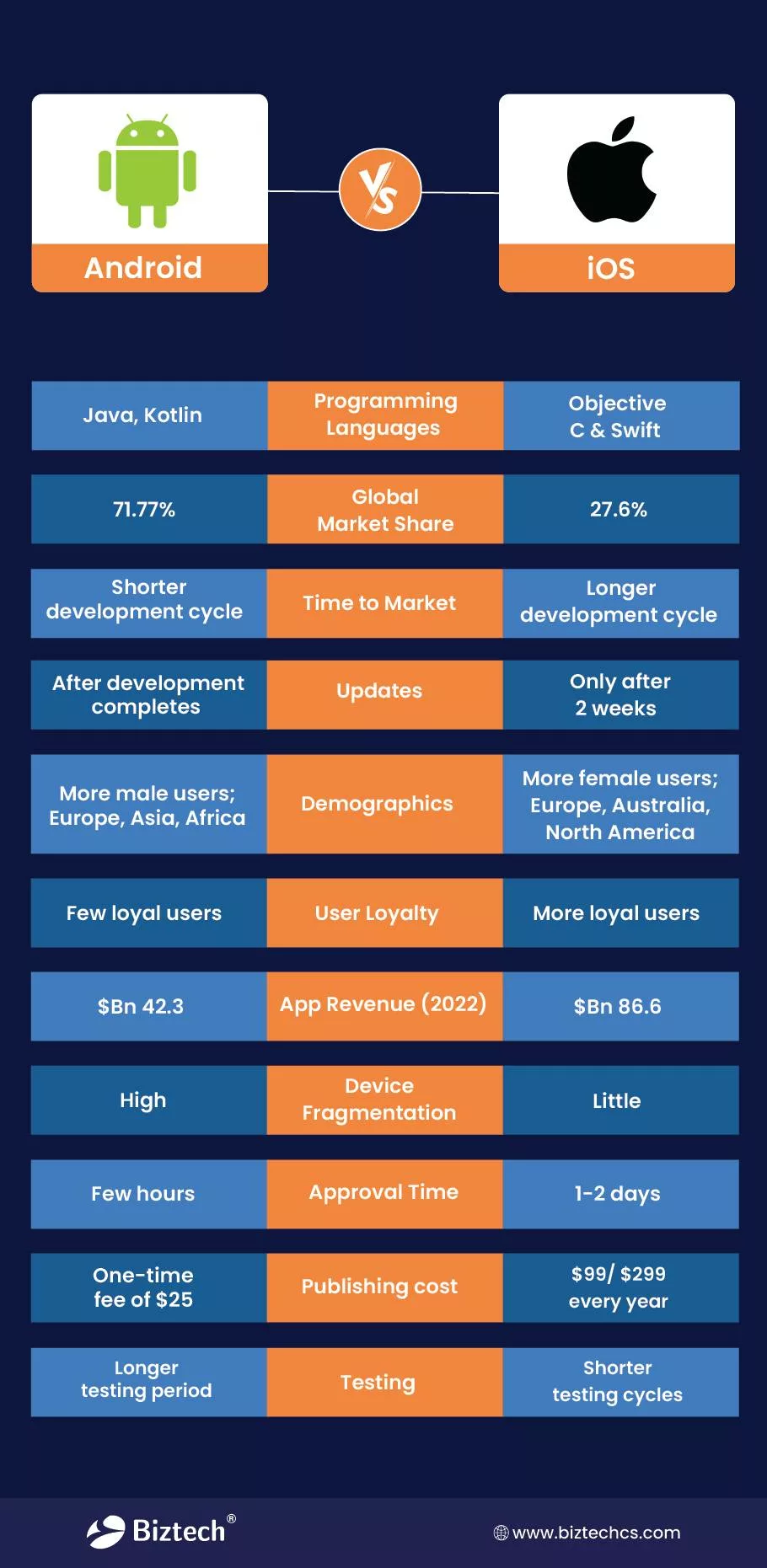
iOS benefits from a tightly coupled development environment. Developers write once in Swift or Objective‑C, and the OS ensures seamless execution across all supported hardware. Hardware‑specific APIs such as Core ML and Metal are optimized for Apple silicon.
Android’s open‑source nature encourages experimentation but can also fragment performance. Apps often need to account for a range of GPU capabilities, CPU speeds, and memory configurations, leading to a more variable user experience.
Future Trends – 5G, AI, and Beyond
Both ecosystems are racing to embed AI accelerators directly into their chips. Apple’s Neural Engine is already a staple for on‑device processing, while Qualcomm’s AI Engine and MediaTek’s AI acceleration are pushing similar boundaries.
5G is becoming a standard feature across flagship devices, with Apple integrating the latest modems in the A16 and A17. Android’s Snapdragon and MediaTek chips typically provide more varied 5G options, giving consumers more choices in carrier support.
Quick Take: Which Chipset Wins for Your Use Case?
Choose Apple silicon if:
- You prioritize consistent performance and battery life.
- Camera, AR, and iOS‑centric apps dominate your usage.
Opt for Android SoCs if:
- You value device choice and price flexibility.
- Gaming or heavy multitasking on a large, high‑refresh‑rate display is a priority.
FAQs
Q1: Does Apple’s custom silicon mean Android devices are slower?
A1: Not necessarily. Many Android chips, especially newer Snapdragon and Dimensity models, offer competitive performance, particularly in multi‑core and graphics workloads. The difference often lies in power efficiency and software optimization.
Q2: Can an Android phone use Apple’s Neural Engine?
A2: No. Neural Engine is exclusive to Apple silicon and works only within the Apple ecosystem. Android phones use their own on‑device AI accelerators.
Q3: Is it worth buying a flagship Android phone over a new iPhone for gaming?
A3: Flagship Android phones can deliver excellent gaming performance, especially when paired with high‑refresh‑rate displays and powerful GPUs. However, iPhones offer smoother gameplay thanks to tighter hardware‑software integration.
Q4: How often do Android chip manufacturers update their SoCs?
A4: Major manufacturers release new SoC generations roughly every 18–24 months, often aligned with flagship device cycles, though mid‑tier updates can lag.