Cisco Industrial Ethernet Switches: Performance, Features & Setup Tips
Cisco Industrial Ethernet Switches have long been the backbone of mission‑critical networks in factories, ports, and energy plants. Their rugged design, low‑profile hardware, and advanced software stack make them uniquely suited for environments that demand uptime, reliability, and ease of integration. This guide dives into the core attributes that set these switches apart, how to pick the right model, and practical steps to deploy and secure them.
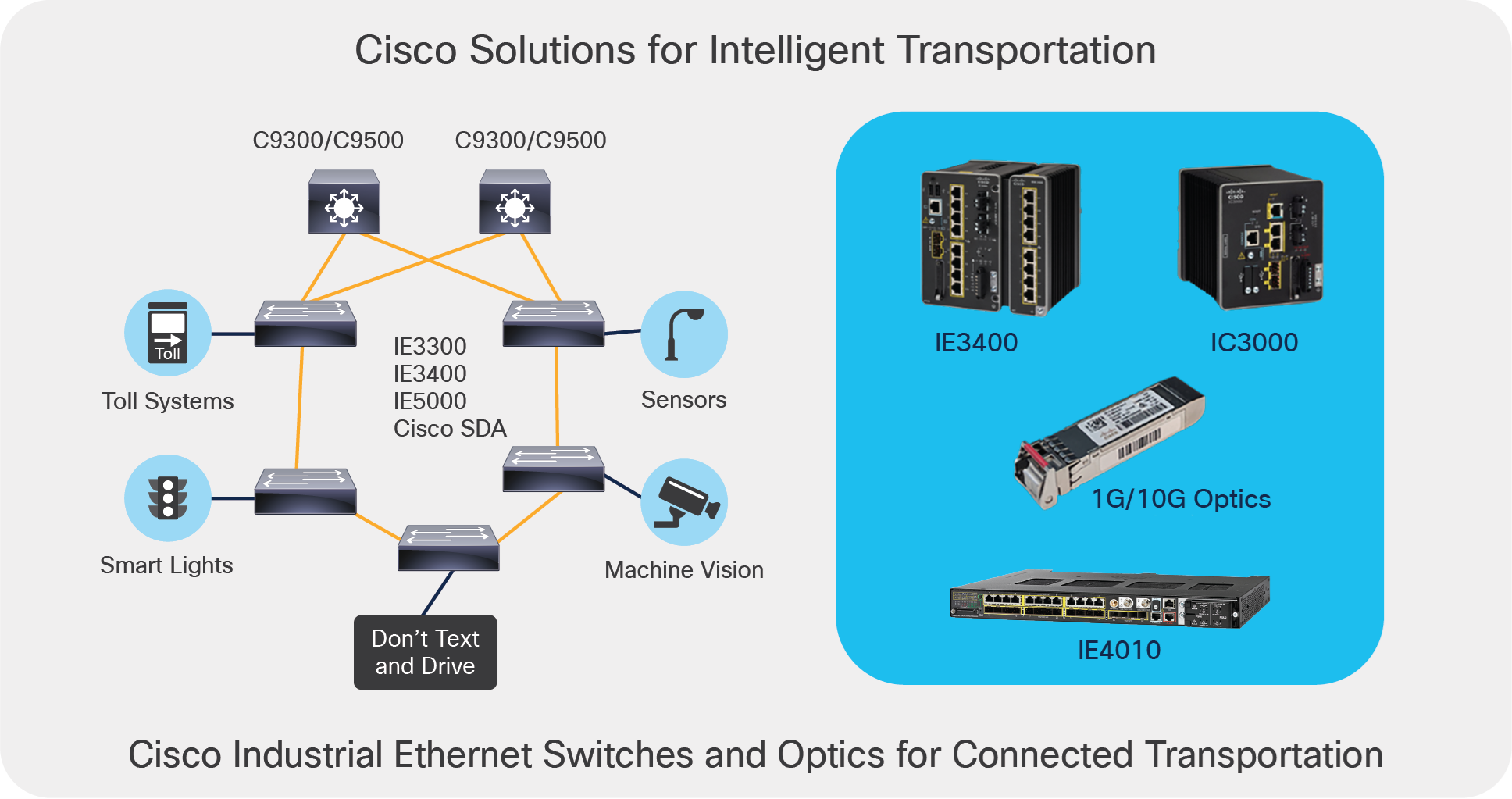
Cisco Industrial Ethernet Switches Overview
At their heart, Cisco’s industrial switches are engineered to meet the demanding standards of the International Electrotechnical Commission (IEC) and the Military Standards (MIL‑STD‑810). They combine the familiar Cisco IOS XE operating system with hardened chassis, redundant power supplies, and fan trays that operate silently under high temperatures. The result is a device that can run 24/7 in temperatures ranging from –40 °C to +75 °C while maintaining data integrity over long distances.
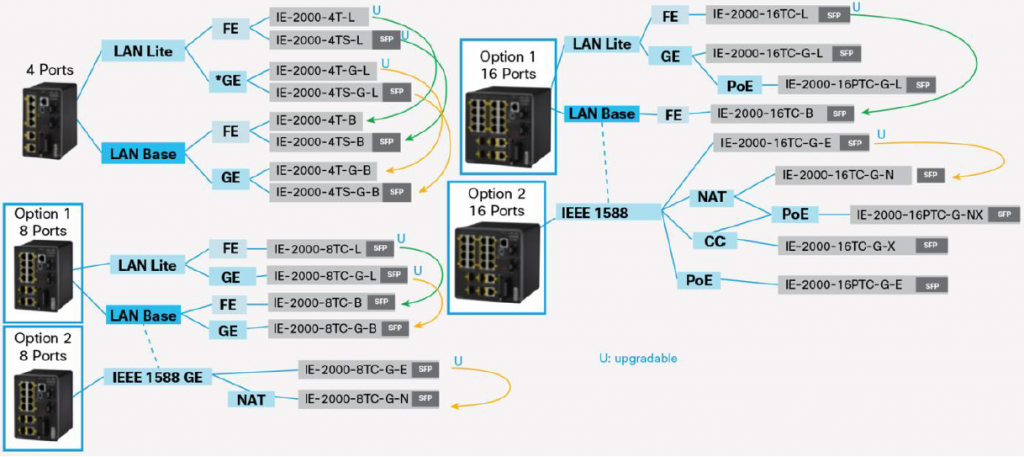
There are several families within the lineup, each tailored to different network scales and performance requirements:
- Industrial Ethernet (IE) Series – Compact, fan‑less units that fit into tight spaces and are ideal for edge‑to‑cloud scenarios.
- Industrial Catalyst 6500/6800 Series – High‑density, stackable switches with up to 48 ports of 10/100 Mbps or 24 ports of 1 Gbps.
- Industrial Catalyst 6900 Series – Enterprise‑grade performance with 1/10/40 GbE uplinks, designed for backbone connections.
- Industrial Gigabit Ethernet (GE) Switches – Stand‑alone 48‑port switches that support PoE+ and PoE‑EXT, perfect for sensor networks.
Each family shares a common software feature set, yet the hardware differences allow you to match capacity to cost and physical constraints.
Key Features That Matter
When choosing an industrial switch, these capabilities typically dominate the decision matrix:
- Rugged Design – Dual power supplies, sealed enclosures, and vibration‑tolerant chassis.
- Low Power Consumption – Fanless options reduce thermal load and maintenance.
- Stacking & Redundancy – 802.3ad link aggregation and Cisco StackWise‑X enable seamless failover.
- PoE+ & PoE‑EXT – Support up to 30 W per port, extended to 90 W for high‑power devices.
- Advanced Security – IEEE 802.1X, MAC‑based access control, and role‑based configuration.
- Management APIs – RESTCONF, NETCONF, and SNMPv3 for automated provisioning.
- Software‑Defined Networking (SD‑N) Compatibility – Integration with Cisco DNA Center for intent‑based policies.
These features together enable networks that can survive harsh environments without sacrificing modern connectivity standards.
Performance Metrics Worth Noting
Cisco’s industrial switches boast impressive line‑rate throughput and low latency, but the specific numbers vary by model:
- Base throughput typically reaches 4–12 Gbps on the 6500/6800 series.
- Uplinks on the 6900 series can reach 40 Gbps with optional 100 Gbps modules.
- Latency in the millisecond range, often below 2 ms for packet‑forwarding between internal ports.
These figures translate into practical benefits: minimal buffering for real‑time control loops and near‑zero jitter for time‑sensitive protocols like OPC‑UA or MQTT.
Common Deployment Scenarios
Here are three typical use cases where Cisco industrial switches shine:
- Factory Automation – Connecting PLCs, HMIs, and machine‑to‑machine devices via PoE+ for energy efficiency.
- Port & Shipping Operations – Providing robust Wi‑Fi backhaul and secure sensor networks to monitor cargo temperature and location.
- Utility Grid Management – Acting as aggregation points for smart meter data in substations, with redundancy to avoid single points of failure.
In each scenario, the combination of ruggedness, high port density, and support for modern protocols is essential.
Step‑by‑Step Setup Guide
Below is a concise checklist for a typical installation:
- Hardware Placement – Mount the switch on a vibration‑isolated shelf; connect redundant power cables.
- Initial Boot – Power on, watch the boot sequence on the console port; verify firmware version via
show version. - IP Configuration – Assign a static IP or configure DHCP with reservation; ensure VLAN trunking for segmentation.
- Enable Redundancy – Configure StackWise‑X for your stack members; set priority values.
- Security Hardening – Disable unused services, set strong SSH passwords, enable SNMPv3.
- PoE Settings – Define power budgets per port and enable per‑port power management.
- Backup & Documentation – Save configuration to TFTP or cloud storage; document port mappings.
Following these steps ensures a solid foundation for both performance and manageability.
Security Considerations
Industrial networks are frequent targets of cyber threats. Cisco’s industrial switches mitigate risk through:
- Zero‑Trust Authentication – 802.1X with RADIUS integration to enforce device‑level access.
- Runtime Application Self‑Protection (RASP) – Detects anomalous traffic patterns in real time.
- Encrypted Management – SNMPv3, SSH, and HTTPS guarantee data integrity.
- Regular Firmware Updates – Cisco releases security patches quarterly;




.jpg?itok=9O-KniX5)