Decoding Biased Coin Probability: A Clear Guide
You might assume that flipping a coin is the ultimate symbol of randomness. Heads or tails, fifty-fifty, pure chance. But what happens when the coin isn’t perfect? What if it’s been weighted? Or perhaps it was tossed in a way that favors one side? This is where the concept of a biased coin comes into play. It sounds simple enough, but understanding biased coin probability requires shifting away from our intuitive "fair coin" mindset and embracing the reality of uneven odds.
For students of statistics, developers, or even avid gamblers, grasping how bias affects outcomes is crucial. It’s not just about knowing the math; it’s about recognizing when the game is rigged, whether intentionally or through physical imperfection.
What Exactly Is a Biased Coin?
A fair coin has an equal likelihood of landing on heads or tails. Mathematically, we denote the probability of heads as $P(H) = 0.5$ and tails as $P(T) = 0.5$. A biased coin breaks this symmetry. In a biased scenario, the probability of one outcome is significantly higher than the other.
This bias can arise from various sources. The most obvious is physical weight distribution. If you drill a small hole in the heads side of a quarter and fill it with lead, the coin will likely land on tails more often because the heavier side tends to settle downward. However, bias isn’t always physical. It can also result from the flipping mechanism itself. A spinner coin, for instance, has very different dynamics than a free-falling coin. Even the way you flick your wrist can introduce a subtle bias, though this is usually negligible for standard coins.
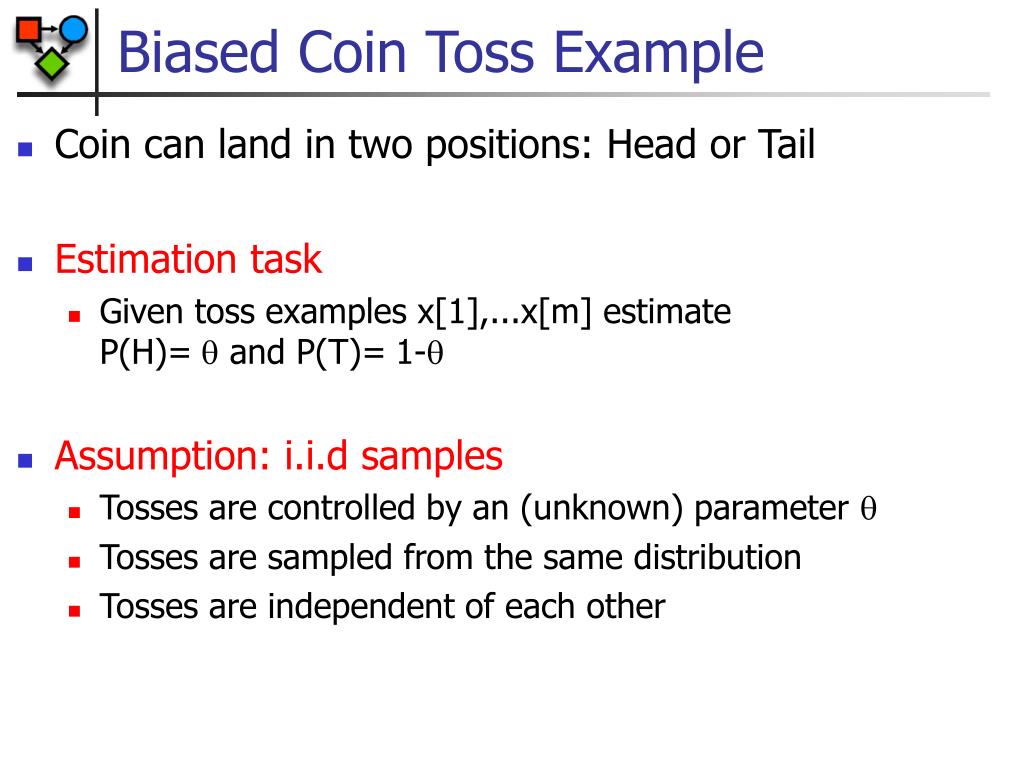
In probability theory, we often represent the bias as a parameter, let’s call it $p$. If $p \neq 0.5$, the coin is biased. For example, if $p = 0.8$, there is an 80% chance of getting heads and a 20% chance of getting tails. The sum of probabilities must still equal 1, but the distribution is skewed.
Calculating the Odds: Single and Multiple Flips
Calculating the probability for a single flip of a biased coin is straightforward. If you know the bias $p$, you simply apply that number. The challenge arises when we multiple flips. Here, the rules of independent events come into play.
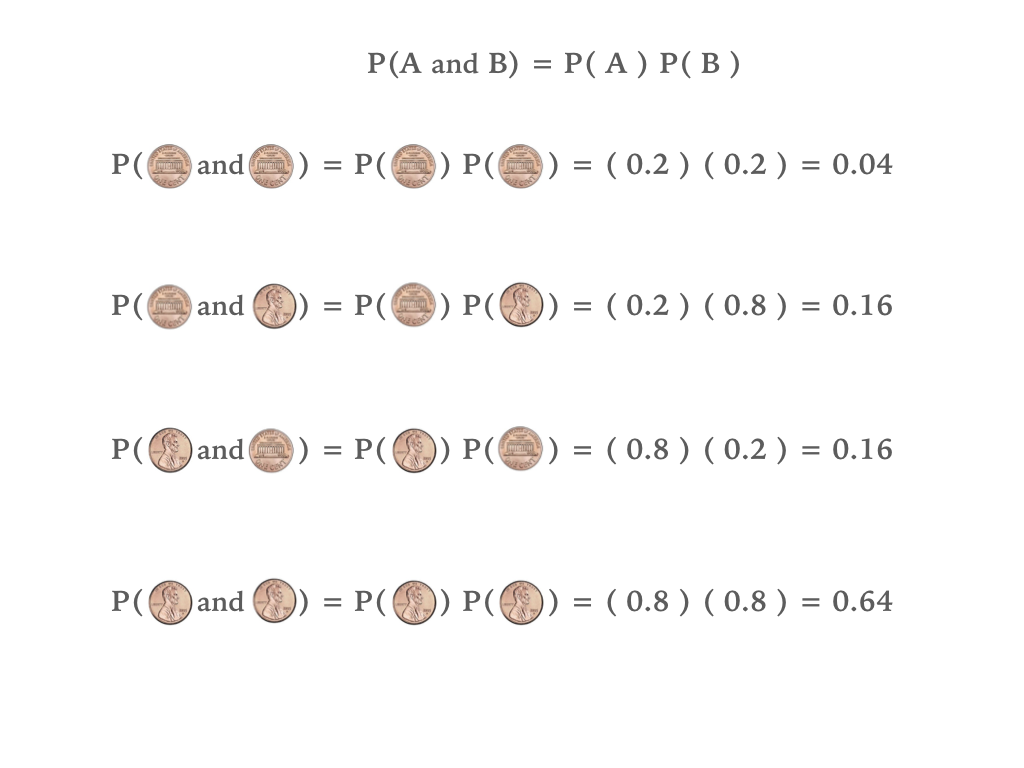
Let’s say we have a coin with a heads probability of $0.6$. What is the chance of getting heads twice in a row? Since the flips are independent (the result of one doesn’t affect the other), we multiply the probabilities:
- Heads then Heads: $0.6 \times 0.6 = 0.36$
What about getting one heads and one tails in any order? There are two ways this can happen: Heads then Tails, or Tails then Heads.
- Heads then Tails: $0.6 \times 0.4 = 0.24$
- Tails then Heads: $0.4 \times 0.6 = 0.24$
- Total Probability: $0.24 + 0.24 = 0.48$
This logic scales up using the binomial distribution formula. It allows us to calculate the probability of getting exactly $k$ heads in $n$ flips. The formula accounts for both the specific combination of outcomes and the number of ways those outcomes can be arranged. It’s a foundational tool in statistics, widely used in fields ranging from genetics to quality control.
Why Bias Matters in Real-World Applications
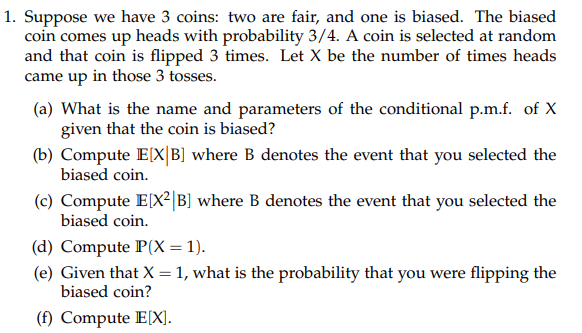
Understanding biased probabilities isn’t just an academic exercise. It has profound implications in computer science and cryptography. In randomized algorithms, developers often rely on the assumption of fair randomness. If the random number generator exhibits a bias, it can compromise the security of encryption keys or lead to inefficient data processing.
Consider the famous Von Neumann unbiasing technique. Suppose you have a biased coin, but you don’t know the degree of bias or even if it changes between flips. You can still generate a fair outcome. Here’s how: Flip the coin twice.
- If you get Heads then Tails, call it "Heads".
- If you get Tails then Heads, call it "Tails".
- If you get two Heads or two Tails, discard the results and flip again.
Why does this work? The probability of getting Heads then Tails is $p(1-p)$, and the probability of getting Tails then Heads is $(1-p)p$. These two values are identical. Therefore, conditional on getting a mixed result, the chance of either sequence is equal, effectively canceling out the bias. This elegant solution demonstrates that even with imperfect tools, we can derive fair randomness through clever logic.
Detecting Bias Through Experimentation
How do you know if a coin is biased? You can’t tell by looking; you have to test it. This involves hypothesis testing. You start with a null hypothesis that the coin is fair ($p=0.5$). Then, you perform a large number of flips—say, 100 or 1,000 counts.
If you get 60 heads out of 100 flips, is that significant? Probably not; it falls within the realm of natural variance. But if you get 80 heads, the probability of that happening by chance with a fair coin is so low that you reject the null hypothesis. The coin is likely biased. The larger the sample size, the more confident you can be in your conclusion. This principle underpins everything from clinical trials to A/B testing in marketing.
Common Misconceptions About Biased Coins
One of the most persistent myths in probability is the Gambler’s Fallacy. This is the belief that if a biased coin has landed on heads several times in a row, it is "due" to land on tails. This is incorrect. Each flip is independent. The coin has no memory. If the bias favors heads, it will continue to favor heads regardless of past outcomes.
Another misconception is that bias always means a fixed percentage. In some complex systems, bias can be dynamic or influenced by external factors. For example, the aerodynamics of a coin can change depending on the height of the drop, the speed of the spin, and the surface it lands on. While standard probability models often assume a static bias for simplicity, real-world physics can introduce layers of complexity that simple equations don’t capture.
Final Thoughts on Probability and Precision
Exploring biased coin probability teaches us a valuable lesson: assumptions matter. In mathematics, statistiscs, and life, assuming fairness where none exists can lead to significant errors. Whether you’re playing a game, analyzing data, or building an algorithm, questioning the underlying probabilities is key. A biased coin isn’t just a trick; it’s a reminder that randomness is nuanced and often hidden beneath the surface of apparent simplicity.
Frequently Asked Questions
How can you tell if a coin is biased?
You cannot determine bias visually. You must conduct a large number of flips to analyze the frequency of each outcome. If the results significantly deviate from the expected 50/50 split over time, statistical tests can confirm bias.
Does a heavier side always land down?
Generally, yes. Physics dictates that the heavier side tends to settle toward the ground due to gravity and rotational inertia. However, the degree of bias depends on the coin’s design, the flip force, and the landing surface.
Can a biased coin be used fairly?
Yes, by using methods like the Von Neumann unbiasing technique. By flipping the coin twice and only accepting mixed results (HT or TH), you can generate a fair 50/50 outcome regardless of the coin’s bias.
Why is biased coin probability important in coding?
In computer science, biased random number generators can compromise security algorithms, load balancing, and simulation accuracy. Understanding bias allows developers to correct algorithms or design systems that account for imperfect randomness.