Guillain‑Barré Syndrome: Full Name, Causes, and Life‑Changing Implications
The GBS disease, formally known as Guillain‑Barré Syndrome, is a rare but potentially life‑threatening autoimmune disorder that attacks the peripheral nervous system. When the body’s immune system mistakenly targets the protective myelin sheath of nerves, muscle weakness and paralysis can develop rapidly, often within days. Understanding the full form, the underlying triggers, and the long‑term implications is essential for patients, caregivers, and healthcare providers alike.
What Is Guillain‑Barré Syndrome?
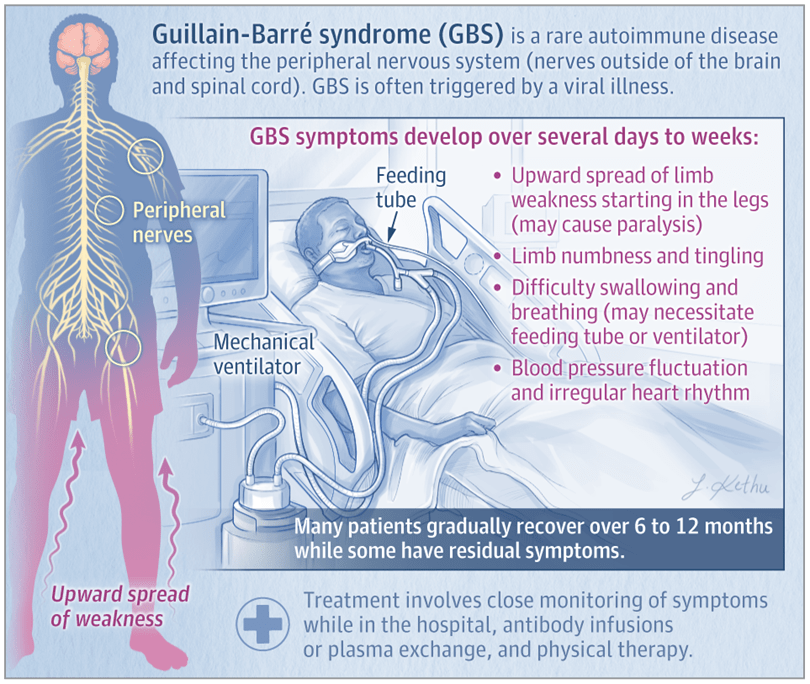
Guillain‑Barré Syndrome is an acute inflammatory demyelinating polyneuropathy. It is characterized by sudden, symmetrical weakness that typically starts in the legs and ascends upward. While most people recover fully, a subset may experience lingering deficits, such as numbness, fatigue, or reduced muscle strength. The condition’s severity ranges from mild to severe, and in some cases, respiratory muscles can be compromised, necessitating mechanical ventilation.
Causes and Triggers
The exact cause of GBS remains unclear, but several associations have been documented:
- Preceding infections, especially Campylobacter jejuni, cytomegalovirus, Epstein‑Barr virus, and influenza.
- Recent vaccinations or, less frequently, autoimmune diseases.
- Rarely, surgical procedures or trauma.
In many cases, the immune system mounts an overactive response after an infection, leading to cross‑reactivity with nerve components.
Recognizing the Symptoms
Early recognition saves lives. Key warning signs include:
- Progressive, symmetrical weakness starting in the feet or hands.
- Loss of reflexes, especially in the ankles.
- Facial weakness or trouble speaking and swallowing.
- Rapid heart rate, high blood pressure, or unstable blood pressure.
Because symptoms can mimic other neurological conditions, a high index of suspicion is essential, especially when weakness escalates within two weeks of a recent illness.
Diagnosing GBS
Diagnosis hinges on clinical evaluation and supporting tests. Common approaches include:
- Electromyography (EMG) and nerve conduction studies to reveal slowed conduction and demyelination.
- Lumbar puncture showing a characteristic “albuminocytologic dissociation” (high protein with normal white blood cell count).
- Blood tests to rule out infections or alternative causes.
Because early treatment improves outcomes, prompt referral to a neurologist is crucial.
Treatment Options
While no cure exists, two main interventions reduce the disease’s severity and duration:
- Intravenous immunoglobulin (IVIG) – a daily infusion that modulates the immune response.
- Plasmapheresis (plasma exchange) – a procedure that removes harmful antibodies from the blood.
Supportive care, such as respiratory monitoring, physiotherapy, and pain management, rounds out the treatment plan. Most patients require hospitalization for close observation during the acute phase.
Long‑Term Implications and Recovery
Recovery trajectories vary. Some patients regain full strength within weeks, while others may take months or develop persistent symptoms. Common long‑term outcomes include:
- Residual muscle weakness or fatigue.
- Autonomic instability (irregular heart rate, blood pressure swings).
- Psychological effects such as depression, anxiety, or post‑traumatic stress.
Rehabilitation plays a pivotal role, and early physiotherapy can hasten functional gains. Understanding these implications helps patients and families prepare for the recovery journey and manage expectations.
Living with GBS: Practical Tips
Daily life can be challenged by the condition’s impact on mobility and sensation. Here are actionable steps:
- Use adaptive equipment—walker, cane, or wheelchair—to maintain independence.
- Prioritize safety at home: remove trip hazards, install grab bars, and keep emergency contacts nearby.
- Plan for regular follow‑ups with a neurologist and a multidisciplinary care team.
- Connect with support groups; sharing experiences can reduce isolation and offer coping strategies.
By addressing both medical and psychosocial aspects, individuals with GBS can navigate their recovery more holistically.
Frequently Asked Questions
Q1: Can Guillain‑Barré Syndrome recur?
A1: Recurrent cases are uncommon but possible. When they occur, they typically arise after a new trigger, such as an infection.
Q2: Is GBS contagious?
A2: No. The syndrome itself is not transmissible; however, the infections that sometimes precede it can be contagious.
Q3: How long does the acute phase usually last?
A3: The most rapid progression typically occurs within the first two weeks, with the peak of weakness often by day 7 to 14. Recovery may continue for several months.
Q4: Are there preventative measures for high‑risk individuals?
A4: Vaccinations and prompt treatment of infections are recommended, though no specific prevention strategy for GBS exists beyond general public health practices.