How Cooling Tower Design Parameters Shape Efficiency and Reliability
Cooling towers quietly keep power plants, data centers and industrial plants from boiling over. While the basic idea—air passing over hot water to evaporate some—remains simple, the devil is in the details. Engineers talk about cooling tower design key parameters almost as if they were a secret recipe. In this article, we’ll unpack those parameters, show how they interact, and explain why the right balance makes the difference between a cost‑effective asset and a costly headache.
Core Parameters That Drive Performance
When a plant manager asks “What matters most in a tower?” the answer is a set of interrelated variables. The first five—water flow rate, air flow, fill characteristics, heat load, and tower dimensions—are the foundation. Water quality, ambient conditions and system controls add nuance. Each parameter can swing a tower’s efficiency by 10–20 %.
Water Flow Rate
The amount of water that must be cooled is dictated by the process heat that needs removal. Too little flow and the tower can’t absorb enough latent heat; too much and you waste energy pumping water and diluting the fill. Designers calculate the required flow from the heat duty and the desired inlet/outlet temperature swing, then size pumps accordingly.
Fan Speed and Air Distribution
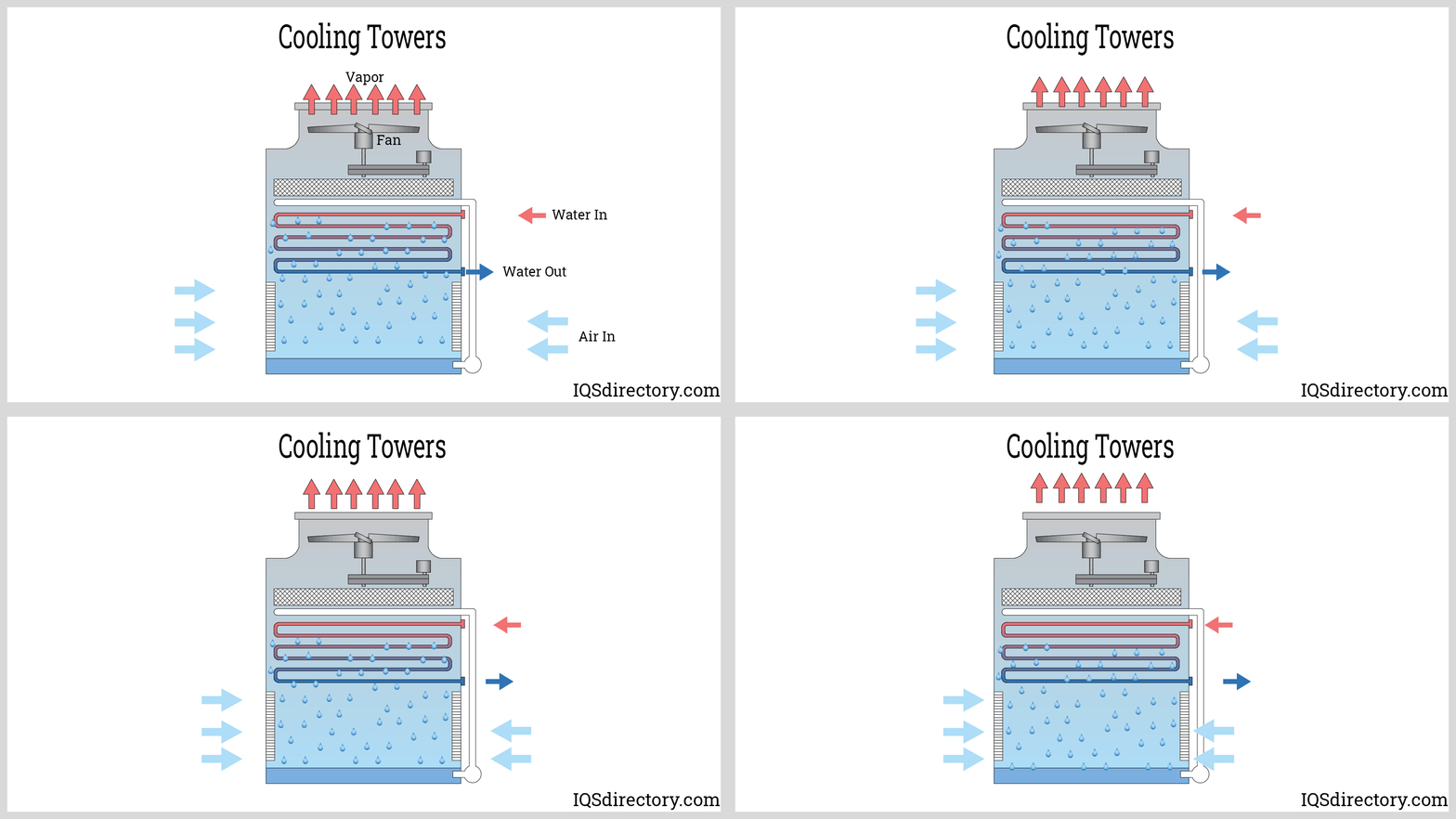
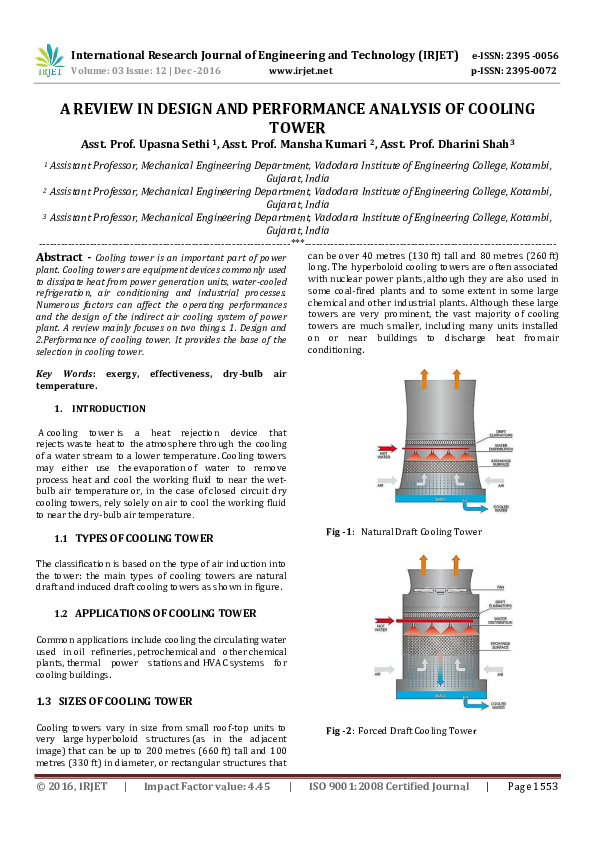
Fans move ambient air through the tower, creating the air–water interaction that drives evaporation. Variable-speed drives allow operators to match fan capacity to heat load, conserving electricity when the plant is lightly loaded. Uniform airflow across the fill ensures every droplet gets enough air to evaporate; uneven distribution leads to “dead zones” that raise water temperatures.
Fill Design and Material
Fill is the heart of a tower, increasing the water‑air contact area. Common materials include perforated plates, packed beds, and woven fabrics. The choice affects surface area, pressure drop, and fouling resistance. A well‑designed fill can reduce the required tower height while maintaining cooling performance.
Heat Load (Sensible & Latent)
Heat load is split into sensible (raising water temperature) and latent (causing evaporation). Engineers use the NTU–Effectiveness method or empirical correlations to predict how much water will evaporate at a given temperature difference. This informs the sizing of both the fill and the fan.
Tower Dimensions
Height and width dictate the residence time of water in the fill. Taller towers offer more evaporation but cost more to construct and maintain. A taller design can also mitigate the need for aggressive airflow, saving fan power.
Water Quality Management
Scaling, corrosion, and fouling are the quiet killers of cooling tower life. Engineers specify treatment chemicals, filtration, and recirculation strategies to keep the water chemistry stable. Poor quality water shortens fill life, increases maintenance, and can trigger hazardous vapor releases.
Balancing Heat Load and Cooling Capacity
Heat load is not static. Seasonal shifts, equipment changes, or process variations alter the demand. A flexible design—variable fan speeds, adjustable fill, and a scalable water loop—lets operators respond without over‑engineering. The goal is to keep the tower operating close to its design point most of the time.
Water Quality Management
Beyond initial design, ongoing water treatment is essential. A common practice is to use a combination of ion exchange, chemical dosing, and membrane filtration. Monitoring key parameters—pH, total dissolved solids, and conductivity—helps catch problems early. Regular fill cleaning schedules prevent fouling that could reduce surface area and force higher fan speeds.
Environmental and Regulatory Considerations
Cooling towers emit a plume of vapor, noise, and sometimes chemicals. Local regulations impose limits on vapor loss, noise levels, and water discharge. Designing for minimal vapor loss—through proper fill selection and water quality control—reduces both regulatory risk and operating costs. Noise abatement can involve enclosure panels, fan speed modulation, or sound‑absorbing materials.
Optimization Techniques and Modeling Tools
Modern engineering blends empirical data with advanced simulation. Computational Fluid Dynamics (CFD) models capture airflow patterns and temperature gradients, while system simulation tools (like Aspen HYSYS or EES) predict temperature swings over varying loads. These tools let designers iterate quickly, exploring “what if” scenarios such as a sudden heat‑load spike or a change in ambient humidity.
Case Study: A Typical Industrial Application
Consider a 200 MW power plant that required a cooling tower capable of removing 3 MW of heat at 80 °F water input and 55 °F output. The design team began by estimating the required water flow rate of 70 gpm. They chose perforated plate fill with a 15 in diameter, 50 ft height. A variable-speed fan system provided 25 kW of power under peak load, dropping to 5 kW during off‑peak hours. After installing a water treatment plant that kept conductivity below 300 µS/cm, the tower ran for 12 years with less than 1 % downtime.
Key Takeaways
- Water flow rate, fan speed, and fill type are the three pillars of tower performance.
- Balancing sensible and latent heat ensures the tower meets temperature targets without excess energy use.
- Water chemistry control is as crucial as mechanical design; it protects the fill and reduces maintenance.
- Regulatory compliance, especially for vapor and noise, shapes design choices early in the process.
- Simulation tools accelerate optimization, but field data must validate