How Dilution Works: A Simple Guide for Everyday Use
Ever poured a splash of lemon juice into a pitcher of water and wondered how the flavors blend? That mixing is a classic example of dilution—reducing the concentration of a substance by adding more solvent. Whether you’re following a recipe, measuring a medication, or tweaking a cleaning solution, understanding dilution helps you get the right balance without guesswork.
Dilution Explained: A Simple Guide
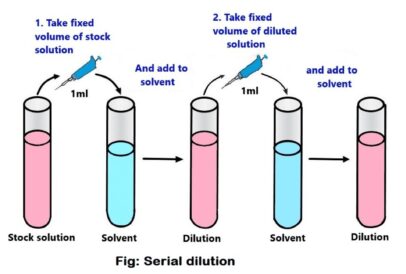
Dilution is essentially a ratio. You start with a certain amount of solute (the “thing” you want to dilute) and combine it with a solvent (often water) to achieve a target concentration. The key idea is that the amount of solute stays the same; you’re just spreading it out over a larger volume.
Why Dilution Matters
In everyday life, the right dilution can mean the difference between a tasty dish and a sour disaster, or between an effective disinfectant and a weak one. In labs, precise dilutions are the backbone of experiments, ensuring that reactions proceed predictably. Even in medical settings, dosing calculations hinge on accurate dilution to keep patients safe.
Basic Calculation Formula
The most common equation is C₁V₁ = C₂V₂, where:
- C₁ – initial concentration of the stock solution
- V₁ – volume of the stock you’ll use
- C₂ – desired concentration after dilution
- V₂ – final total volume (stock plus solvent)
Rearrange the formula to solve for whichever variable you need. For example, if you have a 10% salt solution (C₁) and you want 200 ml of a 2% solution (C₂), the math looks like this:
10 % × V₁ = 2 % × 200 ml → V₁ = (2 % × 200 ml) ÷ 10 % = 40 ml.
So you’d mix 40 ml of the stock with 160 ml of water to hit the target.
Step‑by‑Step Dilution in the Kitchen
Cooking is full of informal dilutions. Here’s a quick method for scaling a sauce:
- Identify the concentration you have—say a 5 % vinegar glaze.
- Decide the final taste intensity (perhaps 1 %).
- Determine the total volume you need, such as 300 ml.
- Apply C₁V₁ = C₂V₂: 5 % × V₁ = 1 % × 300 ml → V₁ = 60 ml.
- Combine 60 ml of the glaze with 240 ml of water or broth.
The result is a milder glaze that still carries the original flavor profile.
Medical Dilution: Safety First
When preparing intravenous fluids or oral suspensions, clinicians often use the same formula, but they add a layer of safety checks. They verify the stock concentration, confirm the patient’s dosage, and double‑check the final volume. A common mistake is confusing milliliters with milligrams; using a mL syringe for a mg dose can lead to under‑ or overdosing.
Cleaning Solutions Made Simple
Many commercial cleaners are sold as concentrates. To make a floor cleaner, the label might recommend a 1:20 ratio. That means one part concentrate to twenty parts water. If you need 5 L of solution, you’d use:
5 L ÷ (1 + 20) = 0.238 L concentrate, then top up with water to reach 5 L.
Mixing in a large bucket first, then stirring, ensures an even distribution of the active ingredients.
Common Pitfalls and How to Avoid Them
- Rounding errors: Small rounding differences can add up, especially in large batches. Keep extra decimal places during calculation, then round at the end.
- Temperature effects: Some solutes dissolve better in warm water. If you’re working with sugar or salts, slightly heating the solvent can prevent undissolved particles.
- Assuming linearity: Not all reactions scale linearly. For strong acids or bases, dilution can shift pH in non‑intuitive ways.
Quick Reference Table
- Cooking sauces: 1 %–5 % concentration, adjust to taste.
- Medical IV fluids: Typically 0.9 % saline (isotonic).
- Household cleaners: 0.5 %–2 % active ingredient, per label.
- Laboratory reagents: Often prepared at 1 M, then diluted to 0.1 M or lower.
FAQ
Q: How do I know if a dilution is accurate without a calculator?
A: You can use a simple proportion on paper. Write the known concentration and volume on one side, the desired concentration on the other, and solve for the missing volume. Many people also keep a conversion chart for common ratios.
Q: Does the order of mixing matter?
A: Generally, you add the solute to the solvent, not the reverse, especially for powders that may clump. Stir gently to avoid creating bubbles.
Q: Can I reuse a leftover concentrate?
A: Yes, if it’s stored properly—sealed, away from heat, and in a cool place. However, always check the expiration date and any changes in odor or color before re‑diluting.