How Emerging Tech is Shaping the Future of Warfare
When you hear the phrase future of war, images of sleek drones and holographic battle maps often spring to mind. The reality is far more nuanced: a web of interlocking technologies, doctrines, and ethical debates is already re‑defining how conflicts might be fought. From autonomous systems that decide when to fire, to quantum‑enhanced communications that could outpace any traditional cipher, the emerging trends are as fascinating as they are unsettling. Below we explore the most consequential developments, why they matter, and what challenges they pose for policymakers and soldiers alike.
Autonomous Weapons and AI Decision‑Making
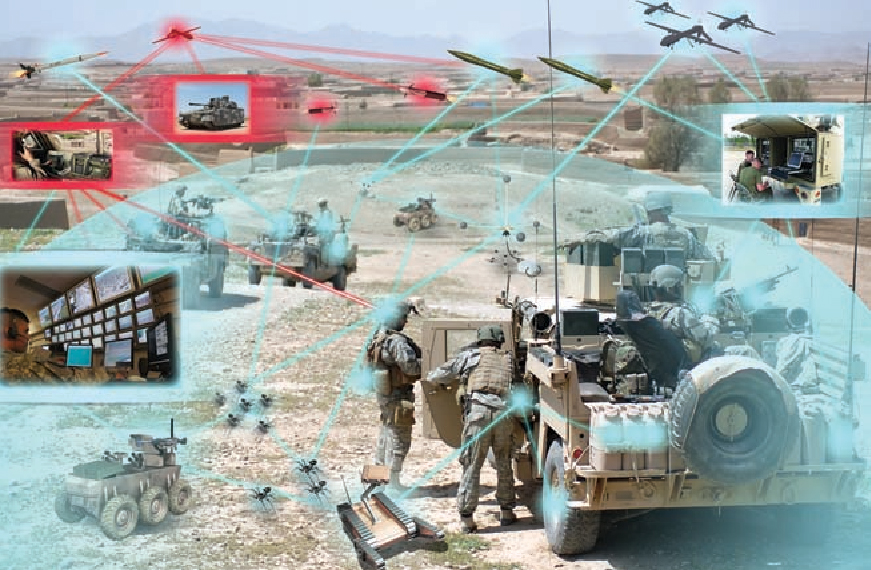
Artificial intelligence has moved beyond data analysis to become a potential combat partner. Autonomous weapons platforms—ranging from swarming micro‑drones to self‑directed artillery—are capable of identifying, tracking, and engaging targets with minimal human input. While fully “killer‑robot” systems remain controversial, many militaries are field‑testing semi‑autonomous tools that can, for instance, suggest fire solutions or prioritize threats in seconds.
Proponents argue that AI can reduce the “fog of war” by processing sensor data faster than any human crew, thereby sparing lives on both sides. Critics counter that delegating lethal decisions to algorithms raises profound moral and legal questions, especially when accountability is murky. As a result, an emerging body of international law is debating standards for meaningful human control.
Hyper‑Connected Battlefields: 5G, Edge Computing, and the Cloud
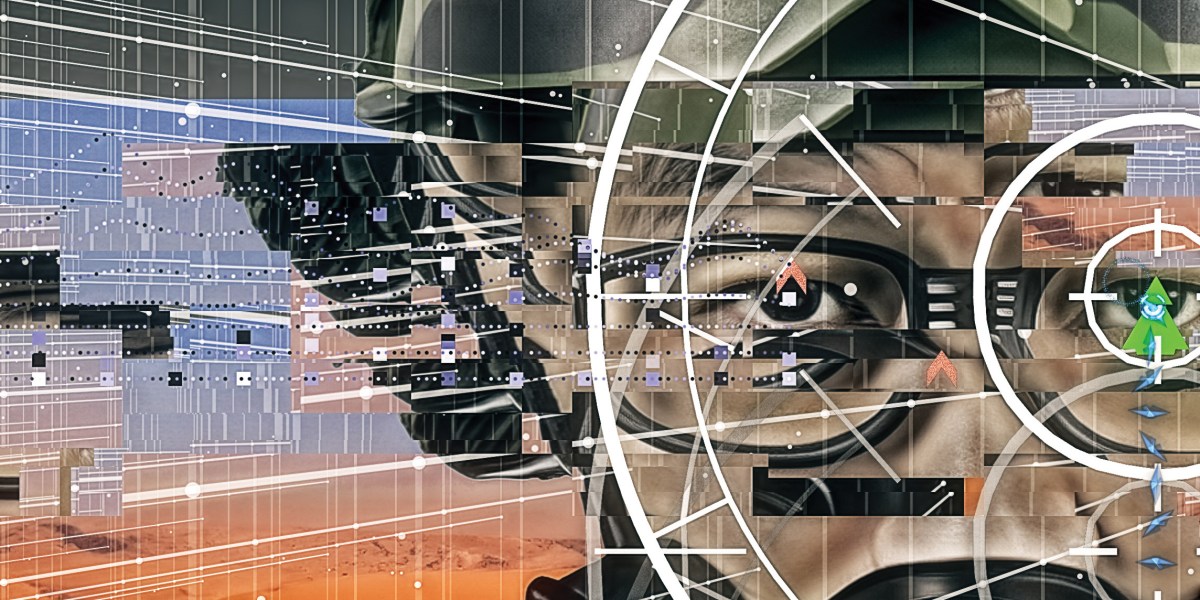
Speed of information is becoming as decisive as firepower. The rollout of 5G networks and edge‑computing nodes promises sub‑millisecond latency for data streams from wearables, vehicle sensors, and reconnaissance satellites. In practice, a soldier’s visor could overlay live enemy positions sourced from drones, while a command center runs predictive simulations in real time.
Such connectivity also fuels cloud‑based war‑gaming, where entire formations practice tactics against AI opponents before ever stepping onto the ground. However, the reliance on continuous data flow introduces vulnerabilities: adversaries may target the same networks with cyber‑attacks, jamming, or even kinetic strikes on communication hubs.
Quantum Technologies: Encryption and Sensing
Quantum mechanics is no longer confined to labs. Quantum key distribution (QKD) offers theoretically unbreakable encryption, allowing forces to exchange orders that cannot be intercepted without detection. Simultaneously, quantum sensors can detect minute variations in magnetic fields, potentially revealing concealed weapons or underground bunkers that traditional radar misses.
While the technology is still nascent, nations are investing heavily. The United States, China, and several European states have launched dedicated quantum research programs, recognizing that whoever masters these tools could gain a decisive intelligence edge.
Energy Weapons and Directed‑Energy Systems
Laser and microwave weapons have transitioned from sci‑fi concepts to operational prototypes. A high‑energy laser mounted on a naval ship can neutralize incoming missiles at the cost of a few kilowatt‑seconds of electricity, offering a low‑cost, unlimited‑ammunition defense against swarms of cheap drones.
On the ground, portable directed‑energy devices could disable electronic equipment or incapacitate personnel without traditional ammunition. The main hurdles remain power generation, cooling, and ensuring safe operation in complex environments, but each successful test brings the concept closer to field deployment.
Bio‑Enhanced Soldiers and Human Augmentation
Advances in biotechnology are reshaping the soldier’s body as much as their gear. Exoskeletons can amplify strength, allowing a combatant to carry heavier loads with reduced fatigue. Meanwhile, neuro‑interfaces aim to shorten reaction times by linking the brain directly to weapon systems or vehicle controls.
These enhancements raise practical questions about training, maintenance, and long‑term health effects. Ethical concerns also surface: if a soldier’s capabilities are heavily augmented, does that alter the legal definition of combatant status? The debate is far from settled.
Logistics Revolution: Additive Manufacturing and Autonomous Resupply
Supply lines have always been the Achilles’ heel of any campaign. 3‑D printing, or additive manufacturing, enables forward units to fabricate spare parts on demand, reducing the need for massive inventory shipments. Coupled with autonomous ground or aerial resupply vehicles, the logistics tail can become a self‑sustaining loop.
This shift not only cuts costs but also adds strategic flexibility. An army can operate deeper in hostile territory without exposing long convoys to ambushes, thereby altering traditional concepts of operational depth.
Ethical and Legal Frontiers
Every technological leap invites a corresponding legal and moral reckoning. International humanitarian law, drafted in an era of human‑controlled weapons, struggles to address autonomous decision‑making, cyber‑offensives, and the use of AI‑generated disinformation as a weapon.
Several NGOs and think tanks have called for a new treaty framework that specifically governs emerging combat technologies. Until such agreements solidify, individual nations will continue to set their own standards, creating a patchwork of regulations that could complicate coalition operations.
What to Watch in the Coming Decade
- Swarm tactics: Hundreds of cheap drones acting as a coordinated force, overwhelming traditional defenses.
- AI‑driven logistics: Machine‑learning algorithms optimizing supply routes in real time.
- Hybrid warfare: Blending kinetic attacks with cyber and information operations to achieve strategic goals.
- Space‑based assets: Persistent surveillance and potentially kinetic weapons stationed in orbit.
These trends are not isolated; they reinforce each other, creating a feedback loop where speed, autonomy, and connectivity become the new pillars of military power.
FAQ
What technologies are likely to dominate future battlefields?
Emerging AI-driven autonomous systems, quantum communications, directed‑energy weapons, and advanced bio‑augmentation are all poised to play central roles, each amplifying speed, precision, and resilience.
How will artificial intelligence change the decision‑making process in combat?
AI can process sensor data and suggest courses of action within milliseconds, potentially outpacing human deliberation. Yet most experts advocate for “meaningful human control” to ensure accountability and ethical compliance.
Are there international rules governing autonomous weapons?
Currently, there is no binding treaty specifically addressing lethal autonomous weapons. Ongoing discussions at the United Nations aim to establish norms, but consensus remains elusive.
What ethical concerns arise from human augmentation on the battlefield?
Issues include the fairness of augmenting only certain troops, the long‑term health impacts of exoskeletons or neural interfaces, and the legal status of enhanced soldiers under existing humanitarian law.









:max_bytes(150000):strip_icc():focal(2529x1438:2531x1440)/90-Day-Fiance-The-Other-Way-Sean-Joanne-4ebe4bd859284fd29c354c605bf1700b.jpg)

