How Gamma Radiation Is Unlocking Physics’ Greatest Mysteries
When you hear the word “gamma,” you might picture sci‑fi weapons or hospital scanners. In reality, gamma radiation is a high‑energy photon that pierces matter with astonishing ease, and physicists have turned that trait into a powerful microscope for the universe’s most elusive phenomena. From probing the heart of atomic nuclei to testing the limits of Einstein’s relativity, gamma rays have become a silent partner in the quest to understand how nature truly works.
The Physics Behind Gamma Radiation
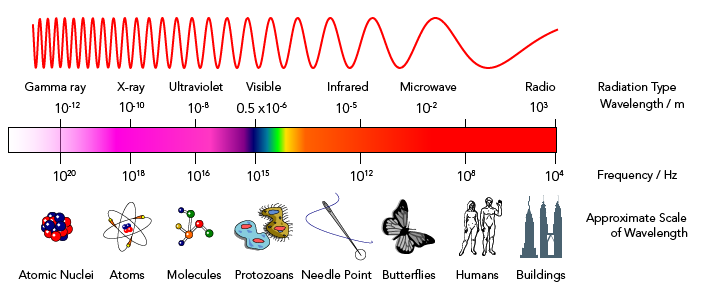
Gamma rays sit at the extreme end of the electromagnetic spectrum, boasting frequencies above 1019 Hz and energies that can exceed several mega‑electronvolts. Unlike visible light, they carry no electric charge, so they interact with atoms primarily through the photoelectric effect, Compton scattering, and pair production. These interactions are predictable enough that researchers can infer the structure of a target simply by measuring how the gamma photons are deflected or absorbed.
Peering Inside the Nucleus
One of the most dramatic applications of gamma radiation is nuclear spectroscopy. By exciting a nucleus with a burst of gamma photons, scientists can watch it emit its own characteristic gamma lines as it relaxes. Each line acts like a fingerprint, revealing the energy levels and spin states inside the atom. This technique has clarified the shape of exotic isotopes, helped map the chart of nuclides, and even confirmed the existence of predicted “magic numbers” where nuclei become unusually stable.
Testing Relativity in the Lab
Because gamma photons travel at the ultimate speed limit—c—they are ideal test particles for Einstein’s theory of special relativity. Experiments that measure the Doppler shift of gamma rays emitted from rapidly moving sources have repeatedly verified time dilation to parts per trillion. More recently, precision gamma‑ray clocks based on nuclear transitions have been proposed as next‑generation standards, potentially outclassing today’s optical atomic clocks.
Gamma Rays as Cosmic Messengers
Outside the laboratory, the cosmos constantly showers Earth with gamma radiation from supernovae, pulsars, and even the enigmatic gamma‑ray bursts (GRBs). Space‑based observatories such as the Fermi Gamma‑ray Space Telescope capture these fleeting flashes, letting astrophysicists trace the most violent processes since the Big Bang. By decoding the energy spectra of distant GRBs, researchers are piecing together how massive stars collapse and how black holes launch relativistic jets.
Medical Marvels and Safety Concerns
In medicine, gamma rays have a dual personality. On one hand, they enable non‑invasive imaging; on the other, they can destroy malignant cells. Techniques like positron emission tomography (PET) rely on gamma photons emitted by short‑lived isotopes to map metabolic activity. Meanwhile, targeted gamma‑knife radiosurgery focuses dozens of beams onto a tumor, delivering a lethal dose while sparing surrounding tissue. Of course, the same penetrating power that makes gamma rays useful also demands strict shielding—lead walls, concrete barriers, and rigorous dose monitoring keep exposure well below harmful levels.
Future Frontiers: Gamma‑Ray Lasers and Quantum Control
Scientists are now flirting with the idea of a gamma‑ray laser, or “grasers,” which would amplify gamma photons in a coherent beam. If realized, such a device could probe nuclear transitions with unprecedented precision, potentially unlocking new pathways for quantum information storage. Even without a full‑blown laser, advances in ultrafast gamma pulse generation are already enabling experiments that watch nuclear reactions unfold on femtosecond timescales—a glimpse that was unimaginable just a decade ago.
Practical Tips for Working With Gamma Radiation
- Shielding matters: Always line work areas with dense materials—lead is standard, but tungsten or depleted uranium can be used for higher energies.
- Dosimetry is essential: Personal dosimeters should be worn at all times; they provide real‑time feedback on cumulative exposure.
- Calibration is key: Regularly verify detectors with known gamma sources (e.g., ^60Co or ^137Cs) to maintain measurement accuracy.
- Safety culture: Never assume a source is “dead”; follow established protocols for storage, transport, and disposal.
Why Gamma Radiation Matters Today
Beyond the headline‑grabbing applications, gamma radiation is reshaping fundamental physics. By serving as both a probe and a probe‑induced catalyst, it bridges the gap between theory and experiment. Whether it’s confirming the subtle predictions of quantum electrodynamics, revealing the hidden symmetries of the atomic nucleus, or mapping the violent births of black holes, gamma rays are the silent storytellers of the subatomic and cosmic realms.
Frequently Asked Questions
What exactly is gamma radiation? Gamma radiation consists of high‑energy photons emitted from the nucleus of an atom during radioactive decay or nuclear reactions. It has no mass or electric charge, making it extremely penetrating.
How is gamma radiation used in medicine? In diagnostics, gamma photons from PET tracers create detailed images of metabolic processes. Therapeutically, focused gamma beams—such as those used in gamma‑knife surgery—target tumors with millimeter precision.
Can gamma rays be harmful? Yes, excessive exposure can damage DNA and increase cancer risk. However, strict safety protocols, proper shielding, and controlled dosing keep occupational and medical use within safe limits.