How IPsec, OSPF, and Static Routes Work Together
When you’re designing a corporate network, three concepts often surface together: IPsec for encryption, OSPF for dynamic routing, and static routes for precise control. Understanding each piece and how they interlock can mean the difference between a smooth, secure backbone and a patchwork of work‑arounds. This guide walks through the fundamentals, the typical use cases, and practical tips for marrying these technologies without over‑complicating your topology.
IPsec Basics: Securing Data Across Untrusted Links
IPsec (Internet Protocol Security) is a suite of protocols that encrypts IP packets at the network layer. It operates in two modes: transport (protecting only the payload) and tunnel (encapsulating the entire original packet). Most site‑to‑site VPNs use tunnel mode, because the whole packet – source, destination, and payload – is hidden from prying eyes.
Key components include:
- AH (Authentication Header) – adds a cryptographic checksum for integrity but does not encrypt.
- ESP (Encapsulating Security Payload) – provides both confidentiality and integrity.
- IKE (Internet Key Exchange) – negotiates security associations (SAs) and handles key management.
When configuring IPsec, you’ll choose an encryption algorithm (AES‑256 is common), a hash algorithm (SHA‑256), and a key‑exchange method (IKEv2 is preferred for its efficiency). The result is a secure tunnel that can carry any IP traffic, including OSPF updates and static‑route traffic.
OSPF Overview: Dynamic Routing for Large Networks
Open Shortest Path First (OSPF) is a link‑state routing protocol designed for interior gateway use. Each router builds a complete map of the network topology and calculates the shortest path to every destination using Dijkstra’s algorithm. OSPF’s hierarchical design – areas and backbone (Area 0) – helps keep calculations manageable and limits flooding of LSAs (link‑state advertisements).
Key OSPF features that matter for security‑focused designs:
- Authentication options – plain text or cryptographic (MD5, SHA‑1/2). While not as strong as IPsec, they prevent rogue routers from injecting false LSAs.
- Fast convergence – when a link fails, OSPF quickly recomputes paths, reducing downtime for VPN tunnels.
- Support for route summarization – helps control the amount of routing information that traverses a VPN.
In practice, OSPF is often run inside an IPsec tunnel, allowing the dynamic exchange of routes without exposing internal topology to the public internet.
Static Routes: Precision When Dynamics Aren’t Needed
Static routes are manually entered paths that tell a router exactly where to send traffic for a given network. They shine in scenarios where you need predictable behavior, such as routing traffic to a remote data center over a dedicated VPN, or providing a fallback path when OSPF isn’t present.
Typical reasons to use static routes alongside OSPF and IPsec include:
- Directing management traffic to a firewall that sits outside the OSPF domain.
- Creating a “stub” route for a remote subnet that only exists inside an IPsec tunnel.
- Implementing a default route to a VPN concentrator when dynamic routing isn’t available.
Because static routes don’t change unless an administrator edits them, they’re immune to the occasional flapping that can occur in a mis‑configured OSPF area. However, they lack the self‑healing qualities of dynamic protocols, so they’re best used sparingly.
Combining the Three: Design Patterns That Work
Here are three common patterns for integrating IPsec, OSPF, and static routes in a real‑world deployment.
1. Full‑mesh VPN with OSPF inside the Tunnel
Each site runs OSPF over its IPsec tunnel. The tunnel encrypts all traffic, while OSPF dynamically advertises each site’s subnets. This arrangement eliminates the need for manual route updates when you add or remove a site.
Implementation tip: Use OSPF’s cost metric to prefer the lowest‑latency path, and enable OSPF authentication (MD5 or better) inside the tunnel for an extra layer of integrity.
2. Hub‑and‑Spoke VPN with Static Routes to the Hub
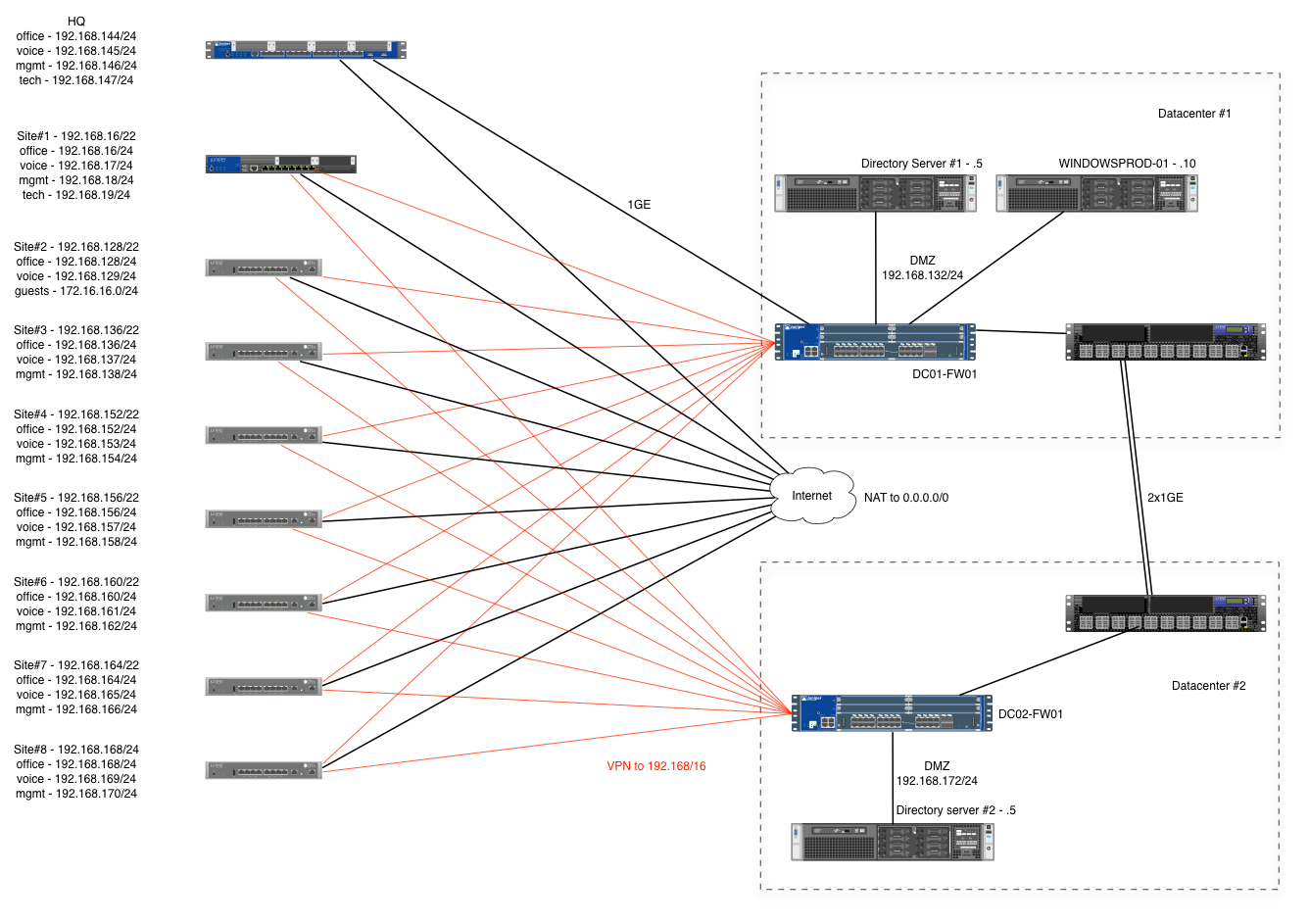
Spoke routers maintain a static route pointing to the hub’s VPN endpoint for all remote subnets. The hub runs OSPF to learn each spoke’s local networks and then redistributes those routes to other spokes via IPsec.
Why this works: Spokes keep a simple configuration (just one static default to the hub), while the hub handles the complex routing logic. If a spoke goes down, OSPF on the hub automatically withdraws the related routes.
3. Hybrid Approach: Static Route for Critical Services, OSPF for Everything Else
Sometimes a particular application—say, a payment gateway—needs a dedicated, low‑latency path. You can place a static route that forces that traffic through a high‑capacity IPsec tunnel, while the rest of the traffic relies on OSPF’s dynamic decisions.
Make sure the static route’s metric is lower (more preferred) than the OSPF‑learned routes for the same destination; otherwise, OSPF will override your intent.
Practical Tips for a Smooth Deployment
- Match MTU sizes across IPsec and OSPF. IPsec adds encapsulation overhead; if the underlying link MTU is too low, OSPF packets may fragment and be dropped.
- Synchronize key lifetimes. IKE SA lifetimes should be long enough to avoid frequent renegotiation during OSPF convergence events.
- Use route maps or policies to filter which OSPF routes are allowed into the VPN. Over‑advertising can expose internal topology unnecessarily.
- Monitor tunnel health. Simple ping tests aren’t enough; track IKE status, ESP SA counters, and OSPF adjacency state to catch silent failures early.
FAQ
Can OSPF run directly over an IPsec tunnel without any additional configuration?
Yes, but you should enable OSPF authentication inside the tunnel and consider using OSPF area design to limit LSA flooding. Without authentication, a compromised tunnel could still allow rogue LSAs.
When should I prefer a static route over OSPF in a VPN environment?
Use a static route for traffic that requires a guaranteed path—like a critical server or a management link—especially when you want to avoid the overhead of OSPF on low‑capacity links.
What happens to OSPF routes if an IPsec tunnel goes down?
The tunnel’s failure triggers OSPF adjacency loss, causing the router to withdraw any routes learned through that neighbor. The network then reconverges on alternate paths, if any are available.
Is it safe to run OSPF authentication and IPsec encryption at the same time?
Absolutely. They protect different layers: IPsec encrypts the payload, while OSPF authentication ensures the routing messages themselves haven’t been tampered with. Using both provides defense‑in‑depth.