How Nuclear Rocket Propulsion Could Transform Space Travel
When we picture the next leap beyond Earth’s orbit, rockets that burn hydrogen or kerosene feel almost quaint. Nuclear rocket propulsion promises thrust and efficiency that could shave months off journeys to Mars, enable cargo hauls to the Moon’s far side, and even make crewed missions to the outer planets plausible. The idea isn’t brand‑new—research labs have tinkered with it since the 1950s—but recent advances in materials and reactor safety are reigniting serious discussions.
What Is Nuclear Rocket Propulsion?
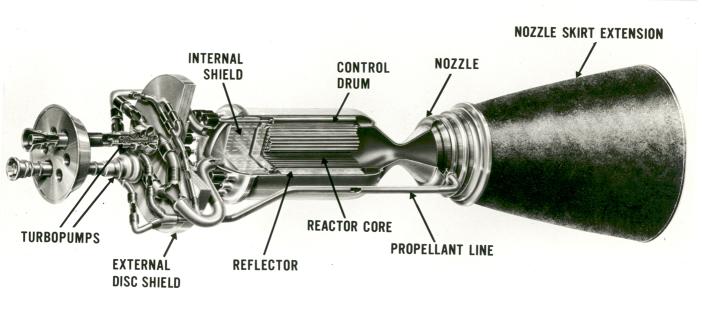
At its core, a nuclear rocket replaces the chemical combustion chamber with a compact nuclear reactor. The reactor heats a propellant—usually liquid hydrogen—to extreme temperatures, then expels it through a nozzle to generate thrust. Because the energy density of nuclear reactions is millions of times greater than chemical fuels, a single kilogram of nuclear fuel can produce the same thrust as tens of thousands of kilograms of conventional propellant.
How the System Generates Thrust
Two main designs dominate the field: the nuclear thermal rocket (NTR) and the nuclear electric propulsion (NEP) system. An NTR directly transfers heat from the reactor to the propellant, achieving exhaust velocities around 8–9 km/s—roughly double that of the best chemical engines. NEP, by contrast, uses the reactor to generate electricity that powers ion or Hall‑effect thrusters, trading raw thrust for exceptional fuel efficiency, ideal for deep‑space cruise phases.
Key Advantages Over Chemical Rockets
- Higher Specific Impulse: Nuclear rockets can achieve specific impulses (Isp) of 800–1000 seconds, compared to 450 seconds for the best liquid hydrogen engines.
- Reduced Launch Mass: Less propellant means lighter launch vehicles, which in turn can carry larger payloads or require smaller boosters.
- Longer Mission Durations: With higher efficiency, spacecraft can linger in orbit for scientific observations without consuming massive fuel reserves.
Technical and Safety Challenges
Despite the promise, several hurdles keep nuclear rockets in the testing phase. Reactor materials must survive intense neutron radiation and thermal cycling without cracking. Moreover, launching a radioactive device poses regulatory and public‑perception obstacles; any launch failure could disperse nuclear material, a scenario agencies are loath to entertain.
To mitigate these risks, modern concepts employ “high‑temperature gas‑cooled reactors” that can shut down automatically if temperatures rise unexpectedly. Additionally, many designs envision assembling the reactor in low Earth orbit, keeping the most hazardous components away from populated launch sites.
Current Programs and Recent Milestones
NASA’s Project Prometheus in the early 2000s laid groundwork for NTR technology, but funding stalled. A resurgence came with the Kilopower reactor tests, demonstrating that small, safe nuclear reactors can operate in space. Private firms such as Blue Origin and SpaceX have expressed interest in hybrid approaches, pairing chemical boosters with nuclear stages for interplanetary cargo.
In 2023, the Department of Energy’s Thermal Propulsion Test Facility successfully fired a prototype NTR engine for a few seconds, confirming that the reactor could heat hydrogen to the required 2,500 °C without structural failure. While still far from flight‑ready, the test proved that decades‑old theoretical models hold up under modern scrutiny.
Future Scenarios: From Moon Bases to Jupiter Flybys
Imagine a lunar “gateway” powered by an NTR tug that shuttles supplies from low Earth orbit to a polar base in a matter of days, not weeks. Or a crewed mission to Europa, using a nuclear electric stage to accelerate gently over months, conserving precious fuel for orbital insertion. These concepts hinge on mastering both the engineering and the political consensus needed to launch nuclear systems safely.
Beyond crewed missions, robotic explorers could benefit from NEP’s sustained low thrust, enabling precise orbital adjustments around asteroids or comets. Such flexibility would improve sample‑return missions and could even support future asteroid‑mining endeavors.
What It Will Take to Get There
Three pillars will determine whether nuclear rockets move from lab benches to launch pads: sustained funding for long‑term research, robust safety frameworks that satisfy international regulators, and public outreach that demystifies the technology. Collaboration across agencies—NASA, ESA, Roscosmos, and emerging space nations—could spread costs and share expertise, accelerating development timelines.
In short, nuclear rocket propulsion stands at the crossroads of engineering ambition and societal responsibility. If the balance tips toward cautious optimism, the next generation of spacecraft may very well carry a tiny, humming reactor, turning the once‑far‑off dream of rapid, affordable interplanetary travel into a practical reality.
Frequently Asked Questions
What is the main difference between nuclear thermal and nuclear electric propulsion?
Nuclear thermal rockets directly heat propellant for high thrust, while nuclear electric systems generate electricity to power ion thrusters, offering higher efficiency but lower thrust.
Are nuclear rockets safe to launch?
Modern designs incorporate passive safety features that shut down the reactor if temperatures exceed limits, and many proposals suggest assembling the reactor in orbit to avoid ground‑based risks.
How much faster could a mission to Mars be with nuclear propulsion?
Depending on the architecture, travel time could drop from about nine months with chemical rockets to roughly six months, shaving weeks off the crew’s exposure to space radiation.
When might we see the first nuclear‑propelled spacecraft?
While exact dates are uncertain, current test programs aim for a demonstrator flight in the early 2030s, provided funding and regulatory approvals stay on track.