How Pressure and Force Interact: A Detailed Physics Look
What Is Pressure?
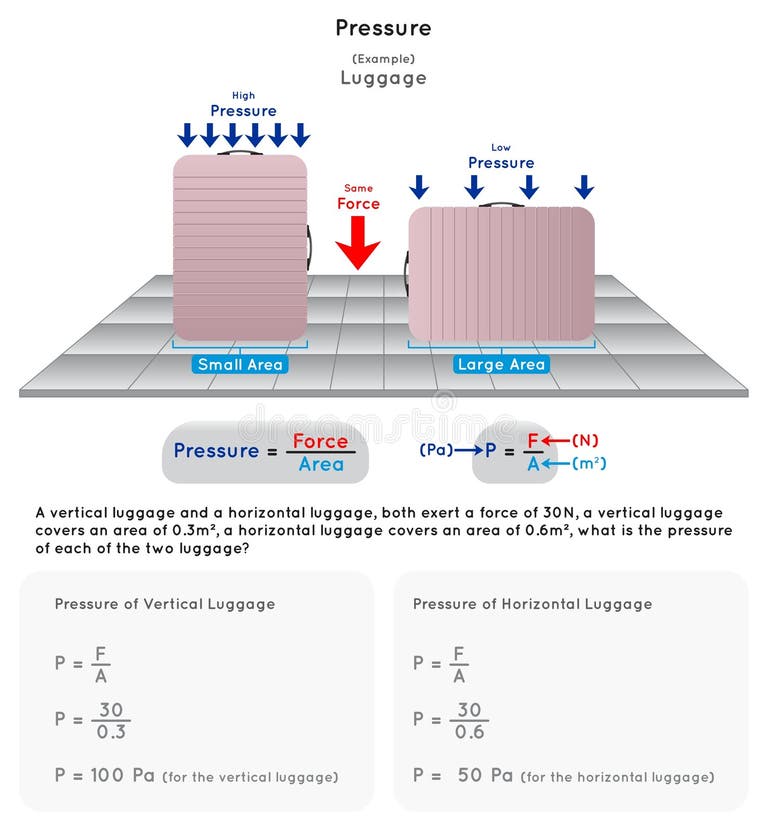
In everyday language pressure feels like a vague notion – “the pressure to finish on time” or “air pressure dropping before a storm.” In physics, however, pressure is a precise quantity: the amount of force applied per unit area. If you push on a surface with a certain force, the smaller the area you press on, the higher the pressure becomes. This relationship is why a thumbtack can pierce a board while a flat hand cannot.
Mathematically, pressure (P) is expressed as P = F / A, where F is the normal force perpendicular to the surface and A is the contact area. The unit in the International System is the pascal (Pa), equal to one newton per square metre.
How Force Relates to Pressure
Force, at its core, is a push or pull that can cause an object to accelerate, deform, or change direction. When that force meets a solid or fluid surface, it distributes itself over the contact region, creating pressure. The key insight is that pressure does not exist without force; it is simply a way of describing how that force is spread out.
Consider a hydraulic press: a modest force applied to a small piston creates a high pressure that, when transmitted through an incompressible fluid, exerts a proportionally larger force on a bigger piston. The system’s ability to multiply force hinges entirely on the pressure‑force connection.
The Mathematical Link
Rearranging the basic definition gives us two useful forms:
- F = P × A – Knowing the pressure and the area lets you calculate the resulting force.
- A = F / P – If you know how much force you can apply and the pressure you can sustain, you can determine the necessary contact area.
These equations are the backbone of engineering calculations, from designing bridge supports to sizing airbags. They also illustrate why engineers pay close attention to both the magnitude of the force and the geometry of the surfaces involved.
Real‑World Examples
One of the most relatable illustrations involves a snowshoe. Walking on fresh powder with regular boots sinks you in because the force of your body weight is concentrated on a relatively small sole area, creating high pressure. Snowshoes spread that weight over a larger surface, reducing pressure and keeping you afloat.
In medicine, blood pressure gauges measure the force that blood exerts on arterial walls per unit area. When arteries narrow (a condition called stenosis), the same cardiac force acts over a smaller area, raising the pressure and forcing the heart to work harder.
Aviation provides another vivid case: the wings of an airplane generate lift by creating a pressure difference between the upper and lower surfaces. The airflow exerts a force on the wing; the wing’s shape ensures that this force translates into lower pressure on top, pulling the aircraft upward.
Common Misconceptions
Many people assume that increasing force automatically means higher pressure, forgetting the role of area. In reality, you can apply a massive force to a large surface and still have modest pressure – think of a massive dam holding back a river.
Conversely, a small force can generate high pressure if confined to a tiny spot. This is why a needle can penetrate skin with barely perceptible effort, whereas a palm cannot.
Another frequent error is treating pressure as a one‑directional phenomenon. In fluids, pressure acts isotropically – equally in all directions – which explains why a balloon expands uniformly when you inflate it.
Practical Tips for Managing Pressure and Force
- When designing a tool that must cut or puncture, minimize the contact area to boost pressure without increasing effort.
- In structural engineering, distribute loads over larger areas to keep pressure within material limits and avoid failure.
- For personal safety, remember that sharp objects concentrate force, so handle knives and pins with care.
- In sports, equipment such as cleats or ski boots is deliberately designed to increase pressure on the ground, improving traction.
Frequently Asked Questions
Why does pressure increase when I push harder with the same tool?
Because the force you apply rises while the contact area stays constant, the ratio F / A grows, leading directly to higher pressure.
Can pressure exist without any force?
No. Pressure is defined as force per unit area, so without an underlying force there is no pressure to speak of.
How do hydraulic systems amplify force?
They use a small piston to create high pressure in a fluid; that pressure is then transmitted unchanged to a larger piston, where the larger area converts the same pressure into a greater output force.
Is atmospheric pressure the same as the pressure inside a car tire?
Both are measurements of force per unit area, but atmospheric pressure is the weight of the air column above us, while tire pressure is the force the air exerts on the inner walls of the tire. They differ in magnitude and purpose.