How Rio de Janeiro Handles ICMS on Inter‑City Sales
If your business ships goods from Rio de Janeiro to another Brazilian municipality, the state‑level value‑added tax known as ICMS will be part of the equation. Navigating the rules can feel like decoding a second language, especially when you’re juggling different rates, exemptions, and documentation requirements. This guide breaks down what you need to know about ICMS for Rio de Janeiro sales between cities, from the basics to the nitty‑gritty of filing.
Understanding ICMS in a nutshell
ICMS (Imposto sobre Circulação de Mercadorias e Serviços) is Brazil’s tax on the movement of goods and certain services. Unlike a federal VAT, each state sets its own rates and rules, which means the Rio de Janeiro tax authority, Secretaria de Estado de Fazenda (SEFAZ‑RJ), has its own nuances.
Key points to remember:
- Origin‑based taxation: The tax is generally calculated where the product originates.
- Destination relevance: For inter‑city sales, the destination municipality may affect the applicable rate, especially if the destination state has a different regime.
- Tax credit system: Businesses can offset ICMS paid on inputs against the tax due on sales, but only if proper documentation is kept.
How ICMS applies to sales between cities in Rio de Janeiro
When a company in Rio de Janeiro sells to a buyer in another city—whether within the same state or across state lines—the transaction is classified as an inter‑state or inter‑municipal operation. The default rule is that the origin state (Rio) levies the tax, but there are two notable exceptions.
First, if the buyer is in a different state, the destination state’s rate may apply under the “substituição tributária” (ST) regime, where the seller is responsible for collecting and forwarding the tax on behalf of the buyer’s state. Second, certain commodities—like fuel, cigarettes, and telecommunications services—have specific ST rules that override the general principle.
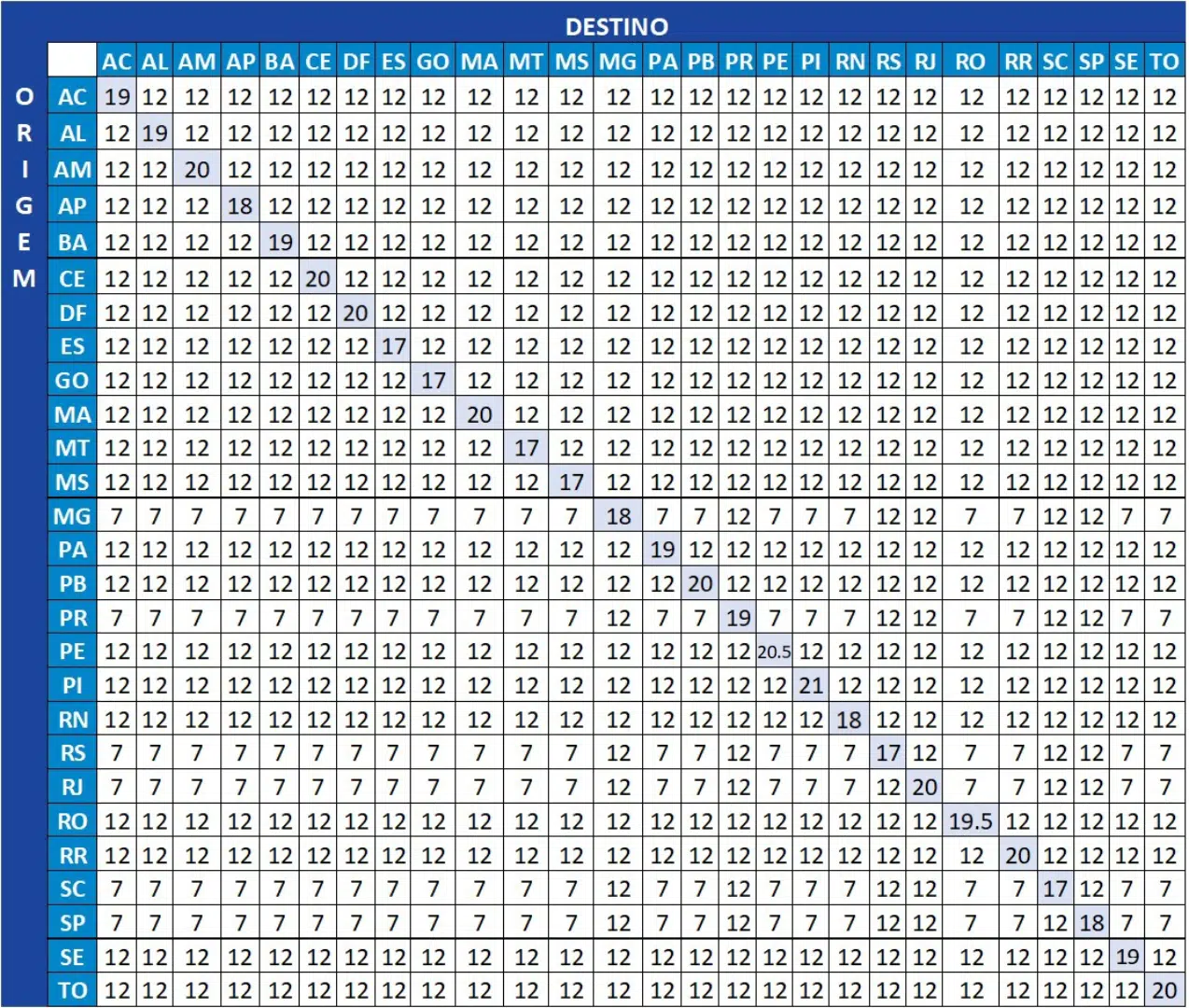
In practice, most regular goods shipped from Rio to another municipality inside Rio will be taxed at the standard Rio rate, currently ranging from 12% to 18% depending on the product classification (NCM code). For shipments crossing state borders, you’ll usually see a 7% to 12% rate, but the exact figure hinges on the destination’s legislation.
Key rates and the role of substituição tributária
The base ICMS rate for Rio de Janeiro is 18% for most merchandise. However, a reduced 12% applies to essential items such as foodstuffs, medicines, and certain agricultural products. When ST is in effect, the seller must calculate the tax as if the buyer were the final consumer, often using a “margem de valor agregado” (MVA) multiplier that inflates the taxable base.
For example, a company selling a product with an MVA of 30% will calculate the ST tax on a base that is 1.30 times the product’s price. This can raise the effective tax burden substantially, so it’s crucial to verify whether your product falls under an ST regime before issuing the invoice.
Practical steps for businesses
To stay compliant, follow this checklist:
- Identify the NCM code of each product and confirm the applicable ICMS rate in Rio de Janeiro.
- Determine whether the transaction triggers substituição tributária—consult SEFAZ‑RJ’s official tables or a tax advisor.
- Issue a proper electronic invoice (NF‑e) that clearly marks the ICMS amount, the tax regime (normal or ST), and the destination municipality.
- Record the tax credit on your bookkeeping system so you can offset future ICMS liabilities.
- File the monthly ICMS declaration (GIA) through the SEFAZ‑RJ portal, ensuring all inter‑city sales are reported accurately.
Automation can help. Many ERP solutions integrate directly with the SEFAZ system, pulling the correct rates and generating compliant NF‑e documents with a few clicks.
Common pitfalls and how to avoid them
Even seasoned traders stumble over a few recurring issues:
- Misclassifying the product: Using the wrong NCM code can lead to an incorrect tax rate and potential fines.
- Overlooking ST obligations: If a product is subject to substituição tributária and you treat it as a normal sale, the tax authority may reassess the transaction with penalties.
- Late or missing NF‑e issuance: Brazilian tax law mandates that the electronic invoice be sent within 24 hours of the sale. Delays can trigger administrative sanctions.
- Improper credit documentation: Forgetting to retain purchase invoices with valid ICMS credit details means you lose the right to offset those amounts.
Regularly reviewing SEFAZ‑RJ updates and attending state‑run webinars can keep you ahead of rule changes, especially since the government frequently revises MVA percentages and exemption lists.
Frequently Asked Questions
What is the standard ICMS rate for goods shipped from Rio de Janeiro to another city within the same state?
Generally, the rate is 18% for most products, but essential items enjoy a reduced 12% rate. Always verify the specific NCM classification to confirm.
Do I need to collect ICMS if I sell to a buyer in a different Brazilian state?
Yes, but the tax may be collected under the substituição tributária regime, meaning you calculate and remit the tax based on the destination state’s rules rather than Rio’s standard rate.
How can I claim ICMS credits on purchases made for inter‑city sales?
Keep the electronic invoices (NF‑e) for all inputs, ensure the ICMS amount is clearly indicated, and record the credit in your accounting software. The credit can then be applied against the ICMS due on your sales.
Is an electronic invoice mandatory for every inter‑city transaction?
Yes. Brazilian law requires the issuance of a NF‑e for all commercial operations, including sales between municipalities. The invoice must contain the correct ICMS details and be transmitted to SEFAZ‑RJ within 24 hours.