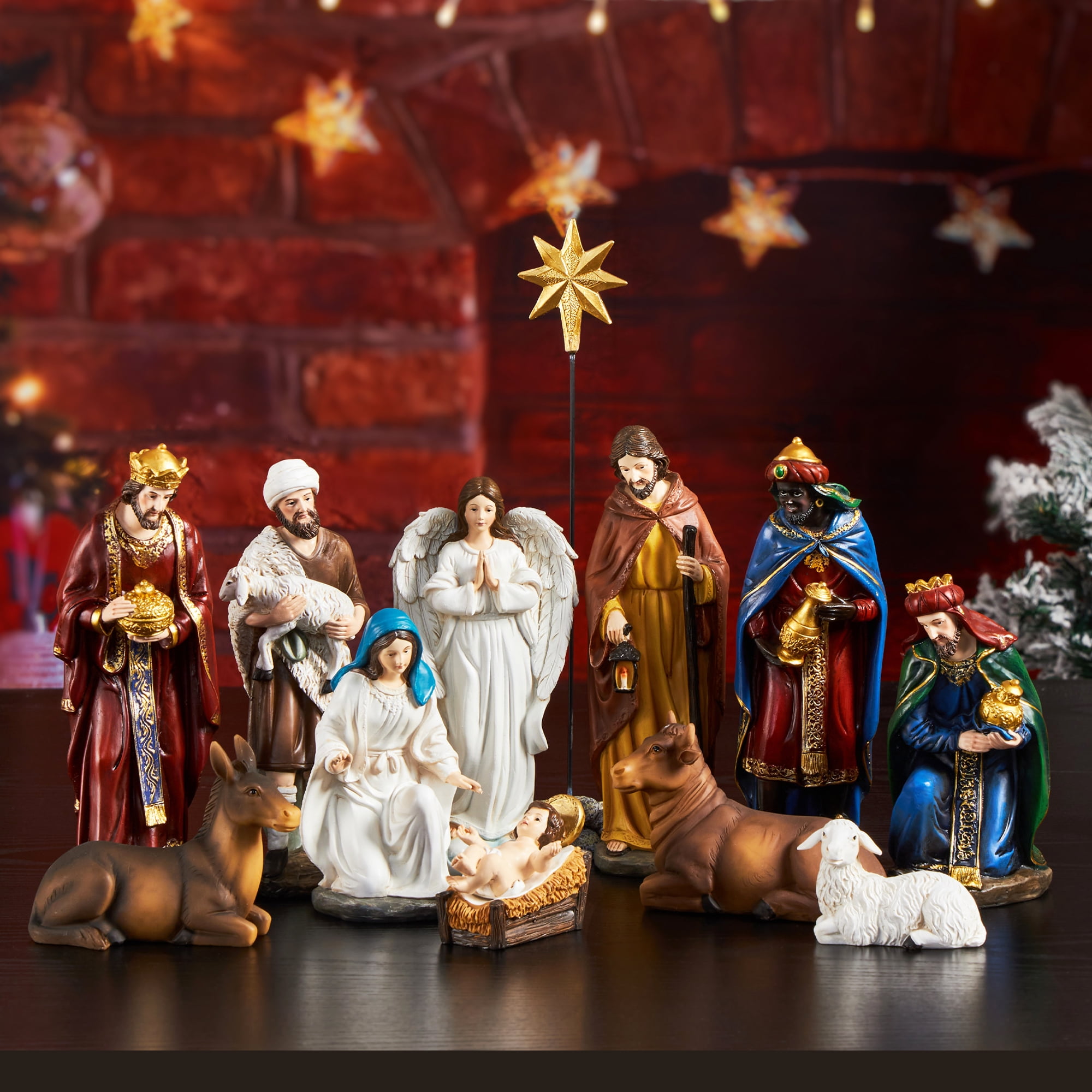
How to Arrange Nativity Scene Figures for a Stunning Display
When the holiday season rolls around, many families pull out their cherished nativity sets and wonder where each character belongs. The placement of nativity scene figures isn’t just about tradition; it’s about creating a visual story that draws the eye and honors the moment. Whether you have a modest tabletop set or a sprawling garden tableau, a thoughtful layout can turn a simple collection of figurines into a warm, inviting tableau that feels both reverent and festive.
Key Principles for Placement of Nativity Scene Figures
Before you start moving pieces around, consider three guiding ideas: focus, balance, and narrative flow.
- Focus: The infant Jesus should anchor the scene. Position the manger at the center or slightly off‑center if you’re working with a rectangular base, allowing surrounding figures to naturally gravitate toward it.
- Balance: Distribute larger figures—like the shepherds, the three Magi, and the animals—so the composition feels stable from every angle. Avoid clustering all heavy pieces on one side; instead, mirror them across the central axis.
- Narrative flow: Imagine a story unfolding as someone walks around the display. Arrange the characters so the eye moves from the humble stable, out to the adoring shepherds, then toward the regal Magi bearing gifts.
Step‑by‑Step Layout Guide
Follow these practical steps to achieve a harmonious arrangement, regardless of the size of your display surface.
1. Choose the right base
Start with a stable platform—cardboard, wood, or a decorative tray. If you’re outdoors, a weather‑proof table or a sand‑filled box works well. Ensure the surface is level; a tilted base can make the whole scene look off‑kilter.
2. Position the manger and the holy family
Place the manger at the chosen focal point, then set Mary and Joseph on either side. Their posture should suggest protective closeness to the baby. If the set includes a blanket or a small lantern, drape them lightly for added warmth.
3. Add the animals
Traditionally, a donkey and an ox flank the stable. Position them slightly forward, as if they’re curious onlookers. If you have goats, sheep, or a camel, spread them around the perimeter to fill empty corners and reinforce the rustic vibe.
4. Arrange the shepherds
Shepherds often appear in small groups. Place one near a hill or a rock to imply a watchful stance, and the others a few steps away, perhaps holding a staff or a lamb. Their placement should hint at movement—like they’ve just arrived after hearing the angel’s call.
5. Position the Magi
The three wise men usually occupy the opposite side of the scene from the shepherds, suggesting a journey from the East. Space them evenly, allowing each to hold their gift (gold, frankincense, myrrh) prominently. A small star or a candle can act as a visual cue pointing toward the baby.
6. Add finishing touches
Consider adding a low fence, a few potted evergreens, or a subtle backdrop of rolling hills. Small props—like a wooden cart or a simple lantern—can add depth without overcrowding the tableau.
Tips for Different Settings
Not every nativity set lives on a coffee table. Here are a few adaptations for varying environments.
Tabletop displays
Keep the arrangement compact. Use a shallow dish of sand or faux snow to anchor the figures and give a seasonal feel. If space is limited, prioritize the holy family, a couple of animals, and at least one shepherd or Magi to convey the story.
Garden or patio installations
Scale up the base—use a large wooden pallet or a sturdy garden table. Weather‑proof the figures with a light sealant, and consider adding string lights or a battery‑operated star overhead. A low fence can help define the area and keep curious pets at bay.
Multi‑level displays
If you have shelves or a tiered stand, assign each level a different part of the narrative: the bottom tier for the stable, the middle for the shepherds, and the top for the Magi approaching from the distance. This vertical storytelling adds visual intrigue.
Common Mistakes and How to Avoid Them
Even seasoned decorators stumble over a few pitfalls. Spotting them early can save you a lot of re‑arranging.
- Overcrowding: Packing too many figures into a small area creates visual chaos. Step back often and remove any piece that doesn’t contribute to the story.
- Ignoring scale: A large animal placed too close to a tiny baby can look disproportionate. Keep size relationships in mind; if needed, use a stepped platform to raise taller figures.
- Neglecting lighting: Dim lighting can hide details. A soft glow from a nearby candle or LED strip highlights the faces and adds a serene ambiance.
- Static composition: A scene that feels flat can be revived by slight offsets—tilt a shepherd’s staff, angle a Magi’s cloak, or stagger the animals.
Frequently Asked Questions
What order should I place the figures in?
Start with the manger and the holy family, then add animals, shepherds, and finally the Magi. This sequence builds the scene outward from its spiritual core.
How far apart should the shepherds stand from the stable?
Leave enough space for each shepherd to be seen individually—typically a foot (30 cm) away from the manger, adjusting based on the overall size of your base.
Can I mix modern and traditional figurines?
Yes, as long as the mix doesn’t distract from the narrative. Modern pieces can add a fresh twist, but keep the overall aesthetic cohesive by using similar color palettes or materials.
Is it okay to use artificial snow or other décor?
Absolutely. A light dusting of artificial snow or a few sprigs of evergreen can enhance the seasonal feel without overwhelming the figures.