How to Convert Liters to Kilograms: A Simple Guide
When you need to translate a volume measured in liters into a mass expressed in kilograms, the key ingredient is density. Without it, the conversion is impossible because a liter of helium weighs far less than a liter of honey. This guide walks you through the underlying principle, shows step‑by‑step calculations, and highlights common pitfalls you might encounter in everyday situations.
Understanding Why Density Matters
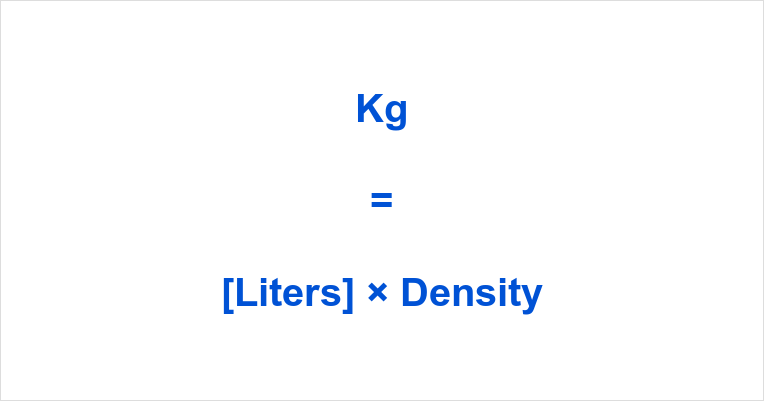
Liters measure space; kilograms measure weight. The relationship between the two hinges on how tightly packed the material’s molecules are. Mathematically, the formula is:
Mass (kg) = Volume (L) × Density (kg/L)
For water at 4 °C, the density is approximately 1 kg/L, so one liter of water weighs one kilogram. Change the substance, and the density changes, altering the result.
Step‑By‑Step Conversion Process
Follow these three simple steps for any material:
- Identify the density. Look it up in a reliable reference (material safety data sheet, textbooks, or reputable online databases).
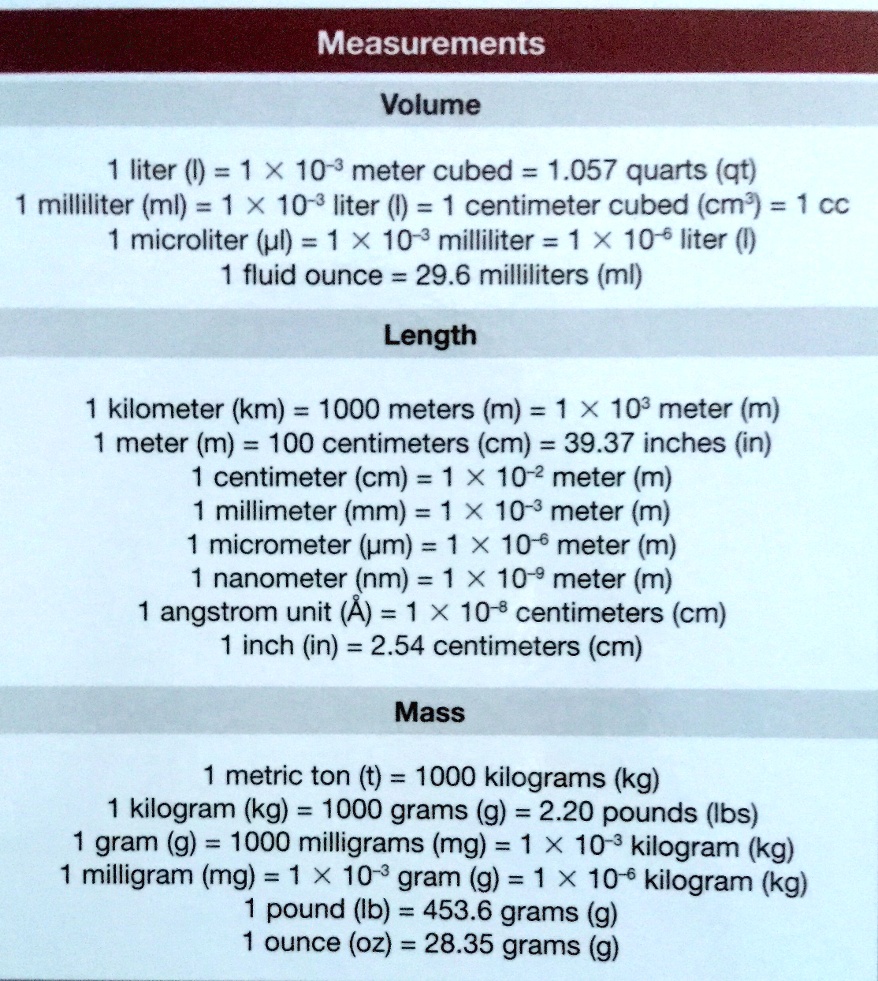
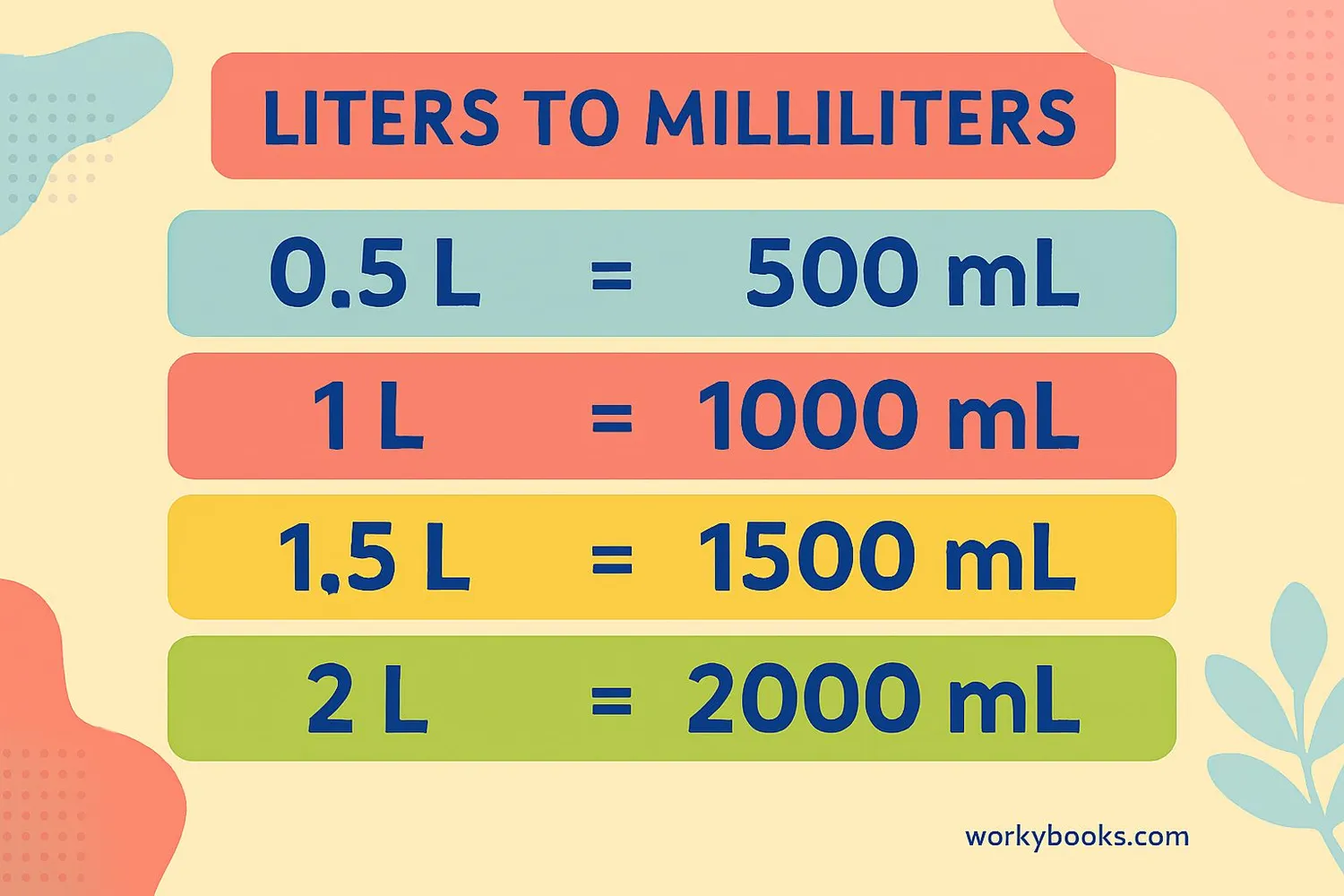
- Measure the volume in liters. If your container is marked in milliliters, divide by 1,000.
- Multiply. Apply the formula above to obtain the mass in kilograms.
For example, if you have 2 L of olive oil with a density of 0.92 kg/L, the mass is 2 × 0.92 = 1.84 kg.
Quick Reference Densities
- Water: 1.00 kg/L (at 4 °C)
- Milk: 1.03 kg/L
- Honey: 1.42 kg/L
- Gasoline: 0.74 kg/L
- Air (at sea level, 20 °C): 0.0012 kg/L
Common Situations Where You’ll Need the Conversion
Cooking and baking often call for precise weight measurements, especially when scaling recipes. In the laboratory, reagents are frequently supplied by volume, but protocols require mass. Even in shipping, knowing the weight of a liquid cargo is essential for compliance with transport regulations.
Consider a home brewer who wants to add 5 L of malt extract to a batch. If the extract’s density is 1.35 kg/L, the mass contribution is 5 × 1.35 = 6.75 kg. That figure helps determine the total grain bill and the brewing equipment’s load limits.
Dealing with Temperature and Pressure
Density isn’t static; it shifts with temperature and, for gases, pressure. Warm water expands, lowering its density to roughly 0.998 kg/L at 20 °C, which means a liter will weigh a bit less than a kilogram. For gases, use the ideal gas law (PV = nRT) to estimate density before converting.
When precision matters—such as in scientific research—record the temperature of the liquid and consult density tables that account for thermal expansion.
Tools and Apps That Simplify the Math
Many smartphone calculators let you input volume and select a substance from a built‑in database, automatically performing the conversion. Online converters work similarly, often offering a dropdown list of common liquids. If you prefer a manual approach, a simple spreadsheet with two columns (volume, density) can calculate mass instantly for a whole list of items.
Potential Mistakes to Avoid
- Using the wrong density. Always verify that the density matches the exact temperature and purity of the material.
- Confusing milliliters with liters. Remember that 1 L = 1,000 mL; a misplacement of three zeros can throw off the result dramatically.
- Neglecting units. Keep an eye on whether the density you find is in kg/L, g/mL, or another unit. Convert to kg/L before multiplying.
FAQs
Can I convert liters to kilograms without knowing the substance?
No. Since density varies widely between materials, you need at least an approximate density value to perform the conversion accurately.
Is the conversion the same for solids?
For solids, you typically measure mass directly. If you only have a volume, you can still use the same formula, but you must obtain the solid’s bulk density, which may differ from its true material density due to air gaps.
How do I handle mixed liquids, like a cocktail?
Calculate the mass of each component separately using its own density, then sum the results. This yields the total mass of the mixture.
What if I only have the weight in pounds?
First convert pounds to kilograms (1 lb ≈ 0.4536 kg), then divide by the density to find the volume in liters.