How to Find the GCF of 32, 40, and 88 (Step‑by‑Step Guide)
If you’re looking for an inside look at finding the GCF of 32, 40, and 88, you’ve come to the right place. The greatest common factor—sometimes called the greatest common divisor—tells you the largest number that divides each of the given values without leaving a remainder. Knowing how to uncover it can simplify fraction reduction, solve ratio problems, and even aid in algebraic factoring.
What Exactly Is the GCF and Why It Matters
The GCF is the biggest shared factor among a set of integers. For example, the GCF of 8 and 12 is 4 because 4 is the largest number that fits evenly into both. In practical terms, the GCF helps you:
- Reduce fractions to their simplest form.
- Identify common measurement units in word problems.
- Break down algebraic expressions for factoring.
When the numbers get larger or you have three or more of them, the process can feel a bit daunting. That’s why mastering a couple of reliable techniques—prime factorization and the Euclidean algorithm—is worth the effort.
Method 1: Prime Factorization Made Simple
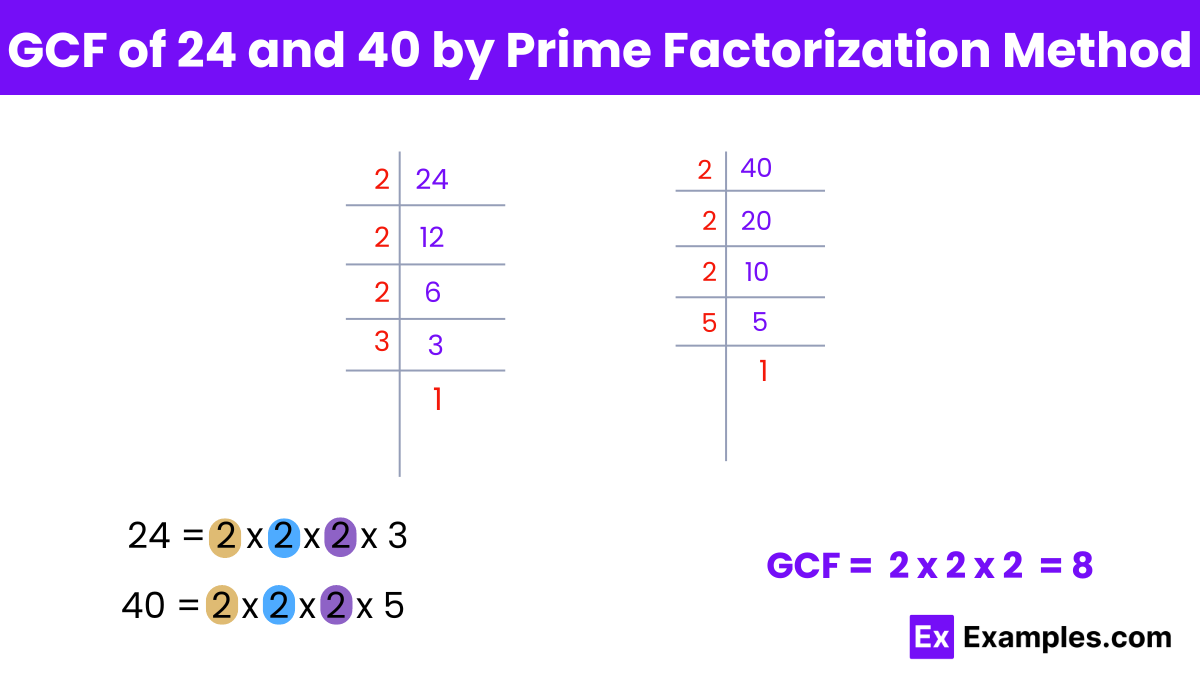
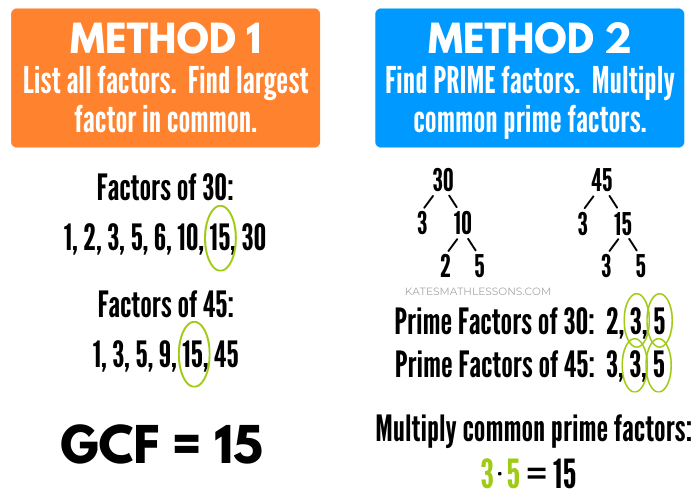
Prime factorization means breaking each number down into its building‑block primes. Once you have the prime lists, the GCF is simply the product of the primes they all share.
Step‑by‑step for 32, 40, and 88
- Factor 32. 32 = 2 × 2 × 2 × 2 × 2 (that’s 2⁵).
- Factor 40. 40 = 2 × 2 × 2 × 5 (or 2³ × 5).
- Factor 88. 88 = 2 × 2 × 2 × 11 (or 2³ × 11).
Look for the primes that appear in every list. All three numbers contain at least three 2’s. No other prime—5, 11—appears across the board.
Multiply the common primes: 2 × 2 × 2 = 8. Therefore, the GCF of 32, 40, and 88 is 8.
Method 2: The Euclidean Algorithm for Speed
The Euclidean algorithm works by repeatedly subtracting or taking remainders until you hit zero. It’s especially handy when the numbers are large or when you prefer mental math.
Applying the algorithm
- Start with the two smallest numbers: GCF(32, 40). Divide 40 by 32, which leaves a remainder of 8.
- Now find GCF(32, 8). 32 divided by 8 leaves no remainder, so the GCF of 32 and 40 is 8.
- Finally, combine the result with the third number: GCF(8, 88). 88 divided by 8 leaves a remainder of 0, confirming the GCF remains 8.
In just a few quick steps, the Euclidean algorithm arrives at the same answer without writing out any prime lists.
Quick Tips to Remember
- Always start with the smallest pair; the GCF can never be larger than the smallest number.
- If you spot an obvious common factor—like an even number indicating a factor of 2—factor it out early.
- For three or more numbers, find the GCF of the first two, then use that result with the next number.
Why 8 Is the Right Answer (And Not 4 or 16)
It’s tempting to settle on 4 because all three numbers are even, but a quick check shows each contains at least three 2’s. Conversely, 16 would require each number to have four 2’s, which 40 and 88 lack. The systematic methods above eliminate the guesswork and confirm that 8 is the largest shared divisor.
Common Mistakes and How to Avoid Them
Skipping the smallest pair. Jumping straight to GCF(32, 88) can give a misleading intermediate result, making you overlook the influence of the middle number.
Confusing GCF with LCM. The least common multiple (LCM) finds the smallest shared multiple, not the greatest shared factor. Mixing the two up leads to completely different numbers.
Leaving out a prime factor. When using prime factorization, double‑check each breakdown. A missed 2 or 5 will throw off the final product.
FAQ
Can I use a calculator to find the GCF?
Yes, many scientific calculators have a built‑in “gcd” function. Enter the numbers in any order, and the device will return the greatest common divisor instantly.
Is there a shortcut for numbers that are all even?
When every number is even, you know at least a factor of 2 is shared. Keep dividing by 2 until at least one of the numbers becomes odd; the number of successful divisions tells you the highest power of 2 common to all.
Does the Euclidean algorithm work with more than two numbers?
Indirectly, yes. Compute the GCF of the first two numbers, then treat that result as the new “first” number and repeat with the next number in the list. Continue until you’ve processed all values.
What if the GCF turns out to be 1?
A GCF of 1 means the numbers are relatively prime—they share no common factors other than 1. In that case, fractions built from those numbers are already in simplest form.