Mastering Passive Voice: Formulas, Rules, and Real‑World Examples
When you hear a sentence like “The cake was eaten by the kids,” you’re listening to the passive voice in action. It flips the usual subject‑verb‑object order, letting the focus shift from who performed the action to who (or what) received it. This shift can make writing sound more formal, emphasize results, or simply hide the doer when it’s unknown. Below we’ll unpack the core formulas, walk through each tense, and give you plenty of examples to keep your grammar muscles flexed.
What Is Passive Voice, Anyway?
In plain terms, the passive voice swaps the roles of the subject and object. The object of an active sentence becomes the subject of the passive version, while the original subject either disappears or slides into a “by‑phrase.” Think of it as a grammatical spotlight that can be moved around to highlight different parts of the action.
Basic Passive Voice Formula
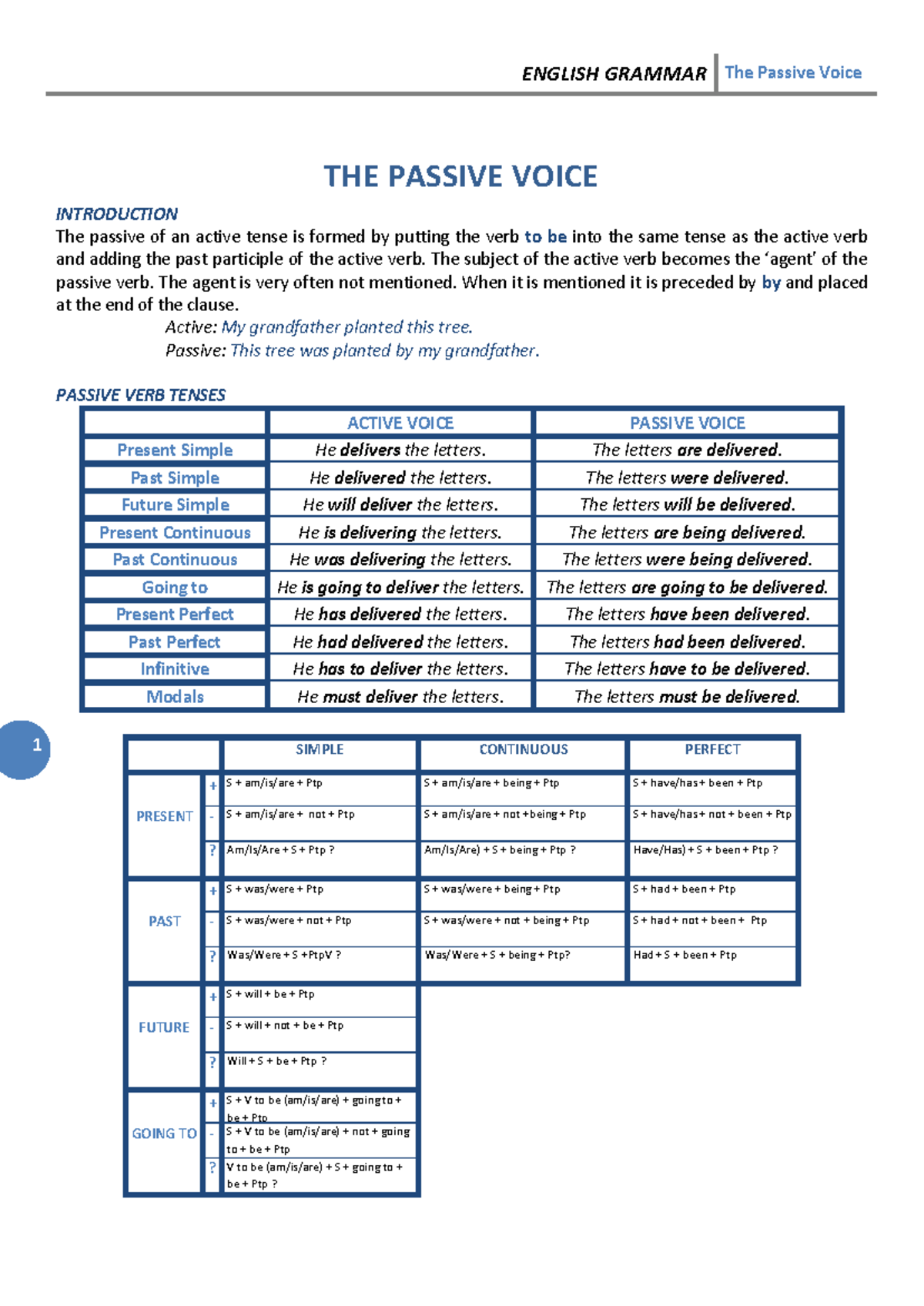
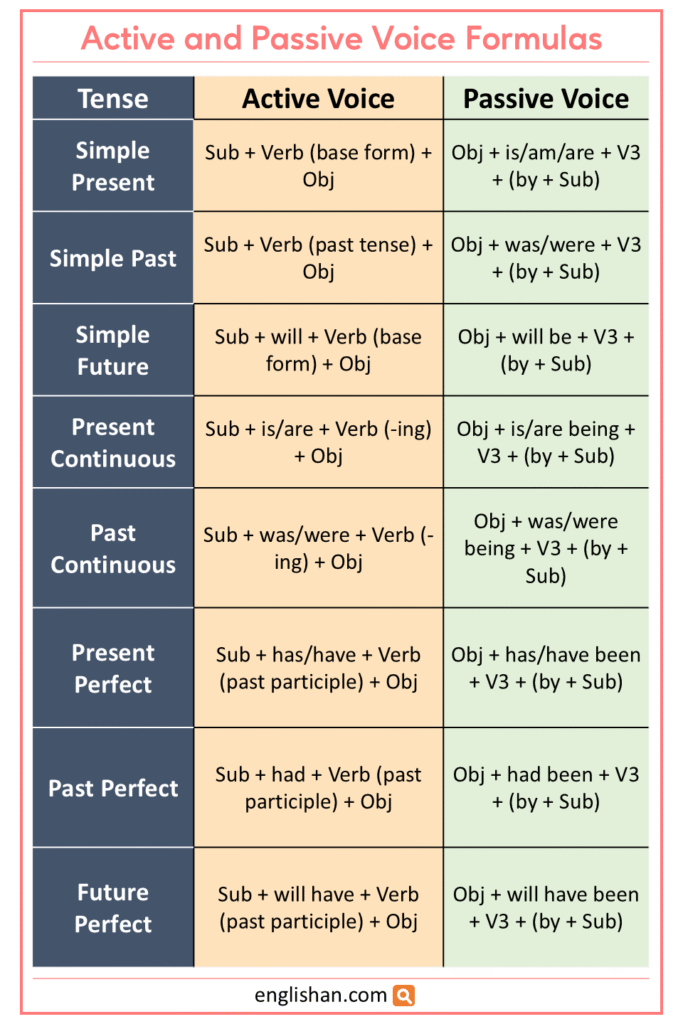
The skeleton of any passive construction is straightforward:
- Subject + form of “to be” + past participle (+ optional “by‑phrase”).
That’s it. The form of “to be” changes with tense, and the past participle stays the same regardless of the subject. For example, “The letter is written (present simple) by Sarah” versus “The letter was written (past simple) by Sarah.”
Tense‑by‑Tense Passive Forms
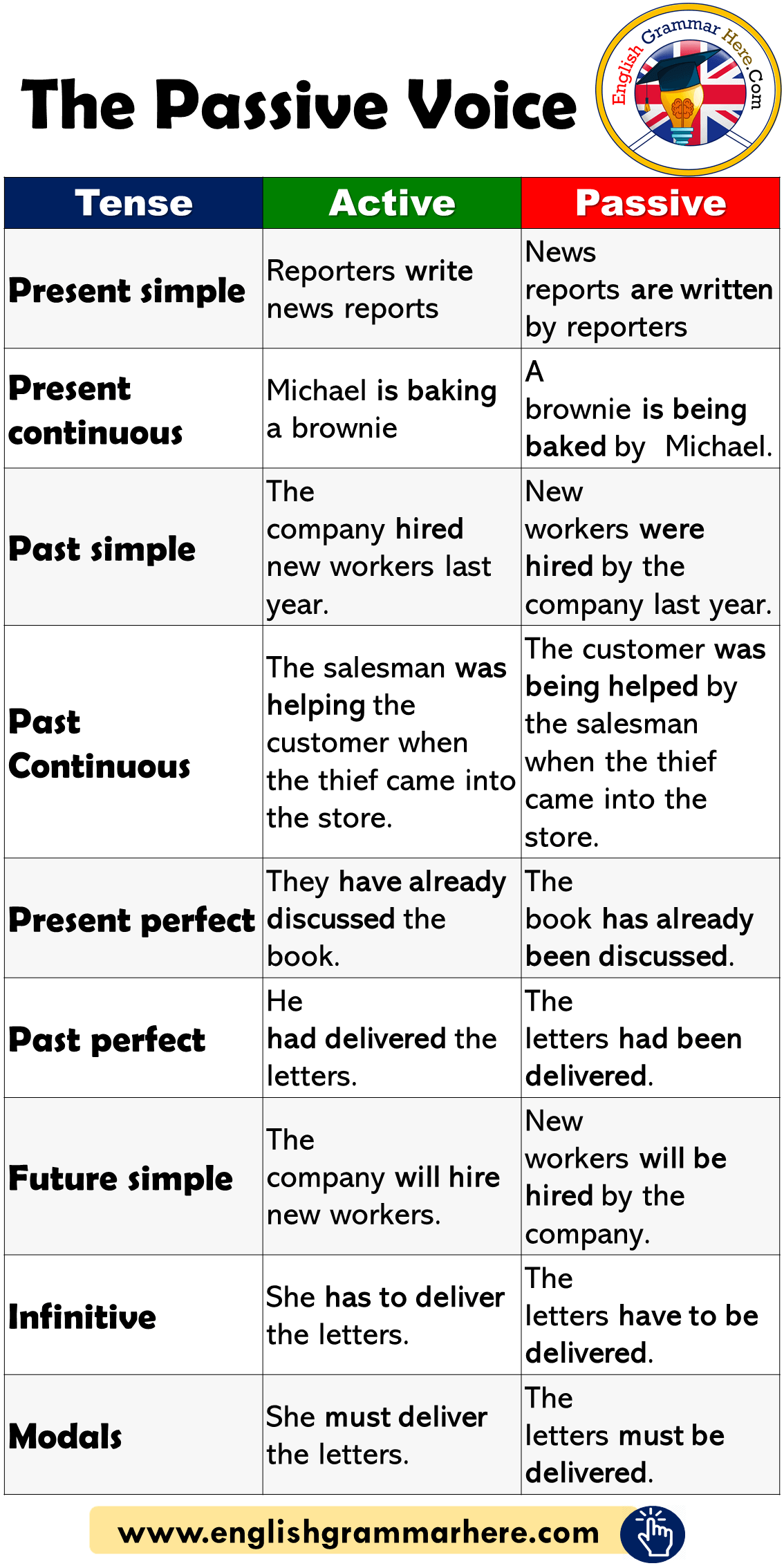
Because the “to be” verb is the only moving part, you can line up every English tense with its passive counterpart. Here’s a quick reference you can keep at your desk:
- Simple Present: is/are + past participle (e.g., “The reports are filed every Friday.”)
- Simple Past: was/were + past participle (e.g., “The cookies were baked yesterday.”)
- Present Continuous: am/is/are being + past participle (e.g., “The road is being repaired right now.”)
- Past Continuous: was/were being + past participle (e.g., “The house was being painted when the storm hit.”)
- Present Perfect: has/have been + past participle (e.g., “The project has been completed ahead of schedule.”)
- Past Perfect: had been + past participle (e.g., “The invitation had been sent before the date changed.”)
- Future Simple: will be + past participle (e.g., “The new policy will be implemented next month.”)
- Future Perfect: will have been + past participle (e.g., “By tomorrow, the data will have been analyzed.”)
Notice how the participle never changes; only the auxiliary “to be” moves through the timeline.
Common Pitfalls and How to Dodge Them
Even native speakers trip over the passive voice from time to time. Here are a few mistakes worth watching for:
- Leaving out the “by‑phrase” when it matters. If the agent is crucial to meaning, omit it at your peril. “The window was broken” leaves us guessing; “The window was broken by the baseball” clears the fog.
- Using a passive with a stative verb. Verbs like “know,” “belong,” or “own” don’t naturally take a passive form. “The secret is known” works, but “The secret is owned” feels odd.
- Mixing tenses unintentionally. Remember the “to be” must match the intended time frame. “The report is submitted yesterday” is a no‑no; it should be “was submitted.”
- Overusing the passive. While it can add variety, a paragraph full of passives becomes dull. Aim for a balance that keeps the narrative lively.
Everyday Examples to Practice
Take a look at these paired sentences. Try turning the active version into a passive one, and vice versa. It’s a handy way to internalize the formulas.
- Active: “The chef cooks the soup.”
Passive: “The soup is cooked by the chef.” - Active: “Scientists will discover new planets.”
Passive: “New planets will be discovered by scientists.” - Active: “The committee has approved the budget.”
Passive: “The budget has been approved by the committee.” - Active: “Someone is stealing my bike.”
Passive: “My bike is being stolen (by someone).” - Active: “They had repaired the bridge before the flood.”
Passive: “The bridge had been repaired before the flood.”
Notice how the focus shifts each time. In the passive versions, the objects—soup, planets, budget—take center stage, while the doers are tucked into optional “by‑phrases.”
FAQ
When should I choose passive over active?
Use passive when the actor is unknown, irrelevant, or you want to emphasize the receiver of the action. Academic writing, news reports, and formal instructions often favor this style.
Is the passive voice always more formal?
Not necessarily. While many formal documents employ passives, casual speech rarely does. Overusing passives can make even a formal piece feel stiff.
Can all verbs be turned into the passive?
Most transitive verbs (those that take an object) can, but intransitive verbs—like “arrive” or “sleep”—lack a direct object and therefore resist passive conversion.
Do I need a “by‑phrase” every time?
No. If the agent is obvious from context or unimportant, you can drop the “by‑phrase” entirely, leaving the sentence concise and focused on the action’s recipient.