PCR Technique Explained: What It Is, How It Works and Key Findings
The polymerase chain reaction, or PCR, has become a household name in labs worldwide. Whether you’ve heard it mentioned in a news story about COVID‑19 testing or in a genetics class, the basic idea is simple: make millions of copies of a specific DNA fragment in a matter of hours. Yet the science behind that convenience is a blend of clever chemistry, precise engineering, and a dash of ingenuity that continues to evolve.
What Is the Polymerase Chain Reaction?
At its core, PCR is a molecular technique designed to amplify a targeted DNA sequence. Imagine having a single page ripped from a massive encyclopedia and needing enough copies to read the whole thing. PCR takes that lone page and, through a series of temperature‑controlled steps, produces enough identical pages to fill a bookshelf.
The method was pioneered in 1983 by Kary Mullis, whose insight earned him a Nobel Prize. Since then, the PCR technique has become indispensable across fields ranging from forensic science to clinical diagnostics, enabling researchers to detect pathogens, genotype individuals, and explore evolutionary relationships with unprecedented speed.
How Does PCR Work? The Three Core Steps
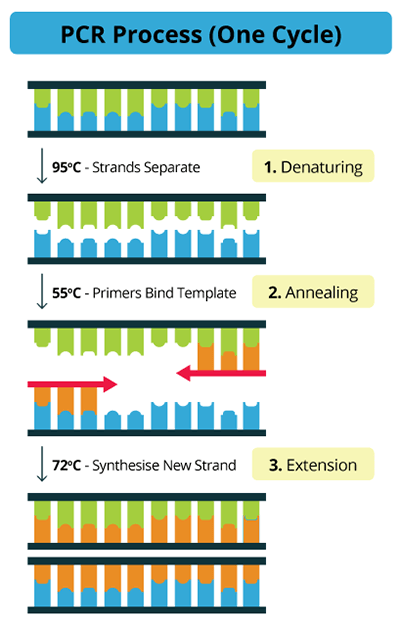
The magic happens inside a thermal cycler—a machine that can rapidly shift temperatures. Each cycle consists of three distinct phases:
- Denaturation (≈94‑98 °C): The double‑helix DNA melts, separating into two single strands.
- Annealing (≈50‑65 °C): Short DNA primers bind, or “anneal,” to complementary sequences flanking the target region.
- Extension (≈72 °C): A heat‑stable enzyme, most commonly Taq polymerase, extends the primers, synthesizing a new strand complementary to each original template.
Repeating these three steps 25‑35 times results in an exponential increase—each cycle roughly doubles the amount of target DNA. By the end, a tiny initial sample can yield billions of copies, all ready for downstream analysis.
Key Components That Make PCR Possible
Beyond the thermal cycler, a successful PCR reaction hinges on a few essential ingredients:
- Template DNA – the source material containing the region of interest.
- Primers – short, single‑stranded oligonucleotides (usually 18‑25 bases) that define the start and end points of amplification.
- DNA polymerase – an enzyme capable of withstanding the high temperatures of denaturation; Taq polymerase from the bacterium Thermus aquaticus is the classic choice.
- dNTPs – the building blocks (deoxynucleotide triphosphates) that the polymerase strings together.
- Buffer solution – provides optimal pH, salts, and often magnesium ions, which are crucial for enzyme activity.
Fine‑tuning concentrations of these components can dramatically affect yield and specificity, which is why experienced technicians often run pilot experiments before committing to large‑scale runs.
Modern Variations and Recent Findings
While the original PCR protocol remains the backbone of molecular biology, several offshoots have expanded its utility:
- Quantitative PCR (qPCR) adds fluorescent dyes or probes, allowing real‑time measurement of product accumulation. This capability is central to viral load monitoring, such as assessing SARS‑CoV‑2 levels in patient samples.
- Digital PCR (dPCR) partitions the reaction into thousands of tiny droplets, enabling absolute quantification without the need for standard curves.
- Reverse‑transcription PCR (RT‑PCR) converts RNA into complementary DNA before amplification, opening the door to gene‑expression studies.
Recent research highlights how PCR can be combined with CRISPR‑based detection systems for ultra‑sensitive diagnostics. In 2023, a study demonstrated that integrating Cas12a collateral cleavage activity with a standard PCR pre‑amplification step could detect single‑molecule viral RNA in under 30 minutes—an advancement that may reshape point‑of‑care testing.
Common Applications in Research and Medicine
From the bench to the bedside, PCR underpins countless workflows:
- Identifying genetic mutations responsible for inherited diseases.
- Authenticating food products and detecting allergens.
- Generating DNA fragments for cloning and recombinant protein production.
- Analyzing ancient DNA in archaeological specimens.
Because the technique is both rapid and highly specific, it has become the go‑to method for confirming the presence of pathogens, verifying forensic evidence, and even guiding personalized cancer therapies based on tumor genotyping.
FAQ
How many cycles are typically run in a PCR experiment?
Most standard protocols use 25‑35 cycles. Fewer cycles may be sufficient for abundant templates, while more cycles risk nonspecific amplification.
Can PCR amplify any length of DNA?
Traditional Taq polymerase efficiently copies fragments up to about 5 kb. For longer targets, high‑fidelity enzymes with stronger processivity are preferred.
Is PCR safe for detecting viruses in clinical settings?
Yes, when performed with proper controls and validated primers, PCR is considered the gold standard for viral detection, offering high sensitivity and specificity.
What are the main sources of error in a PCR reaction?
Common pitfalls include primer‑dimer formation, contamination with extraneous DNA, and suboptimal annealing temperatures, all of which can produce misleading results.