Russia’s Nuclear Arsenal: Facts, Strategy, and Global Implications
When the topic of nuclear weapons comes up in global news, Russia invariably centers the conversation. The sheer size of its arsenal, combined with recent geopolitical tensions, makes understanding the dynamics of Moscow’s strategic nuclear forces not just an academic exercise but a matter of public concern. It is easy to get lost in the numbers or the technical jargon, but the reality is grounded in history, military doctrine, and a complex web of deterrence theories.
Russia inherited the bulk of its nuclear capabilities from the Soviet Union, maintaining the largest stockpile of warheads in the world. However, possessing a weapon is different fromhaving a strategy. To grasp what Russia’s nuclear forces actually mean for global security, we need to look beyond the headlines and examine the structure, the delivery methods, and the stated policies that govern their use.
The Scale of the Arsenal
Numbers can be deceiving. While Russia is often cited as having the most nuclear warheads globally, a significant portion of these are retired or awaiting dismantlement. According to data from the Federation of American Scientists and the Stockholm International Peace Research Institute, Russia possesses roughly 5,580 nuclear warheads. This includes both active and stockpiled weapons.
The critical figure for immediate strategic stability is the number of deployed warheads. Russia has approximately 1,710 deployed strategic nuclear warheads. This figure is roughly equal to that of the United States, creating a fragile balance of power known as Mutually Assured Destruction (MAD). The rest of the stockpile serves as a reserve, allowing for rapid replenishment if necessary, or as political leverage in arms control negotiations.
It is important to distinguish between strategic and non-strategic, or "tactical," nuclear weapons. Strategic nukes are long-range systems designed to hit deep into enemy territory, primarily targeting major cities, military installations, and industrial centers. Tactical nukes, on the other hand, are shorter-range weapons intended for use on the battlefield. Russia is believed to have a significant advantage in this category, with estimates suggesting it holds more tactical warheads than the US and the rest of the world combined. This creates a unique and unsettling tier of escalation risk.
The Triad: How Delivery Works
Like other major nuclear powers, Russia relies on a "nuclear triad" for its strategic force. This diversity ensures that even if one leg of the triad is compromised, the country retains a second-strike capability—meaning it can retaliate effectively after suffering a surprise attack.
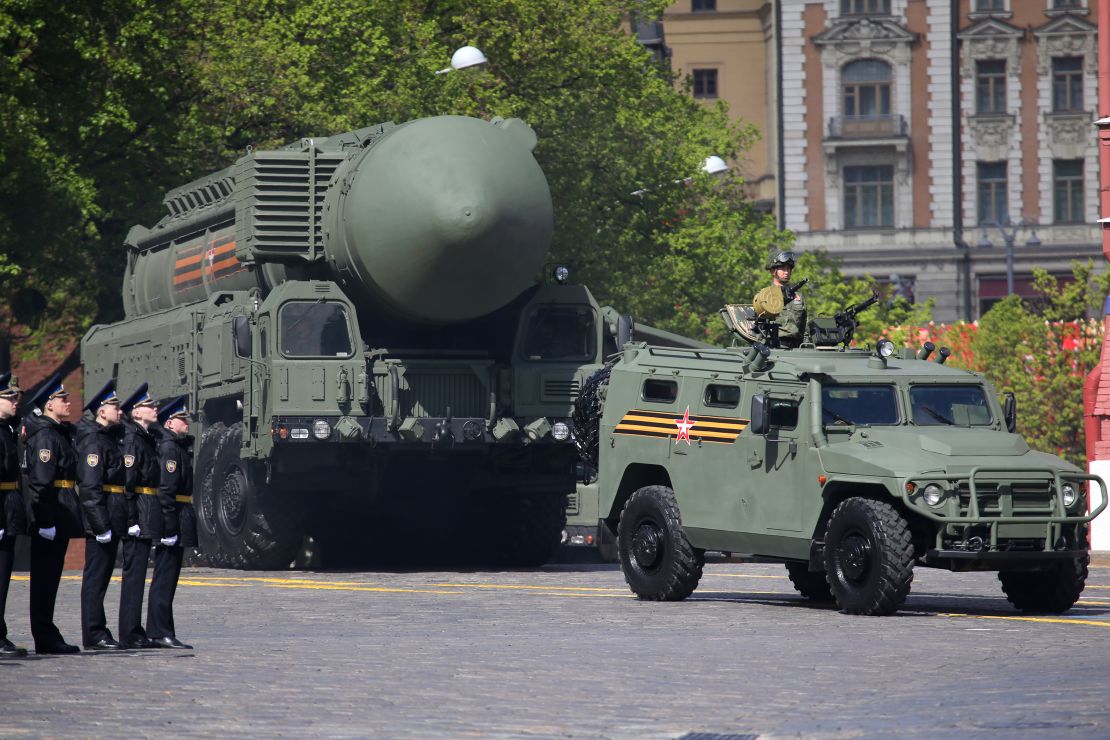
- Land-Based Missiles: This is the backbone of Russia’s strategic force. Systems like the RS-24 Yars and the newer RS-28 Sarmat (often dubbed "Satan II" by Western analysts) are intercontinental ballistic missiles (ICBMs) housed in silos or on mobile launchers. Mobile launchers are particularly significant because they are harder to target and destroy than fixed silos.
- Sea-Launched Missiles: Russia’s nuclear-powered ballistic missile submarines, specifically the Borei-class, can remain submerged for months. These submarines carry R-30 Bulava missiles, which are stealthy and difficult to detect, providing a hidden deterrent.
- Air-Launched Weapons: Long-range bombers, such as the Tu-95MS and the newer Tu-160M, can carry air-launched cruise missiles. These aircraft can circle targets and be recalled if necessary, offering flexibility that missiles lack.
Recently, there has been increased focus on hypersonic glide vehicles, such as the Avangard. These systems can maneuver at extreme speeds and altitudes, potentially evading existing missile defense systems. While their combat readiness is still debated by experts, their development signals a shift toward penetrating advanced defensive networks.
Moscow’s Nuclear Doctrine
Understanding doctrine is perhaps more important than counting warheads. Russia’s official nuclear doctrine, last updated in 2023, outlines when the Kremlin might consider using nuclear weapons. It maintains that nuclear weapons are tools of deterrence and will not be used first against non-nuclear states that do not attack Russia in conjunction with a nuclear-armed ally.
However, the doctrine retains "loopholes" that concern Western strategists. Russia reserves the right to use nuclear weapons in response to a conventional attack that threatens the very existence of the state. The ambiguity here lies in defining what constitutes an existential threat. If a conventional conflict were to escalate to the point where Russia felt its government or territory was at imminent risk of collapse, the threshold for nuclear use could be crossed.
This policy of "escalate to de-escalate" has been a subject of intense debate. The theory suggests that Russia might use a limited tactical nuclear strike to shock an adversary into stopping a conventional war it is losing. While many experts believe this is more of a rhetorical bargaining chip than a practical plan, the mere potential for it alters the psychology of conflict.
Arms Control and the Current Era
For decades, US-Russian relations were anchored by arms control treaties like New START (Strategic Arms Reduction Treaty). This agreement set limits on deployed strategic warheads and delivery systems. However, the current geopolitical climate has shattered this framework. In 2023, Russia suspended its participation in New START, citing US violations and broader Security Council disputes.
Without active arms control, transparency diminishes. Both sides are now free to expand their arsenals beyond previous limits, though the cost and complexity of modernizing these forces act as natural brakes. The lack of communication channels between Moscow and Washington increases the risk of miscalculation, making every drill or exercise highly scrutinized.
Why This Matters to the Rest of the World
It is easy to feel disconnected from nuclear debates, but the stability of this relationship impacts global security, energy markets, and international law. The normalization of nuclear rhetoric lowers the threshold for conflict. Furthermore, the modernization race drives up military spending globally, as other nations feel compelled to upgrade their own defenses.
As Russia continues to integrate its nuclear forces into its broader geopolitical strategy, the world watches closely. The numbers remain high, the doctrine remains ambiguous, and the safeguards are weaker than at any point in recent history. Understanding these facts is the first step in navigating an increasingly precarious global landscape.
FAQs
How many nuclear warheads does Russia currently have?
Russia is estimated to possess around 5,580 total nuclear warheads, with approximately 1,710 deployed on strategic delivery systems. The remainder are in storage or awaiting dismantlement.
When would Russia use nuclear weapons?
According to their 2023 doctrine, Russia may use nuclear weapons in response to a nuclear attack on itself or its allies, or if a conventional attack threatens the existence of the state. They claim they will not use nukes against non-nuclear UN members unless those states attack Russia alongside a nuclear power.
Is Russia’s nuclear force more advanced than the US?
Both nations have highly sophisticated, modernized arsenals. Russia has made significant strides in hypersonic technology and mobile missile launchers, while the US leads in certain areas of missile defense and submarine stealth. The overall deterrent capability is considered roughly equivalent.
What happened to the New START treaty?
Russia suspended its participation in the New START treaty in 2023. This treaty previously set limits on deployed strategic nuclear weapons and provided verification measures. Its suspension marks the end of the last major arms control agreement between the two superpowers.