Single‑Phase vs. Three‑Phase Power: Key Differences Explained
When you hear “single‑phase vs. three‑phase electricity,” the debate usually centers on efficiency, cost, and where each system shines. Whether you’re a homeowner eyeing a new workshop, an engineer sizing a factory’s supply, or simply curious about how the lights in your kitchen stay bright, understanding the fundamental contrast between these two AC formats helps you make smarter choices.
What Is Single‑Phase Power?
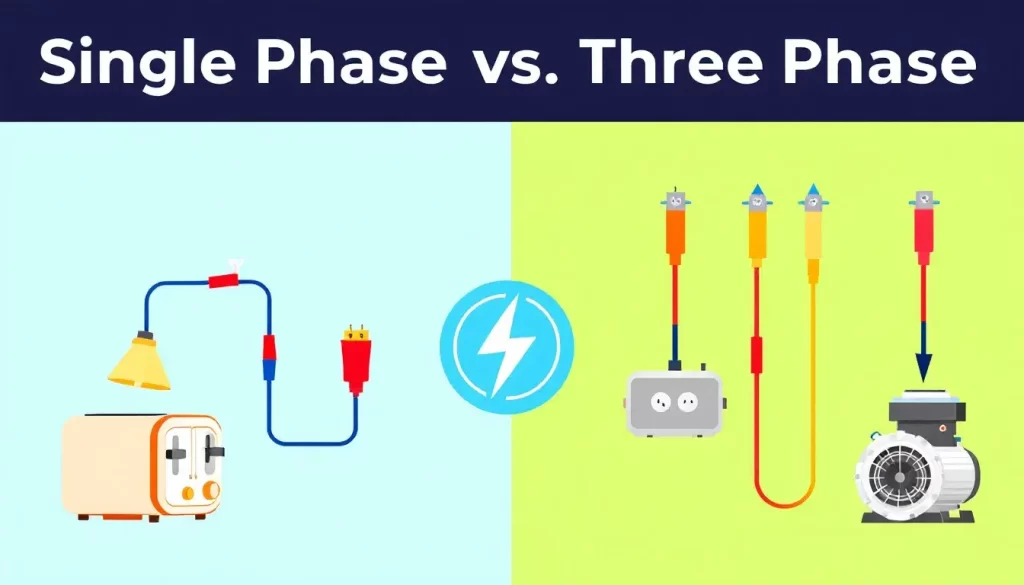
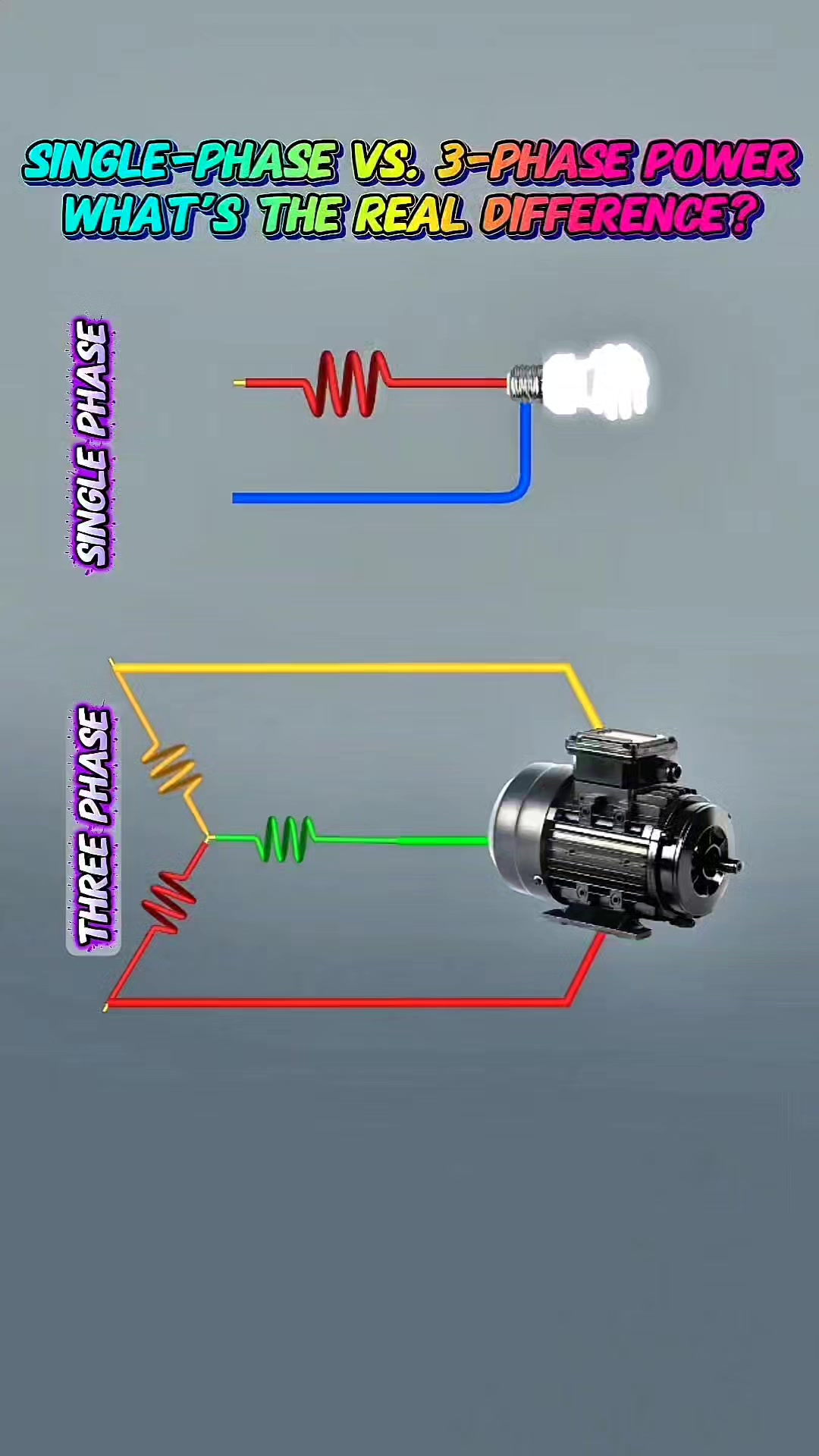
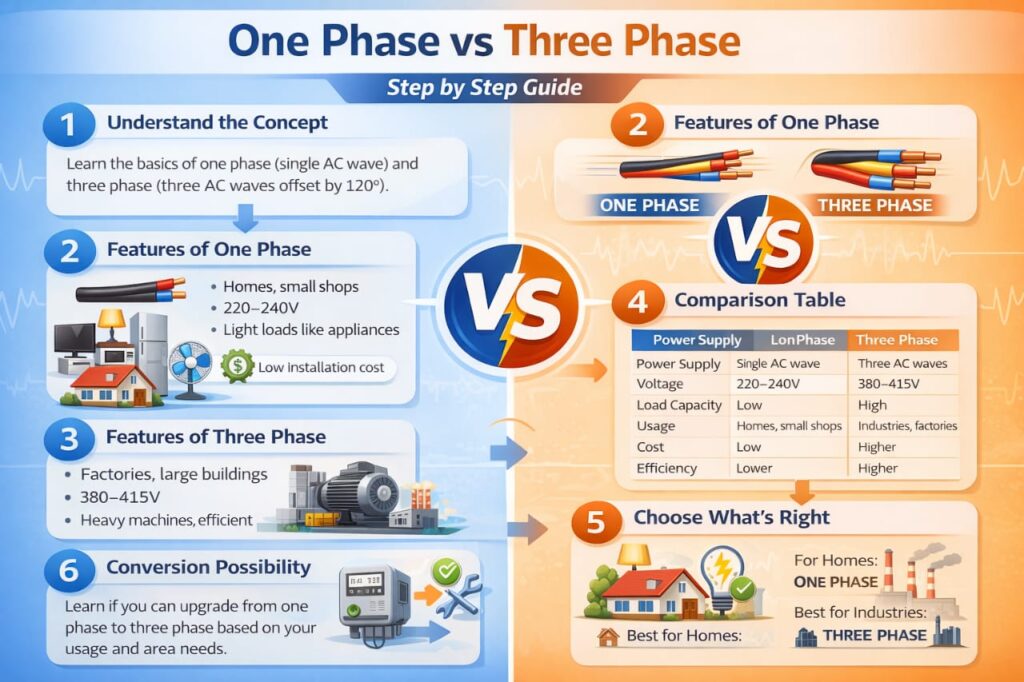
Single‑phase electricity delivers voltage through one alternating current waveform. In most residential neighborhoods, the utility provides a 120‑volt (or 240‑volt in some regions) service that powers everything from refrigerators to televisions. Because there’s only one sinusoidal wave, the voltage reaches its peak twice each cycle—once positive, once negative—resulting in a smooth but relatively modest power flow.
Key traits of a single‑phase system include:
- Simple wiring: Typically just two conductors (live and neutral) plus a ground.
- Lower installation cost: Fewer conductors and smaller transformers keep expenses down.
- Ideal for light loads: Most household appliances and small offices run efficiently on single‑phase.
However, when you start demanding more horsepower—say, for an industrial motor or a large HVAC unit—single‑phase can become a bottleneck, leading to voltage sag or inefficient operation.
Understanding Three‑Phase Power
Three‑phase electricity employs three alternating currents, each offset by 120 degrees. The result is a constant transfer of power, because as one phase drops toward zero, another rises toward its peak. This overlapping pattern yields smoother torque in motors and higher overall efficiency.
Typical three‑phase supplies for commercial or industrial sites range from 208 V up to 480 V, and the wiring involves three hot conductors plus a neutral (optional) and ground.
Advantages that set three‑phase apart:
- Higher power density: More kilowatts can be delivered through the same conduit size.
- Better motor performance: Motors run cooler, with less vibration, and start more reliably.
- Balanced loads: The three phases naturally balance each other, reducing neutral current and minimizing harmonic distortion.
Because of these benefits, factories, large office buildings, and data centers almost always opt for three‑phase service.
How the Two Systems Compare
While the concepts sound technical, the practical differences boil down to a few everyday considerations.
- Voltage stability: Three‑phase maintains a steadier voltage, which is crucial for heavy machinery; single‑phase can dip under high demand.
- Installation complexity: Single‑phase wiring is straightforward; three‑phase requires more conductors, a larger panel, and sometimes a phase‑balancing study.
- Cost: Upfront, single‑phase is cheaper. Over time, three‑phase can reduce energy losses, especially in large facilities.
- Scalability: Adding additional loads is simpler with three‑phase, because you can spread them across the phases to avoid overload.
In short, if you’re powering a few lights and a TV, single‑phase is more than sufficient. If you need to drive multiple 5‑hp motors or run a commercial kitchen, three‑phase offers smoother, more reliable performance.
Choosing the Right System for Your Needs
Before you decide, ask yourself three questions:
- What is the total load? Add up the wattage of all devices you plan to run simultaneously. If the sum exceeds about 3 kW for a residential setting, you might start seeing the limits of single‑phase.
- Do you need large motors? Motors above 1 hp typically benefit from three‑phase, which reduces start‑up current and extends motor life.
- What’s the budget for wiring and equipment? While three‑phase panels and conduit cost more upfront, the operational savings can outweigh that expense in high‑usage scenarios.
If you’re a homeowner, a common compromise is to keep the main service single‑phase but request a three‑phase feed for a specific workshop or garage. Many utilities can add a “phase converter” or a dedicated three‑phase line for a modest monthly surcharge.
Industrial planners, on the other hand, often perform a load‑analysis study early in the design phase. This helps determine the optimal phase configuration and prevents costly retrofits later.
FAQ
Can I convert a single‑phase system to three‑phase? Yes, but it typically requires a phase‑converter device or a new service connection from the utility. The conversion isn’t trivial and should be handled by a licensed electrician.
Is three‑phase always more energy‑efficient? Generally, three‑phase reduces line losses and improves motor efficiency, but for small loads the difference may be negligible.
Do I need a neutral wire with three‑phase power? Not always. A four‑wire (three hot + neutral) system supplies both 120 V and 208 V loads, while a three‑wire (only hot conductors) setup is common for purely three‑phase equipment.