Spark vs. Flink: The Ultimate Data Processing Showdown
When it comes to processing big data, two giants dominate the conversation: Apache Spark and Apache Flink. Each offers a distinct philosophy and set of strengths, making the choice between them a frequent debate among data engineers. This head‑to‑head showdown dives into architecture, latency, state handling, ecosystem, performance, and practical scenarios to help you decide which tool aligns best with your project’s goals.
Spark vs. Flink: Head‑to‑Head Overview
Apache Spark emerged in 2009 as a unified engine for batch and streaming workloads. Its in‑memory RDD abstraction and later DataFrame API deliver high‑throughput processing, especially for ETL pipelines and machine‑learning pipelines. Apache Flink, launched a year later, focused on true stream processing, offering low‑latency event‑driven computation and sophisticated state management. While Spark’s micro‑batch model bridges batch and stream, Flink’s event‑time semantics give it a clear edge for real‑time analytics.
Execution Model
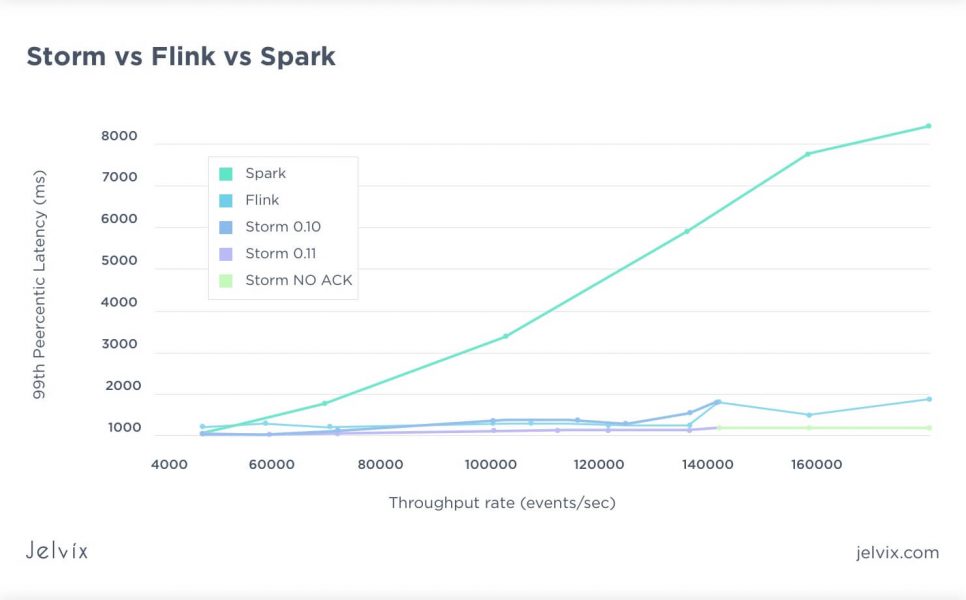
Spark executes jobs in stages, shuffling data between worker nodes via disk or network. Its scheduler optimizes task placement, but the inherent batch nature introduces a micro‑batch delay (usually 200 ms–5 s) before data becomes visible downstream.
Flink runs a continuous operator graph. Every event traverses the pipeline immediately, and the scheduler keeps a tight coupling between source, operator, and sink. This allows sub‑millisecond latencies for time‑sensitive applications.
Batch vs. Streaming
Both systems support batch, but their streaming models differ. Spark’s Structured Streaming treats a stream as a series of micro‑batches, simplifying fault tolerance and integration with existing batch workloads. Flink treats a stream as an unbounded data flow, enabling time‑aware windowing and precisely once guarantees without micro‑batching.
State Management and Event‑Time
In Flink, state is first‑class. Operators can store arbitrarily large key‑partitioned state in local RocksDB or in-memory, backed by changelog checkpoints. Windowing on event‑time is straightforward, and watermarks handle out‑of‑order data gracefully.
Spark’s state handling is more limited. Structured Streaming maintains state in memory or on disk for aggregations, but it does not natively support the same level of fine‑grained event‑time semantics. Window functions can be applied, yet the checkpointing strategy differs, and late data handling requires explicit watermark configuration.
Ecosystem and Tooling
Spark enjoys a mature ecosystem: Spark SQL, MLlib, GraphX, and Delta Lake for ACID transactions on data lakes. Its integration with Hadoop YARN, Mesos, and Kubernetes is well‑tested, and the community regularly releases new libraries.
Flink’s ecosystem is growing but narrower. Flink Table API and SQL provide familiar declarative constructs, and the Flink CDC connector keeps data warehouses in sync. The Flink ecosystem excels at real‑time event ingestion with connectors for Kafka, Pulsar, and various JDBC sources.
Performance and Scalability
Spark shines with large‑scale batch jobs. Its in‑memory execution model can outperform traditional MapReduce, especially for iterative algorithms. However, the cost of shuffles and the micro‑batch latency can be a bottleneck for time‑sensitive tasks.
Flink’s low‑latency execution gives it an advantage in real‑time analytics, fraud detection, and IoT telemetry. Yet, for extremely large batch jobs, Spark’s optimized shuffle and memory management often deliver faster runtimes.
Fault Tolerance
Both engines rely on checkpoints. Spark’s DAGScheduler records lineage for recomputation, while Flink’s snapshot mechanism preserves operator state atomically. Flink’s state snapshotting is generally faster and more reliable for streaming workloads, but Spark’s lineage can be more efficient for large batch jobs that can afford recomputation.
Use‑Case Suitability
- Batch ETL, Data Lake ETL, Machine Learning: Spark is usually the default choice, especially when combined with Delta Lake for ACID guarantees.
- Real‑time monitoring, fraud detection, event‑driven microservices: Flink offers the lowest latency and robust state handling.
- Hybrid workloads that need both: Spark’s Structured Streaming can handle many use cases, but if sub‑second latency is critical, Flink remains the better option.
Migration Path
Shifting from Spark to Flink—or vice versa—requires careful evaluation of API compatibility and performance trade‑offs. Spark’s DataFrame API maps cleanly to Flink’s Table API, but the execution model differences mean that performance tuning often needs a fresh approach.
When migrating, start with a proof‑of‑concept on a small dataset, benchmark both runtimes, and measure end‑to‑end latency and resource utilization. The migration cost can be mitigated by gradually porting critical streaming jobs to Flink while keeping batch pipelines on Spark.
Conclusion
Choosing between Spark and Flink hinges on the nature of your workload. If you need massive batch processing with a rich ecosystem, Spark remains the go‑to platform. For low‑latency, event‑driven pipelines that demand precise state, Flink’s architecture offers undeniable advantages. Many organizations adopt both, leveraging Spark for data engineering and Flink for real‑time analytics, thereby harnessing the best of both worlds.
FAQs
- Which is faster, Spark or Flink? Spark is typically faster for large batch jobs, while Flink excels in low‑latency streaming.
- Can Spark handle real‑time analytics? Yes, but its micro‑batch approach introduces a delay that may be too high for ultra‑real‑time use cases.
- Is Flink suitable for machine learning pipelines? Flink can run ML tasks, but Spark’s MLlib offers a more mature library set.
- Do I need to switch to Flink for a new project? If the project demands sub‑millisecond latency and event‑time processing, Flink is recommended; otherwise, Spark can handle most scenarios effectively.