UAE Document Legalization A Simple Guide
Trying to work, study, or live in the UAE? You’ve likely hit the wall of bureaucracy known as “attestation.” It is the process of getting yourEducational, personal, and commercial documents officially recognized by the UAE government. Without it, your degree from Yale or marriage certificate from London is essentially just a pretty piece of paper in the eyes of the Emirate.
The process feels daunting because it involves multiple government bodies, strict deadlines, and a specific order. If you skip a step, you start over. This guide breaks down UAE document legalization into manageable pieces, so you can navigate the system with less stress and more confidence.
Why Does Attestation Matter?
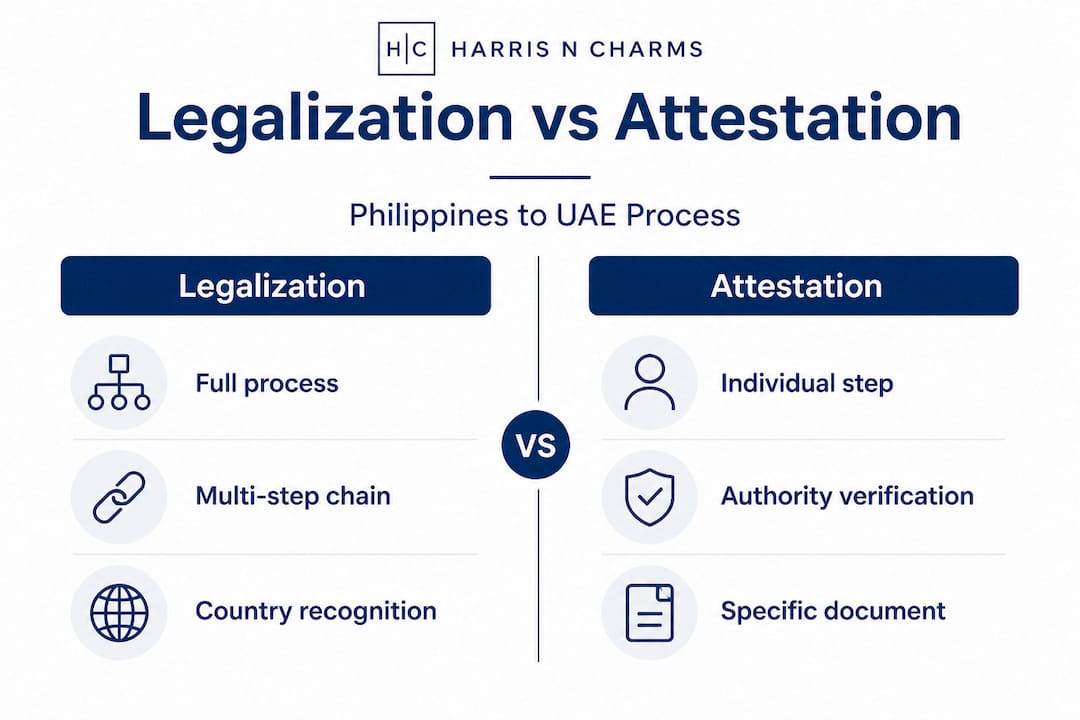
First, let’s clarify the terminology. People often use “legalization,” “attestation,” and “certification” interchangeably. While they overlap, attestation is the broader term for verifying a document’s authenticity. In the UAE, this is mandatory for several reasons:
- Work Visas: Most employment contracts require your educational certificates to be attested to verify your qualifications.
- University Admissions: UAE universities need proof that your previous degrees are genuine before allowing transfer of credits or enrollment.
- Marriage and Family: If you are marrying abroad or bringing a spouse, your marriage certificate, birth certificates, and affidavits must be legalized.
- Business Setup: Power of Attorney documents and corporate papers need attestation to register a company or open a bank account.
Trying to bypass this step usually results in rejected visa applications or delayed permits. It is better to get it right the first time.
The Four-Step Attestation Chain
The process generally follows a strict chain of custody. You cannot jump steps. Here is the typical flow for documents originating from outside the UAE:
1. Notarization (Source Country)
Your journey begins where the document was issued. If it is a personal document like a birth certificate, it often needs to be notarized by a local notary public. For educational degrees, the issuing university usually provides certification or sealing. In some countries, this step is handled by a local registrar or lawyer.
2. State or National Authentication
Next, the document needs validation from the central authority of the issuing country. This varies wildly by nation:
- USA: The Department of State in Washington D.C. or a local Secretary of State.
- India: The Ministry of External Affairs (MEA) or State Human Resource Development Department.
- UK: The Foreign, Commonwealth & Development Office (FCDO).
- Philippines: The Department of Foreign Affairs (DFA).
This step confirms that the previous signature or seal is legitimate. Do not skip this, as the UAE Ministry of Foreign Affairs will not accept documents without this layer of verification.
3. UAE Embassy/Consulate Attestation
Once your home country has certified the document, you need the UAE Embassy or Consulate in that country to stamp it. This step tells the UAE government, “We acknowledge this document from Citizen X is authentic.”
This is often the most time-consuming and expensive part of the process. Embassies have strict requirements, such as specific forms of payment or appointment slots. Some countries allow you to use a proxy service, but many require you or a trusted agent to be present. Check the specific UAE Embassy website for the country holder of the document carefully.
4. MOFA Attestation in the UAE
After the document arrives in the UAE, the final step is attestation by the Ministry of Foreign Affairs (MOFA). You can do this online through the MOFA website or app, or in person at their customer happiness centers across the Emirates.
For some documents, particularly those related to vital records or certain commercial papers, a final step at the local Department of Economic Development (DED) may also be required depending on where you submit your visa or business application. However, MOFA is the critical final hurdle for most expatriates.
Timing and Costs: What to Expect
Patience is your most valuable asset here. The entire process can take anywhere from two weeks to three months, depending on the country of origin and how busy the embassies are. Planning ahead is crucial. Do not wait until your visa is approved to start attesting degrees; start before you even land.
Costs are upfront. You will pay for notarization, national authentication, embassy fees, and MOFA fees. These costs are rarely refundable if you make a mistake. Using a specialized immigration consultant or translation service can save time, but expect to pay a premium for their expediency. Always ask for a breakdown of fees upfront.
Common Pitfalls to Avoid
Mistakes in this process are costly and frustrating. Here are the most common errors:
- Wrong Order: Taking your degree to the UAE Embassy before getting it notarized or state-certified will result in immediate rejection.
- Expired IDs: Ensure the ID copies you submit with applications are current. Some authorities require IDs valid for at least six months.
- Language Issues: Documents must be in Arabic or English. If your original is in another language, you need a certified translation. The translator often needs to be approved by the UAE embassy before the translation itself can be attested.
- Damaged Documents: Papers must be clean and intact. Tears or excessive writing on the back can cause rejection.
Keep scanning every document at every stage. Digital copies are helpful for your records and for submitting to employers or universities while the physical originals are traveling the bureaucratic chain.
FAQs About UAE Document Legalization
How long does the MOFA attestation take?
If you apply online, MOFA attestation is often same-day or next-day. However, getting the document ready for MOFA (the embassy and state authentication) takes most of the time.
Can I use a courier service for attestation?
Yes. Many reputable immigration agencies and courier services offer full-cycle attestation services. They handle the travel between government offices and embassies for a fee. This is convenient if you are already in the UAE or cannot travel back to your home country.
Do electronic degrees need attestation?
Generally, yes. Even if the degree is digital, the official transcript and attestation process require physical or specific digital verification channels that link back to the issuing institution and government bodies. Use the official portal of the issuing country to verify how they handle digital attestation requests.
What happens if my application gets stuck?
Contact the relevant authority immediately. Sometimes, a missing signature or a slightly wrong format can halt the process. Being proactive and polite with customer service representatives can often expedite a review.
UAE document legalization is a marathon, not a sprint. By understanding the chain and preparing your documents meticulously, you turn a bureaucratic hurdle into a smooth transition into your new life in the Emirates.