Understanding the Kinetic Energy Formula: ½ mv² Explained
Kinetic Energy Formula Understand 1/2 Mv²
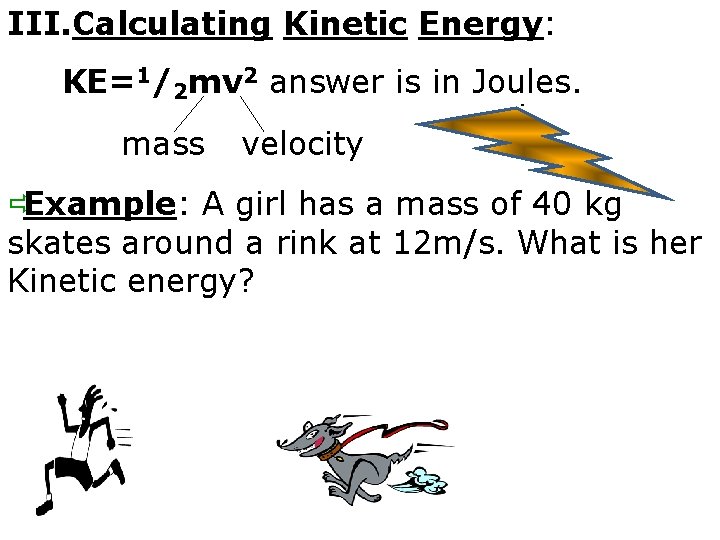
When a moving object gains or loses energy, the term “kinetic energy” is the one that immediately comes to mind. The classic expression that quantifies this energy is ½ mv², a compact way of saying that kinetic energy depends on both mass and the square of velocity. In the first hundred words of this piece you’ll find that formula, but we’ll dig deeper than the textbook definition to see why it matters and how you can use it in everyday calculations.
What Is Kinetic Energy?
Simply put, kinetic energy is the energy of motion. Any object that moves—whether a baseball, a car, or a planet—stores this form of energy. Unlike potential energy, which depends on position or configuration, kinetic energy is tied directly to how fast the object travels.
Deriving the ½ mv² Formula
The derivation begins with work, the force applied over a distance. When a constant force accelerates an object from rest to speed v, the work done equals the change in kinetic energy. Applying Newton’s second law and integrating the force over distance leads to the expression ½ mv². The square of velocity reflects the fact that doubling the speed quadruples the kinetic energy.
Units and Physical Meaning
In the International System of Units, kinetic energy is measured in joules (J). One joule equals one kilogram times a meter squared per second squared (kg·m²/s²). When you plug mass in kilograms and speed in meters per second into the formula, the calculation automatically outputs joules.
Calculating Kinetic Energy: Step‑by‑Step
Follow these simple steps to determine how much kinetic energy an object carries:
- Identify the mass (m) in kilograms.
- Measure or estimate the speed (v) in meters per second.
- Square the speed (v²).
- Multiply the mass by the squared speed (m × v²).
- Halve the result to get kinetic energy (½ m v²).
For example, a 2‑kg puck sliding at 3 m/s has kinetic energy ½ × 2 × 3² = 9 joules.
Real‑World Applications
Engineers use the kinetic energy formula to design safe car crumple zones that absorb impact energy. In sports, coaches analyze the kinetic energy of athletes to optimize performance and reduce injury risk. Even in astrophysics, the kinetic energy of galaxies informs models of cosmic expansion.
Common Mistakes and Clarifications
Many people forget to square the velocity; the formula’s power lies in that step. Others mistakenly plug velocity in kilometers per hour, which produces wildly inaccurate results. Converting all units to SI before calculation eliminates these pitfalls.
Related Concepts: Momentum and Work
While kinetic energy focuses on speed, momentum (p = mv) captures the product of mass and velocity without squaring. The work–energy theorem links the two: the work done on an object equals the change in its kinetic energy. Understanding both concepts gives a fuller picture of motion dynamics.
Why the Factor ½ Matters
The factor ½ arises from integrating the force–distance relationship. It balances the linear increase in force with the nonlinear increase in speed, ensuring the energy calculation reflects real physical behavior. Without it, the formula would overestimate energy by a factor of two.
FAQs About Kinetic Energy Formula
- Q: What happens to kinetic energy if an object's mass doubles while its speed stays the same?
A: Kinetic energy doubles because it depends linearly on mass. - Q: Can kinetic energy be negative?
A: No; kinetic energy is always non‑negative because it’s based on squared velocity. - Q: How does kinetic energy change in a perfectly elastic collision?
A: In an elastic collision, the total kinetic energy before and after the event remains the same.