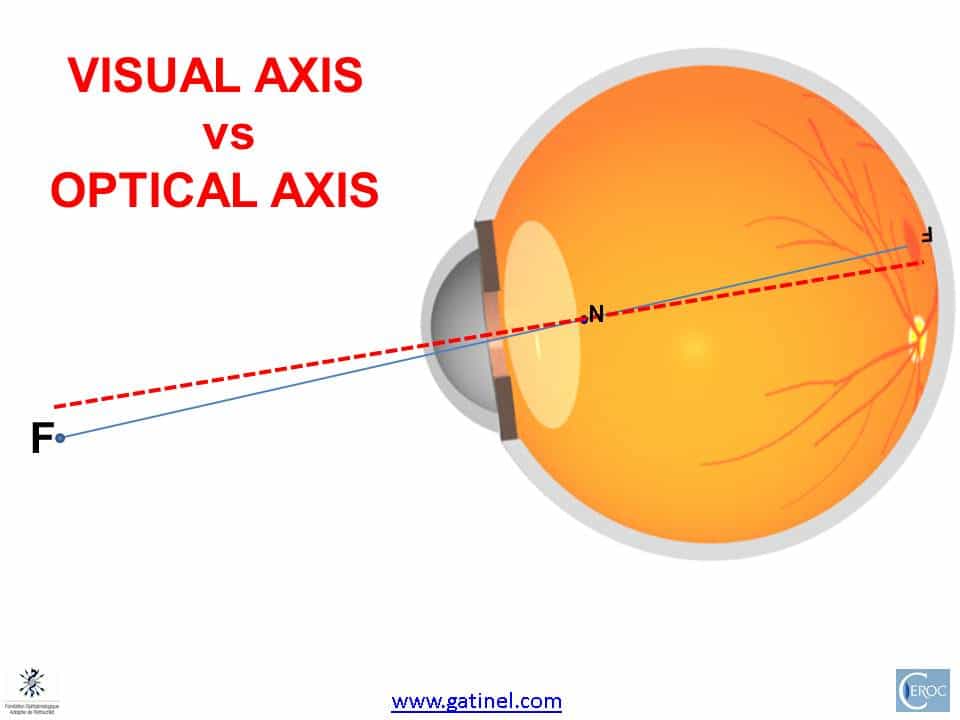
Understanding the Optical Axis: How Light Finds Its Path
The optical axis is the invisible line that runs through the centre of a lens, mirror, or any optical system, dictating how light travels from source to image. Imagine a tightrope stretched perfectly straight; any performer who steps exactly on it will stay balanced, while a wobble sends them veering off. In optics, that tightrope is the optical axis, and the light rays are the performers. Grasping this concept helps demystify everything from a simple magnifying glass to a high‑powered telescope.
What the Optical Axis Actually Is
In technical terms, the optical axis is an imaginary line that passes through the centre of curvature of a spherical surface and the centre of the aperture stop. For a single lens, it cuts through the geometric centre, while in a compound system—think camera lenses—it threads through each element’s centre, aligning them all.
Why does this matter? Because any ray that travels exactly along the optical axis experiences no angular deviation; it emerges straight out, preserving its original direction. Conversely, rays that stray away are refracted or reflected, forming the image we see.
Why the Optical Axis Matters in Everyday Optics
Everyday objects rely on a well‑aligned optical axis, even if you never notice it. A pair of reading glasses, for instance, must keep the axis parallel to the wearer’s eye to avoid distortion. If the axis tilts, the wearer experiences “tilt‑shift,” where parts of the view appear stretched or compressed.
Photographers also chase perfect axis alignment. When a lens is slightly decentered, the image may show uneven sharpness—a problem known as field curvature. Skilled technicians adjust the lens housing until the axis runs true, restoring uniform focus across the frame.
Even the humble laser pointer owes its precision to the optical axis. The laser’s cavity is built around a perfectly straight axis; any misalignment spreads the beam, weakening its focus and reducing range.
How the Optical Axis Guides Light in Lenses and Mirrors
Consider a simple convex lens. Light entering near the centre, close to the optical axis, bends only slightly and converges at the focal point directly behind the lens. Rays farther from the axis travel longer paths within the glass, bending more sharply but still meeting at the same focal spot. This convergence is why the axis is a reliable guide for image formation.
Mirrors behave similarly, though they reflect instead of refract. In a parabolic telescope mirror, the optical axis runs from the vertex straight out to the focal point. Incoming parallel starlight that aligns with the axis reflects straight back to that focal point, delivering a crisp image. Misalign the mirror, and stars become smeared or double‑imaged.
Complex systems, like microscopes, stack multiple lenses along a shared axis. Each element refines the path, correcting aberrations introduced by the previous one. The final image quality hinges on how well every component respects that central line.
Common Misconceptions About the Optical Axis
- It’s a physical rod. The axis is imaginary—no glass or metal marks its location. Engineers simply use reference marks or laser alignment tools to keep components centered.
- Only the centre matters. While the centre defines the axis, peripheral regions still affect image quality through phenomena like coma and astigmatism. Proper design balances central precision with edge performance.
- All lenses share the same axis. In multi‑element lenses, each glass piece has its own internal axis, but designers align them so the overall system behaves as if there’s one continuous axis.
Practical Tips for Keeping the Optical Axis in Check
If you’re tinkering with optics—whether cleaning a telescope or repairing a camera—start by checking alignment. A simple collimator, which projects a beam along the presumed axis, reveals deviations instantly. Adjust mounts until the beam stays centered through every element.
When building a DIY projector, use a straight wooden dowel as a guide. Mount the LED and the lens so their centres line up with the dowel; this physical cue mimics the invisible optical axis and saves hours of trial and error.
Finally, remember temperature can shift materials slightly. In high‑precision instruments, engineers incorporate flexure‑compensating mounts that allow the axis to stay true despite thermal expansion.
FAQ
Q: Does the optical axis change if I tilt a lens?
A: Yes. Tilting a lens moves its centre of curvature relative to the incoming light, effectively shifting the axis. The result is a skewed image, often seen as a “tilt‑shift” effect in photography.
Q: How can I test if my telescope’s optical axis is aligned?
A: Point the telescope at a distant, bright star and defocus slightly. A well‑aligned axis will produce a symmetric diffraction pattern; an off‑axis setup yields an elongated or double‑star pattern.
Q: Is the optical axis the same as the principal axis?
A: In simple lenses, they coincide, but in more complex systems the principal axis may refer to a specific element’s centre, while the optical axis runs through the entire assembly.
Q: Can the optical axis be adjusted after manufacture?
A: Absolutely. Precision mounts, shims, and adjustable lens cells let technicians fine‑tune the axis even in mass‑produced equipment.