What a Negative P/E Ratio Means for Stock Investors
When you glance at a stock’s valuation snapshot and see a negative P/E ratio, it can feel like a warning sign flashing red. The price‑to‑earnings (P/E) multiple is one of the most common gauges of how much investors are paying for each dollar of a company’s earnings. But earnings can dip below zero, and when that happens the ratio flips to the negative side. Understanding why that occurs and what it really tells you about the business is essential before you decide whether to stay away, hold tight, or even jump in.
Why a P/E Ratio Can Turn Negative
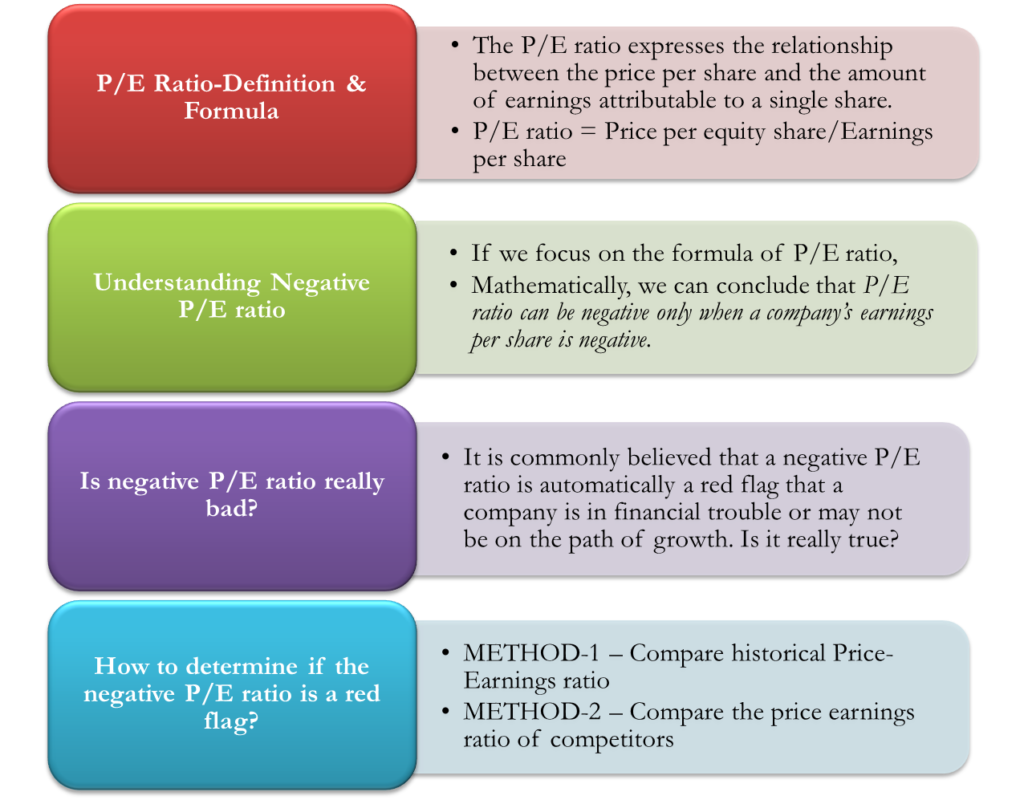
The P/E ratio is calculated by dividing the current market price per share by earnings per share (EPS). If a company reports a loss, the EPS becomes negative, and the division yields a negative figure. This isn’t a mathematical glitch; it simply reflects that the firm isn’t generating profit on a per‑share basis during that reporting period.
Losses can arise from a variety of sources:
- One‑time charges such as restructuring costs, litigation settlements, or asset write‑downs.
- Industry‑wide downturns that compress margins, common in commodities, airlines, or retail.
- Rapid expansion or heavy R&D spending that temporarily outweighs revenue growth.
- Seasonal businesses that experience cyclical deficits, like certain agricultural firms.
In each case the underlying numbers may be temporary, but the negative P/E stays on the screen until the next earnings release turns the EPS back into a positive.
What a Negative P/E Tells You About a Company
A negative P/E ratio is a symptom, not a verdict. It signals that the company’s earnings are currently below zero, but it says little about the underlying health of the balance sheet, cash flow, or long‑term prospects. Investors should treat it as a prompt to dig deeper:
- Cash flow versus accounting loss: A firm might post a net loss while still generating positive operating cash flow, indicating that the loss is largely an accounting artifact.
- Debt load: Heavy leverage can magnify losses, turning a modest earnings dip into a sizable negative EPS.
- Growth stage: Start‑ups and biotech firms often operate at a loss for years as they invest in product development; a negative P/E may be expected.
- Management commentary: Guidance and explanations in earnings calls can reveal whether the loss is a short‑term hiccup or a sign of deeper structural problems.
How Investors Should React to a Negative P/E
There’s no one‑size‑fits‑all playbook, but a disciplined approach helps avoid knee‑jerk reactions. Consider the following steps before making a decision:
- Check the earnings trend. Look at the last few quarters. Is the loss widening, narrowing, or staying flat? A narrowing loss often hints at a turnaround.
- Assess cash reserves. Companies with robust cash balances can weather temporary setbacks, while those burning cash may face liquidity risks.
- Compare valuation alternatives. When the P/E is meaningless, analysts turn to price‑to‑sales, price‑to‑book, or EV/EBITDA as proxies.
- Factor in the industry cycle. Some sectors naturally swing between profit and loss; timing your entry or exit around these cycles can be prudent.
- Review competitive positioning. A company losing money but gaining market share might be executing a deliberate growth strategy.
In practice, many seasoned investors will avoid relying solely on the P/E ratio and instead blend multiple metrics. If a stock’s fundamentals still look sound despite the negative P/E, the market price could be undervalued relative to its future earnings potential.
When a Negative P/E Might Be a Red Flag
Not every loss is benign. Red flags emerge when the negative earnings are accompanied by:
- Consistently declining revenue over several periods.
- Increasing debt ratios that outpace cash generation.
- Management turnover or a lack of clear strategic direction.
- Regulatory or legal issues that could exacerbate losses.
If several of these warning signs converge, the negative P/E ratio is likely reflecting genuine financial distress rather than a temporary dip.
Alternative Metrics to Use When P/E Is Negative
When the price‑to‑earnings multiple goes off the chart, analysts pivot to other valuation tools:
- Price‑to‑Sales (P/S): Useful for companies with strong top‑line growth but weak profitability.
- Enterprise Value‑to‑EBITDA (EV/EBITDA): Excludes the impact of capital structure and non‑cash expenses.
- Price‑to‑Book (P/B): Highlights how the market values a firm relative to its net asset base.
- Free Cash Flow Yield: Shows the cash generated relative to market capitalization, a direct measure of financial flexibility.
Switching to these ratios can provide a clearer picture of whether a stock is truly cheap or simply suffering from accounting losses.
Bottom Line
A negative P/E ratio is a flag that earnings are currently in the red, but it’s far from an automatic “sell” signal. The key is to contextualize the loss—look at cash flow, debt, industry dynamics, and management outlook. By supplementing the P/E with other valuation metrics, you can decide whether the stock represents a bargain waiting for a rebound or a deeper problem that warrants caution.
FAQ
Q: Can a company have a negative P/E ratio and still be a good investment?
A: Yes, especially if the loss is temporary, cash flow remains healthy, and the firm has a solid growth trajectory. Many high‑growth tech firms trade with negative P/Es for years before turning profitable.
Q: How long does a negative P/E usually last?
A: It varies. Seasonal businesses may flip back to positive each quarter, while start‑ups in heavy R&D phases can stay negative for several years.
Q: Should I avoid all stocks with negative P/E ratios?
A: Not necessarily. Use additional metrics like price‑to‑sales or free cash flow yield to gauge value, and examine the reasons behind the loss before making a judgment.
Q: What’s the best alternative metric when the P/E is negative?
A: Many investors prefer price‑to‑sales or EV/EBITDA because they remain meaningful even when earnings are below zero.