What Science Reveals About Psychic Phenomena
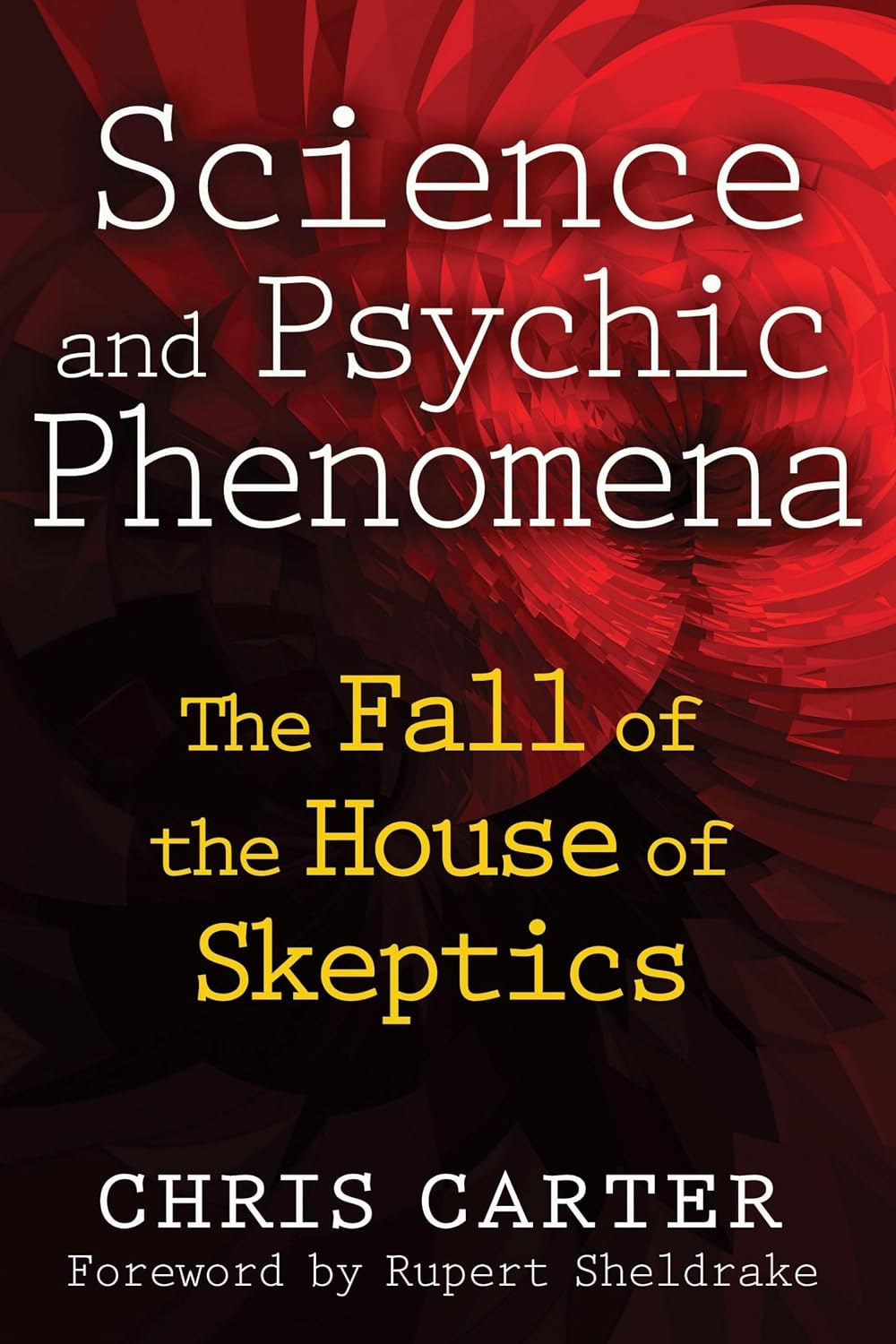
From séances in Victorian parlors to modern‑day TV shows, people have long been fascinated by the idea that the mind can reach beyond ordinary senses. The phrase “psychic phenomena” covers everything from telepathy and clairvoyance to precognition and psychokinesis. While anecdote and folklore have kept these topics alive, a growing body of research asks a tougher question: do any of these abilities hold up under scientific scrutiny?
A Brief History of Psychic Claims
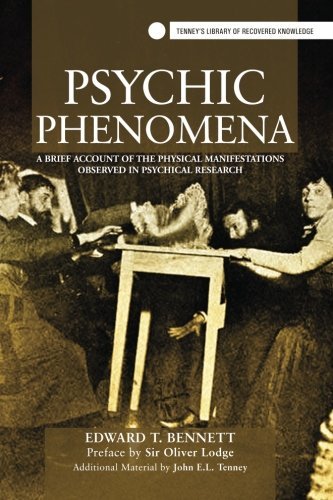
Interest in psychic abilities surged in the late 19th century, when spiritualists claimed to communicate with the dead through mediums. Figures such as the Fox sisters in the United States and the famous British medium Eusapia Palladino drew crowds eager for proof of the afterlife. However, many of their demonstrations were later debunked as clever tricks or outright fraud. The early 20th‑century “psychical research” societies—like the Society for Psychical Research in London—began applying more systematic methods, documenting cases while also exposing hoaxes.
Despite the setbacks, the allure persisted. In the 1970s, the U.S. government’s Project Stargate explored remote viewing—a form of clairvoyance—in hopes of gaining an intelligence edge. Though the program was eventually shut down, it sparked renewed public curiosity and a wave of academic studies that attempted to separate genuine anomalies from wishful thinking.
The Scientific Method Meets the Unexplained
Modern researchers approach psychic claims the same way they tackle any other hypothesis: by designing controlled experiments, using double‑blind procedures, and analyzing results with statistical rigor. One of the most cited efforts is the Ganzfeld experiment, which attempts to test telepathy by placing a “sender” and “receiver” in sensory‑deprived environments. Early reports suggested modest success rates, but later meta‑analyses highlighted methodological flaws and the difficulty of replicating findings across independent labs.
Key Challenges in Testing
- Expectation bias: Participants who believe in psychic powers may unconsciously influence outcomes.
- File‑drawer effect: Studies with null results often go unpublished, skewing the literature toward positive findings.
- Statistical misinterpretation: Small sample sizes can produce apparently significant results that vanish with larger groups.
Because of these hurdles, most mainstream psychologists conclude that, while isolated incidents can be intriguing, there is no reproducible evidence that psychic abilities exceed chance expectations.
Psychology’s Take on Mind‑Reading and Precognition
What feels like mind‑reading often turns out to be a mix of pattern recognition, empathy, and the brain’s knack for filling gaps. Cold reading, a technique used by many self‑described psychics, relies on making high‑probability statements, observing reactions, and then honing in on details that seem “personal.”
Precognition—the sense of knowing future events—can be explained by cognitive biases such as the availability heuristic. When an unusual event occurs, it sticks in memory, leading people to retrospectively believe they “saw it coming.” Similarly, the confirmation bias makes us remember hits and forget misses, reinforcing the belief in a psychic streak.
Everyday Experiences: When Does Intuition Cross the Line?
Most of us have moments that feel uncanny: a gut feeling about a friend's decision, a sudden image of a song before it plays on the radio, or a fleeting sense that something important is about to happen. These experiences are typically grounded in subconscious processing of subtle cues—body language, past patterns, or background sounds—that our conscious mind hasn't fully articulated.
When such hunches line up with reality, they can feel like proof of a supernatural ability. Yet, research shows that the hit‑rate for these “psychic” moments hovers around 50 %, barely better than random guessing. The occasional “wow” moment is often just a statistical fluke amplified by our love of stories.
Evaluating Psychic Claims: A Practical Checklist
Before accepting any extraordinary assertion, consider the following steps:
- Check whether the test was double‑blind and whether both participants and experimenters were unaware of the expected outcome.
- Look for independent replication—has the result been reproduced by other researchers using the same protocol?
- Assess the statistical significance: does the reported effect survive rigorous correction for multiple comparisons?
- Identify potential sources of bias, such as selective reporting or lack of a proper control group.
- Consider alternative explanations rooted in psychology, statistics, or simple chance.
Applying this checklist doesn’t automatically dismiss every claim, but it does raise the bar for evidence, keeping us anchored in what can be demonstrated rather than what we wish to be true.
FAQ
Q: Can anyone develop psychic abilities through training?
A: Scientific studies have not found reliable methods to cultivate telepathy, clairvoyance, or psychokinesis. While meditation and mindfulness can sharpen perception, they do not confer supernatural powers.
Q: Are there any documented cases of genuine psychic phenomena?
A: To date, no case has withstood the rigorous controls required for scientific validation. Many alleged instances have later been explained by fraud, statistical chance, or cognitive bias.
Q: Why do so many people still believe in psychic powers?
A: Belief often stems from personal experiences that feel meaningful, cultural narratives that glorify the mysterious, and the human tendency to find patterns even where none exist.
Q: Should I completely dismiss all reports of psychic events?
A: Skepticism is healthy, but outright dismissal can close the door on exploring how our brains construct reality. Treat each claim as a hypothesis: investigate, test, and remain open to evidence—however mundane it may turn out to be.