What You Need to Know About Luminal B HER2‑Negative Breast Cancer
When a breast tumor is identified as “Luminal B HER2‑negative,” it tells doctors a lot about its biology, likely behavior, and which therapies might work best. In simple terms, this subtype is estrogen‑receptor (ER) positive, has a higher proliferation rate than Luminal A, and lacks the HER2 protein that would otherwise open the door to targeted anti‑HER2 drugs. Understanding these nuances helps patients navigate treatment choices and set realistic expectations for outcomes.
Key Features of Luminal B HER2‑Negative Breast Cancer
Unlike the more indolent Luminal A cancers, Luminal B tumors tend to grow faster, reflected in a higher Ki‑67 index—a marker that gauges cell division. They remain ER‑positive, meaning hormone‑driven growth is still a central driver, but the absence of HER2 amplification removes one potential therapeutic target. This combination often translates to a slightly higher risk of recurrence, prompting oncologists to recommend a more aggressive systemic approach.
How Is the Subtype Determined?
Pathologists rely on a panel of immunohistochemical (IHC) stains and, when needed, genetic testing. The typical workflow includes:
- Assessing estrogen and progesterone receptor status (both usually positive).
- Measuring HER2 protein expression; a score of 0 or 1+ confirms HER2‑negative status.
- Evaluating Ki‑67 to gauge proliferation; values above 14‑20% often tip the diagnosis toward Luminal B.
In borderline cases, a gene‑expression assay such as Oncotype DX may be ordered to refine risk assessment and guide chemotherapy decisions.
Treatment Strategies Tailored to This Subtype
Because the cancer retains hormone sensitivity, endocrine therapy remains the backbone of treatment. Options include tamoxifen for pre‑menopausal women or aromatase inhibitors for those who are post‑menopausal. However, the higher proliferative index frequently warrants the addition of chemotherapy—especially in tumors larger than 2 cm or when nodes are involved.
Recent clinical trials suggest that combining endocrine therapy with CDK4/6 inhibitors (like palbociclib or ribociclib) can improve progression‑free survival for patients with advanced disease. While these agents are not yet standard for every early‑stage case, many oncologists consider them for high‑risk Luminal B patients.
What Role Does Surgery Play?
Standard surgical options—lumpectomy or mastectomy—are chosen based on tumor size, location, and patient preference rather than subtype alone. The key is achieving clear margins, after which radiation therapy is typically recommended for breast‑conserving surgery or when multiple lymph nodes are involved.
Prognosis: What to Expect
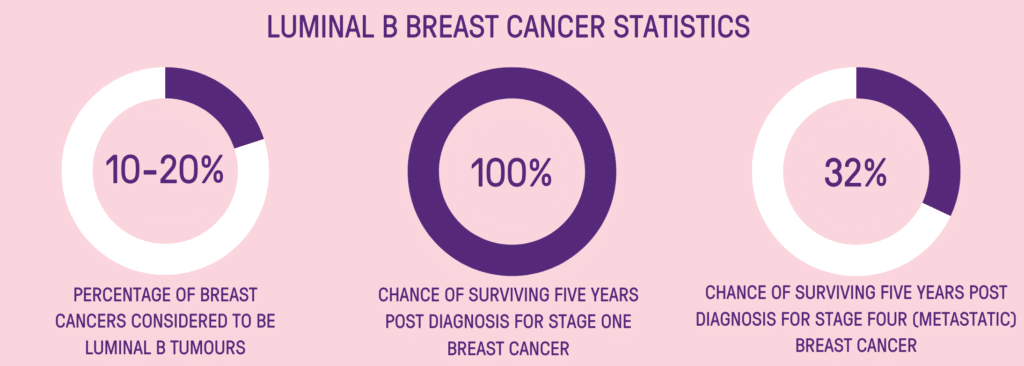
Overall survival for Luminal B HER2‑negative patients falls between the more favorable Luminal A and the more aggressive HER2‑positive or triple‑negative groups. Studies show a modestly higher chance of distant recurrence compared with Luminal A, especially when the Ki‑67 index is elevated. Nevertheless, the availability of effective hormonal agents and newer targeted therapies continues to narrow that gap.
Managing Side Effects and Quality of Life
Endocrine therapies can cause hot flashes, joint stiffness, and bone density loss. Bone‑protective agents such as bisphosphonates or denosumab are often prescribed prophylactically. Chemotherapy brings its own set of challenges—nausea, fatigue, and neuropathy—so supportive care measures, including anti‑emetics and physical therapy, are integral to a comprehensive plan.
Living with Uncertainty: Follow‑Up and Monitoring
After initial treatment, regular follow‑up visits typically include a clinical exam and annual mammograms. For patients receiving hormone therapy, doctors may order periodic blood tests to monitor liver function and lipid levels. If the disease recurs, imaging and a repeat biopsy help determine whether the tumor’s biology has shifted, which could open new therapeutic avenues.
Frequently Asked Questions
Is chemotherapy always required for Luminal B HER2‑negative breast cancer?
Not necessarily. Chemotherapy is often recommended when the tumor is large, nodes are positive, or the Ki‑67 index is high. Low‑risk patients may be managed with endocrine therapy alone, especially if a genomic test predicts a low chance of recurrence.
Can I take a CDK4/6 inhibitor if my cancer is early stage?
These drugs are approved for metastatic disease, but ongoing trials are evaluating their benefit in the adjuvant (post‑surgery) setting. Some clinicians enroll eligible patients in clinical studies to access these agents earlier.
Does being HER2‑negative mean my cancer is less aggressive?
HER2‑negative status removes a specific target, but aggressiveness depends on other factors like hormone‑receptor expression and proliferation rate. Luminal B cancers, despite lacking HER2, can still behave more aggressively than Luminal A because of their higher Ki‑67.
How long will I need to stay on hormone therapy?
Standard practice is five years of endocrine treatment, though extending to ten years may be considered for higher‑risk patients, based on individual tolerance and risk‑benefit discussions with your oncologist.