How to Choose the Perfect Carving Knife: Uses & Types
Whether you’re slicing a holiday turkey, trimming a roast beef, or preparing a delicate smoked salmon platter, the right carving knife can turn a clumsy effort into a smooth, almost artistic motion. A good carving knife isn’t just a longer kitchen blade; it’s a tool calibrated for precision, balance, and ease of use. Below we explore the most common applications, the variety of designs on the market, and the key factors that help you pick a knife that feels like an extension of your hand.
Common Uses for a Carving Knife
At its core, a carving knife is built for thin, uniform slices. Here are the scenarios where it truly shines:
- Roast poultry and meat. The long, narrow blade glides through cooked muscles without tearing the fibers, giving you clean, even slices.
- Cold cuts and charcuterie. When serving a platter of ham, salami, or pastrami, a sharp edge lets you control thickness with a single, fluid motion.
- Fish fillets. A flexible, thin blade can separate delicate flesh from bones while preserving the skin’s texture.
- Vegetable ribbons. Though not its primary job, a well‑balanced carving knife can produce long carrot or zucchini ribbons for garnish.
In each case, the goal is to keep the meat’s juices inside while presenting an appealing slice on the plate.
Main Types of Carving Knives
Classic Straight‑Edge Slicer
This is the most recognizable style: a long (usually 8‑12 inches) blade with a single, razor‑sharp edge. It’s ideal for large roasts and turkey, offering a clean cut without the distraction of a serrated edge.
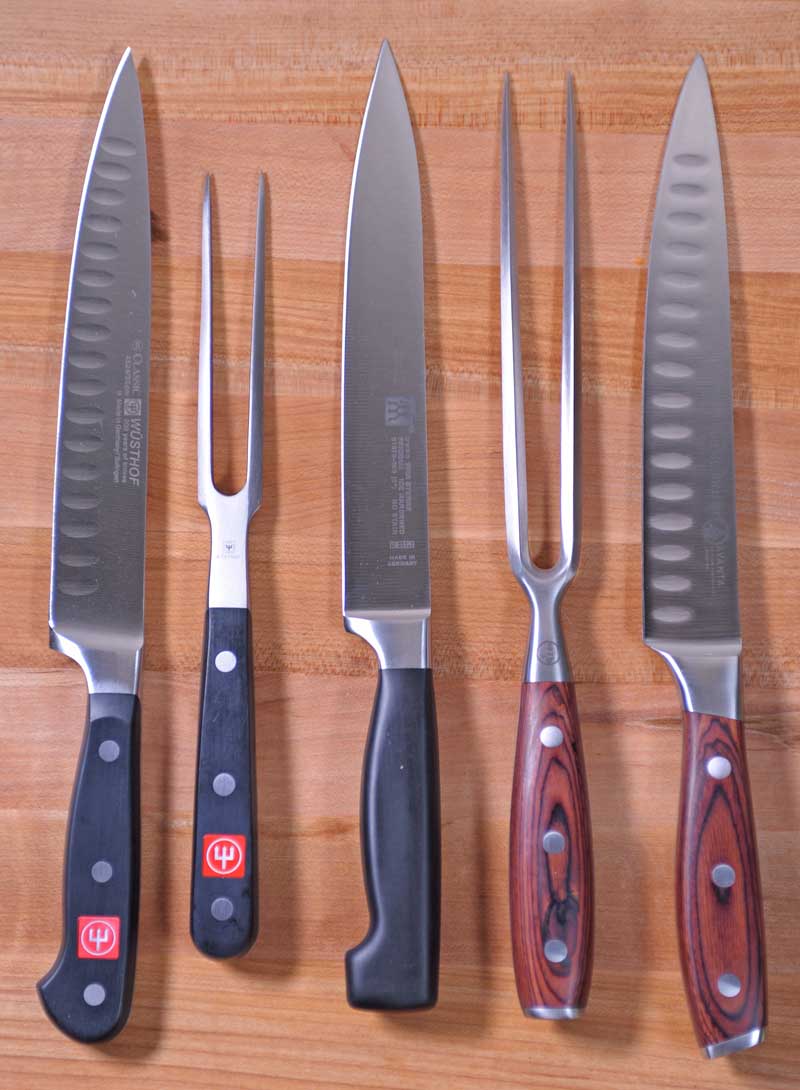
Granton‑Edge (Scalloped) Knife
Small dimples run along the blade’s side, creating air pockets that reduce friction. The result? Slices that slide off the meat without sticking—a handy feature for juicy poultry or moist ham.
Serrated Carving Knife
When you need to tackle a crusty bread‑coated roast or a smoked salmon with a firm skin, a serrated edge provides the grip needed to start the cut without crushing the interior.
Electric Carving Knife
For those who slice large volumes regularly—caterers or busy families—an electric model offers consistent speed and reduces hand fatigue. The trade‑off is higher cost and the need for occasional blade replacement.
Flexible Fillet Knife
Although technically a fillet knife, many home cooks keep a flexible, narrow carving blade for fish and thin‑sliced meats. Its bendable spine follows the contours of bone, delivering precise, thin slices.
Factors to Consider When Selecting One
Choosing a carving knife isn’t just about aesthetics; it’s about matching the tool to your cooking style.
- Blade length. Longer blades (10‑12 inches) are better for big roasts; a 8‑inch blade works well for smaller cuts and more controlled handling.
- Steel composition. High‑carbon stainless steel offers sharpness and resistance to rust, while a softer stainless blend may stay sharper longer but can be harder to hone.
- Edge type. Straight edges excel on tender meat, whereas serrated or Granton edges help with sticky or crusty surfaces.
- Handle material. Wood provides a classic feel but needs maintenance; composite or polymer handles resist moisture and are easier to grip when wet.
- Weight and balance. A well‑balanced knife feels light at the tip but has enough heft to cut through dense meat without wobbling.
- Flexibility. If you often carve fish, look for a blade that bends slightly; for beef and pork, a stiff blade gives the most control.
It’s worth holding a few models in a store if you can. The way the knife sits in your palm often tells you more than any specification sheet.
Caring for Your Carving Knife
Even the best knife loses its edge if neglected.
- Hand wash only. A quick rinse with warm, soapy water and immediate drying prevents corrosion, especially on carbon‑rich steel.
- Hone regularly. Use a fine ceramic rod or a honing steel a few times a month to keep the edge aligned.
- Professional sharpening. Once a year, or when you notice the blade pulling rather than slicing, have a professional sharpen it with a whetstone or belt grinder.
- Store safely. A knife block with a dedicated slot, a magnetic strip, or a sheath protects the edge from accidental knocks.
Frequently Asked Questions
What length is best for a holiday turkey?
For a standard 12‑15 lb turkey, a 10‑12 inch straight‑edge slicer offers the reach needed to cut through the breast without repositioning the knife constantly.
Should I buy a serrated or straight‑edge knife for pork loin?
Most pork loins have a tender interior and a modest crust, so a straight‑edge blade with a Granton surface usually provides the cleanest slices. Choose a serrated edge only if the crust is especially thick.
Is an electric carving knife worth the investment?
If you carve large roasts weekly or run a small catering side‑business, the speed and reduced hand strain can justify the price. For occasional home use, a high‑quality manual blade is typically sufficient.
How often should I sharpen my carving knife?
For regular home cooks, honing once a month and a professional sharpening once a year keeps performance optimal. Heavy users may need to sharpen every 3‑4 months.
![Carving Knife Vs Bread Knife [Which One Should You Choose?]](http://cdn2.hubspot.net/hubfs/334586/Blog/Knives-3.jpg)