Understanding ISA 315: A Practical Guide for IT Professionals
When auditors talk about ISA 315, the phrase can feel like jargon reserved for seasoned accountants. In reality, the International Standard on Auditing 315 is a roadmap for identifying and assessing risks—something that directly shapes how we evaluate IT systems. Whether you’re auditing an ERP platform, a cloud service, or a bespoke application, grasping ISA 315 helps you pinpoint where controls matter most and where vulnerabilities may hide.
What Is ISA 315 and Why It Matters for IT Auditors
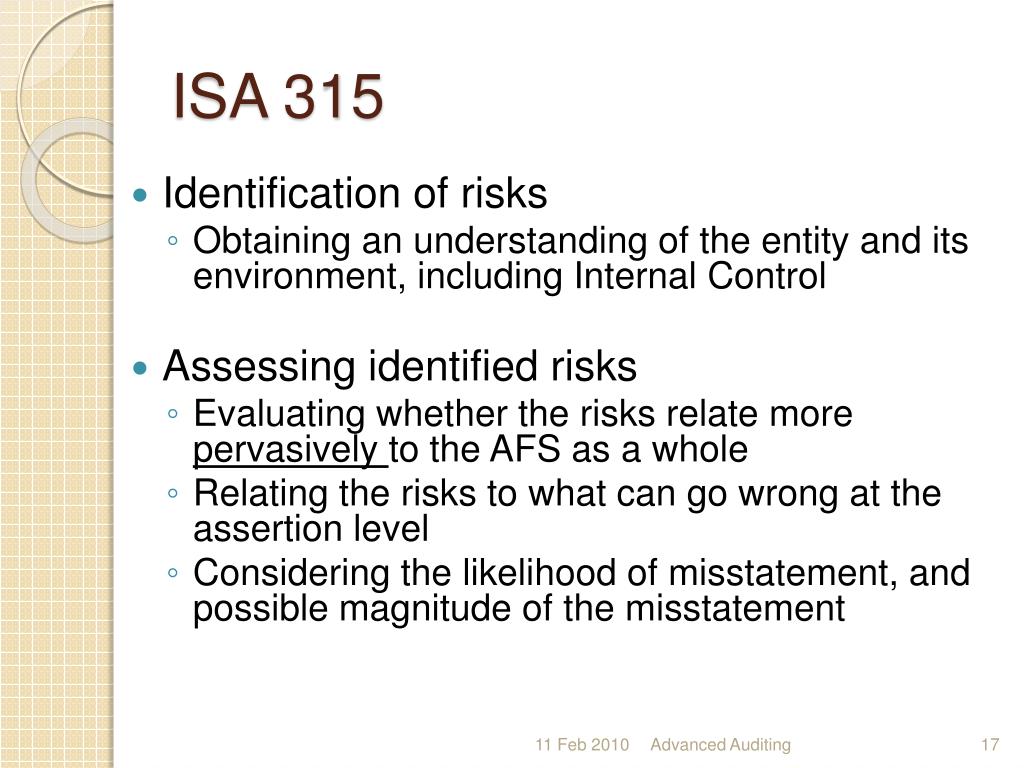
ISA 315, officially titled “Identifying and Assessing the Risks of Material Misstatement,” sets out a structured approach for auditors to understand an entity’s environment, its internal controls, and the risks that could affect financial reporting. For IT auditors, the standard isn’t just a theoretical checklist; it translates into concrete steps for examining the technology that underpins financial data. By aligning audit procedures with ISA 315, you ensure that IT risks are evaluated with the same rigor as traditional financial risks.
The standard emphasizes three pillars: (1) the entity’s internal environment, (2) the nature of its business processes, and (3) the design and implementation of controls. In an IT setting, each pillar expands to include system architecture, data flows, and security mechanisms. Ignoring these connections can lead to gaps where errors or fraud slip through unnoticed.
Core Components of ISA 315 in an IT Context
Understanding the Entity’s Environment
First, auditors must map out the organization’s operating environment. This includes corporate governance, regulatory pressures, and, crucially, the technology stack. Questions to ask include: What operating systems support critical applications? How are cloud services provisioned and monitored? The answers shape the risk landscape and guide subsequent testing.
Identifying Relevant Risks
Once the environment is clear, the next step is to pinpoint risks that could cause material misstatement. In IT, these often revolve around data integrity, access controls, and change management. For example, an inadequate segregation of duties in a finance module may let a single user both create and approve journal entries—a classic risk that ISA 315 urges auditors to flag.
Designing Effective Controls
ISA 315 doesn’t stop at risk identification; it