What Is PSRAM? A Practical Guide to Pseudo‑Static RAM
When designers sketch the next generation of smartphones, wearables, or IoT gateways, they often face a memory dilemma: how to keep data fast, reliable, and energy‑efficient while staying within tight pin budgets and cost constraints. This is where PSRAM—short for Pseudo‑Static RAM—enters the conversation. PSRAM blends the speed of SRAM with the density of DRAM, delivering a sweet spot for embedded systems that need more memory than SRAM can afford but can’t afford the full cost of DRAM. In this guide we’ll unpack the fundamentals, explore how PSRAM achieves its balance, and show you where it fits best in modern designs.
Understanding the Basics of PSRAM
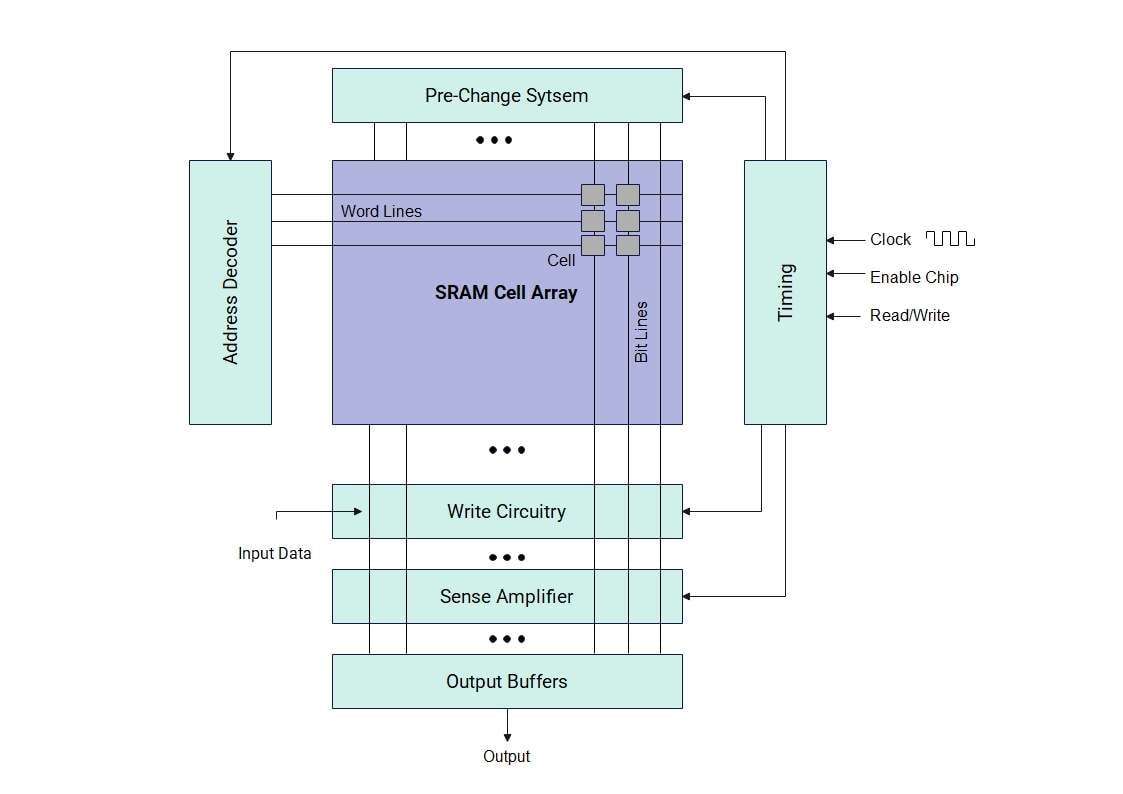
Static RAM (SRAM) stores each bit in a stable flip‑flop network, which means it never needs refreshing and offers quick access times—typically a few nanoseconds. Dynamic RAM (DRAM), on the other hand, stores bits in capacitors that slowly leak charge; it requires periodic refreshes and has slower access times due to additional circuitry. Pseudo‑Static RAM sits between these extremes: it uses an internal SRAM core that behaves like conventional SRAM but couples it to a small internal refresh logic that keeps the data intact over time.
How PSRAM Works: Architecture and Operation
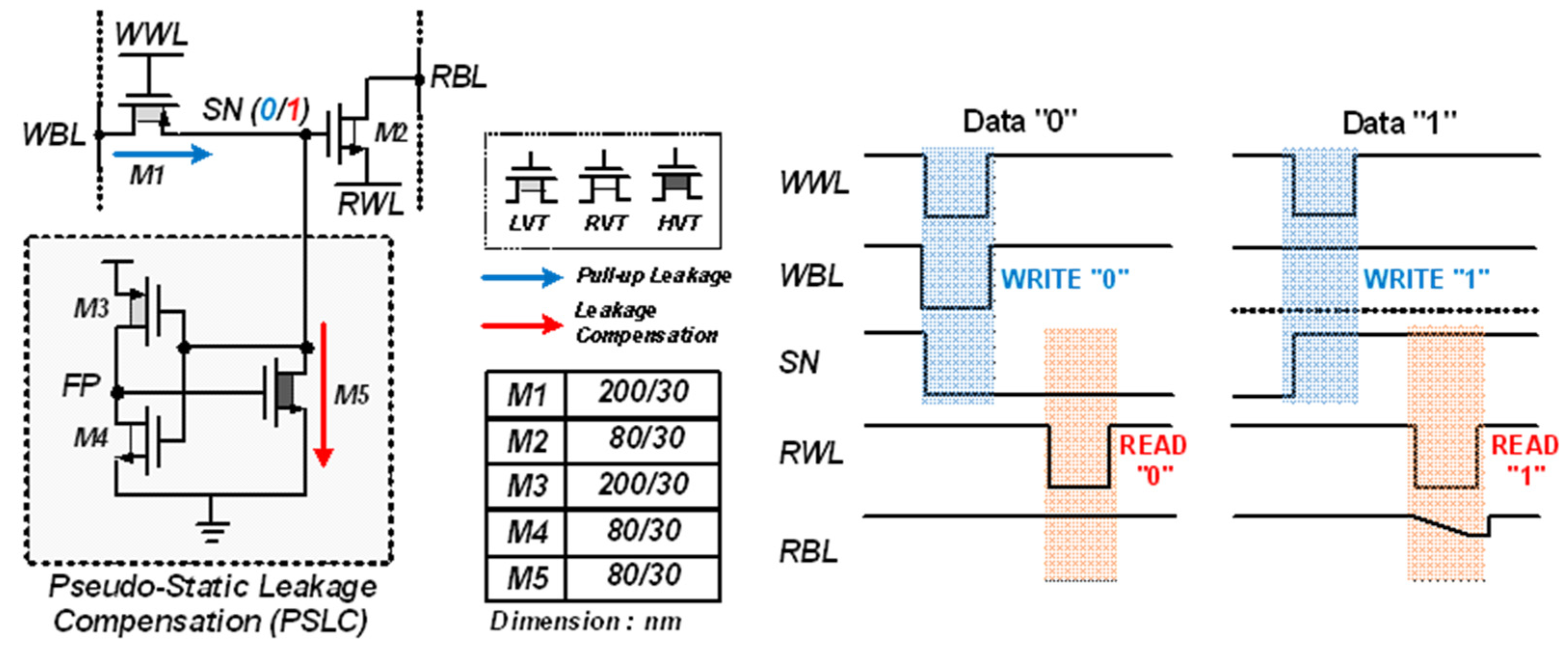
At its heart, PSRAM contains a small SRAM array—often a few kilobits—paired with a set of registers that translate external addresses into internal locations. The key innovation is a refresh controller that periodically reloads the internal SRAM cells from the external interface, ensuring data integrity without requiring a full external refresh cycle.
- Internal SRAM Core – The primary storage engine, typically a 4‑ or 8‑way set associative cache that holds the active data.
- Address Decoder – Maps external 16‑ or 32‑bit addresses to internal SRAM banks.
- Refresh Logic – Operates in the background, sweeping the SRAM cells at a rate that keeps them stable while the external device reads or writes.
- Burst Mode Controller – Enables efficient data transfer by chaining successive addresses.
When a host writes data, the controller writes into the SRAM core and schedules a refresh cycle. Reads occur directly from SRAM, giving the low latency characteristic of static memory. Because the refresh is internal, the external system does not have to perform costly refresh bursts, and power consumption remains lower than conventional DRAM.
Advantages of PSRAM Over Conventional DRAM
- Fast Access – Latencies are usually 2–4 ns, close to SRAM speed.
- Simple Interface – Most PSRAMs use a 16‑bit or 32‑bit data bus and standard address lines, fitting neatly into existing memory controllers.
- Lower Power – No external refresh bursts; internal logic is efficient.
- Higher Density Than SRAM – Densities of 128 Mb to 512 Mb are common, offering more space than typical SRAM on a single chip.
- Cost‑Effective – Manufacturing costs sit between those of SRAM and DRAM.
Typical Applications and Real‑World Use Cases
- Embedded Controllers – Flight controllers, motor drivers, and industrial PLCs benefit from PSRAM’s balance of speed and capacity.
- Wireless SoCs – Bluetooth, Wi‑Fi, and 5G modules often use PSRAM for packet buffers and temporary data storage.
- Graphics and Audio – Low‑end displays and audio codecs that need moderate frame buffers or sample storage.
- IoT Gateways – Edge devices that handle multiple sensor streams and need quick, low‑power memory.
Choosing the Right PSRAM for Your Project
When selecting a PSRAM, consider the following parameters:
- Capacity – 16 Mb, 32 Mb, up to 512 Mb depending on the application.
- Speed Grade – Ranges from 400 MHz to 800 MHz; choose based on processor bus frequency.
- Pin Count – 16‑bit devices typically use 24–32 pins, while 32‑bit variants use 32–48 pins.
- Power Consumption – Look for low IDD values, especially in battery‑powered systems.
- Package – BGA, LGA, or QFN; the package impacts board space and thermal performance.
- Manufacturer Reliability – Check for proven design kits and robust support.
Common Misconceptions and Gotchas
Because PSRAM bridges two memory worlds, it sometimes triggers misunderstandings:
- “PSRAM is just DRAM with a faster clock.” – The core is SRAM, not DRAM; the refresh logic is internal.
- “It has the same endurance as SRAM.” – Endurance is similar to SRAM but can degrade under extreme temperature or voltage swings.
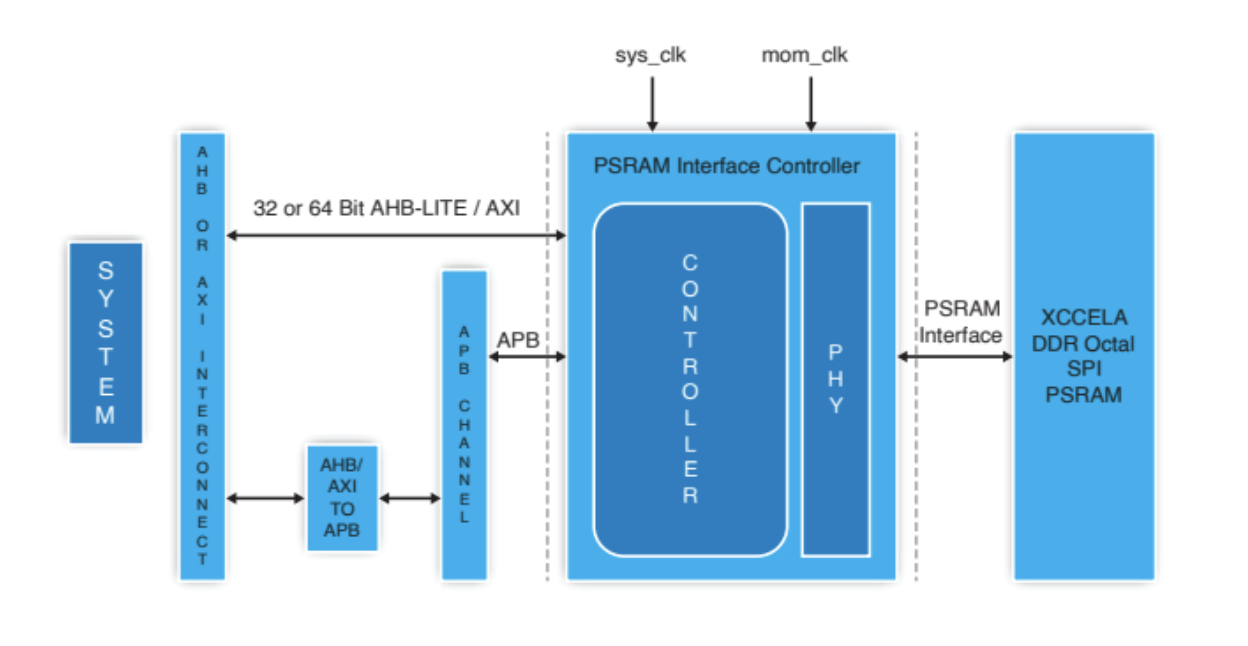
- “You need a special memory controller.” – Most modern MCUs and SoCs have built‑in PSRAM controllers; standard DDR or NOR interfaces often suffice.
- “PSRAM can replace all DRAM.” – For very large memories (>1 Gb) or high‑performance servers, pure DRAM remains superior.
Frequently Asked Questions
What is the maximum reliable operating temperature for PSRAM?
Most commercial PSRAM devices are rated up to +85 °C, with some industrial variants handling up to +125 °C. Always verify the datasheet for your specific part.
Can I mix PSRAM with SDRAM on the same board?
Yes, but you must manage two distinct memory controllers. Many SoCs support dual memory types via separate interfaces.
Is PSRAM more power‑hungry than SRAM?
Not typically. PSRAM’s internal refresh is efficient, and the overall power draw is usually lower than that of a comparable DRAM module of the same capacity.
Does PSRAM support error‑correcting code (ECC)?
Standard PSRAM does not include ECC. However, some vendors offer ECC‑enabled versions for safety‑critical applications.
-Market-Segments.png)