How to Find and Understand Police Radio Frequencies on Ham Bands
When you tune your handheld or base‑station transceiver and hear a crisp, authoritative voice reporting a traffic incident, you’re likely listening to a police transmission. Those broadcasts travel on what many hobbyists refer to as “police ham radio frequencies.” While the term can be misleading—since police use dedicated public‑safety bands rather than amateur‑service allocations—it’s a useful shortcut for anyone trying to locate, identify, and legally monitor law‑enforcement communications.
Understanding Police Ham Radio Frequencies
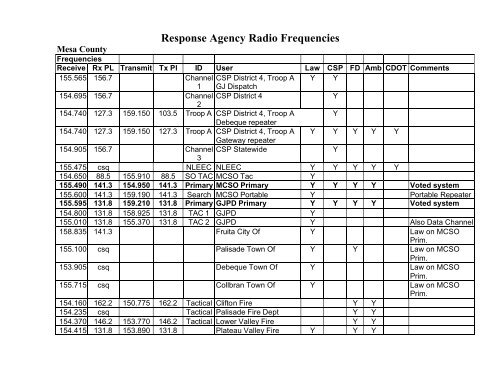
Police agencies primarily operate on two portions of the radio spectrum: the VHF band (roughly 150‑174 MHz) and the UHF band (about 450‑470 MHz). In rural areas, VHF is common because its longer wavelength can travel farther over open terrain. Urban police departments, on the other hand, often favor UHF; its higher frequency penetrates buildings more effectively. Both bands are divided into numerous channels, each assigned to a specific agency, jurisdiction, or purpose—such as dispatch, patrol, or tactical units.
In addition to these analog channels, many departments have migrated to digital or trunked systems. Those platforms bundle dozens of virtual “talk groups” onto a single frequency, switching automatically as users request a channel. While the underlying carrier may sit within the same VHF/UHF ranges, the actual conversation appears on a different logical channel each time, which can make casual listening a bit more challenging.
Legal Landscape for Monitoring Police Channels
In the United States, the Federal Communications Commission (FCC) permits anyone to receive, but not transmit on, public‑safety frequencies. This means you can legally listen with a scanner or a ham radio that has the appropriate range, provided you do not interfere with the transmissions. However, some states impose additional restrictions, especially concerning the use of portable scanners in vehicles or while driving. Always check local statutes before setting up a mobile listening station.
Another legal nuance involves encrypted communications. Certain tactical or investigative units encrypt their traffic to protect sensitive operations. Even if you have a scanner capable of decoding analog signals, encrypted streams remain unintelligible without the proper decryption keys, which are not publicly available.
Typical Bands and Where to Find Them
- VHF Public Safety (150‑174 MHz): Look for channels in the 153‑154 MHz range for state police, and 155‑156 MHz for county sheriffs in many regions.
- UHF Public Safety (450‑470 MHz): Urban police often occupy 453‑456 MHz, while 460‑462 MHz may host municipal dispatch.
- Low‑Band VHF (30‑50 MHz): Some legacy systems still broadcast on this band, though it’s less common today.
- Digital/Trunked Systems: Frequencies vary widely; common carriers include the 800‑MHz public‑safety band, which hosts many statewide trunked networks.
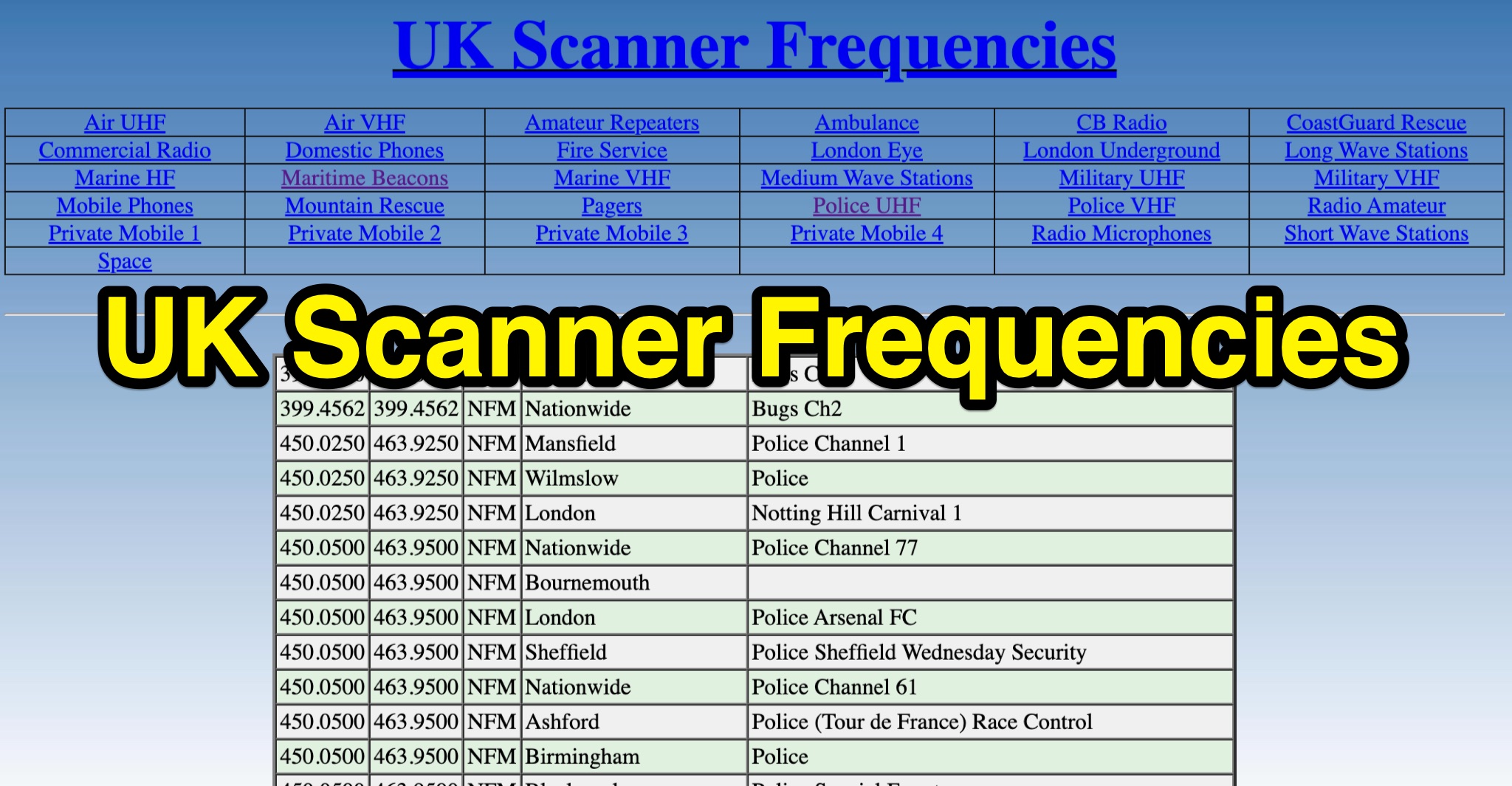
Because allocations differ by state and even by individual city, the best practice is to consult a local frequency database or a reputable scanner website that lists the current assignments for your area.
Practical Tips for Scanning Police Calls
1. Choose the right equipment. A scanner with a wide‑band coverage (VHF 150‑174 MHz, UHF 450‑470 MHz, and 800 MHz) and digital decoding capability will handle most modern police communications.
2. Program your device wisely. Instead of loading every possible channel, start with the most active local frequencies—often the dispatch and patrol channels. Many scanners allow you to set “search mode,” which hops through a list until it finds active traffic.
3. Use a good antenna. A simple telescopic antenna works for basic listening, but a dedicated VHF/UHF whip or a discone antenna can dramatically improve reception, especially in fringe‑area locations.
4. Pay attention to legal notices. Some jurisdictions post “no scanner” signs near courthouses or government buildings. While these signs don’t override federal law, they can indicate heightened enforcement of state restrictions.
Common Misconceptions About Police Frequencies
Many newcomers assume that “ham radio” and “police radio” share the same licensing requirements. In reality, amateur radio operators are licensed by the FCC for personal, non‑commercial use, while police communications operate under a separate public‑safety allocation that does not require a ham license to receive. Another myth is that all police chatter is openly audible; as mentioned, encryption and trunked systems keep a significant portion of the traffic out of reach for casual listeners.
Finally, some hobbyists think that simply buying a cheap “police scanner” guarantees full coverage. Modern police departments increasingly migrate to digital, trunked, or even LTE‑based communication platforms, which older analog‑only scanners cannot decode. Investing in a scanner that supports both analog and digital modes—often labeled “wide‑band” or “software‑defined”—offers the best future‑proofing.
FAQ
Can I legally listen to police radio with my ham transceiver?
Yes, receiving police transmissions is generally legal in the U.S., as long as you do not transmit on those frequencies and you obey any state‑specific restrictions on scanner use while driving.
What’s the difference between a scanner and a ham radio?
A scanner is designed solely for reception and can automatically hunt for active signals across multiple bands. A ham radio can both transmit and receive, but most models require manual tuning and may lack built‑in digital trunking support.
How do I find the exact police frequencies for my city?
Check local government or police department websites, consult online frequency databases such as RadioReference.com, or join regional ham‑radio clubs that often maintain up‑to‑date lists.
Are there apps that let me listen to police radio on my phone?
Several streaming services aggregate live feeds from publicly available police scanners, but availability varies by region and may be subject to the same legal constraints as traditional listening.